
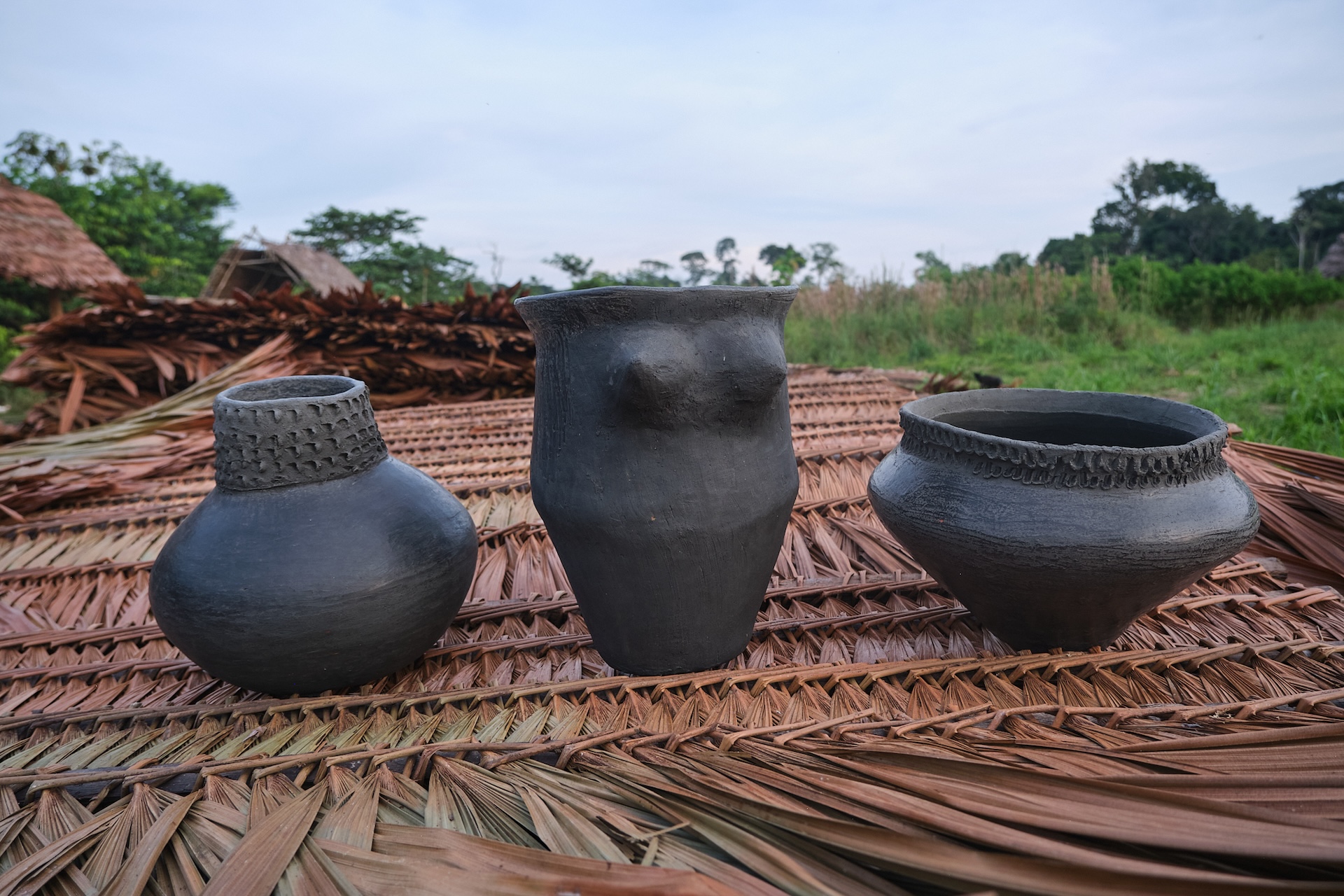
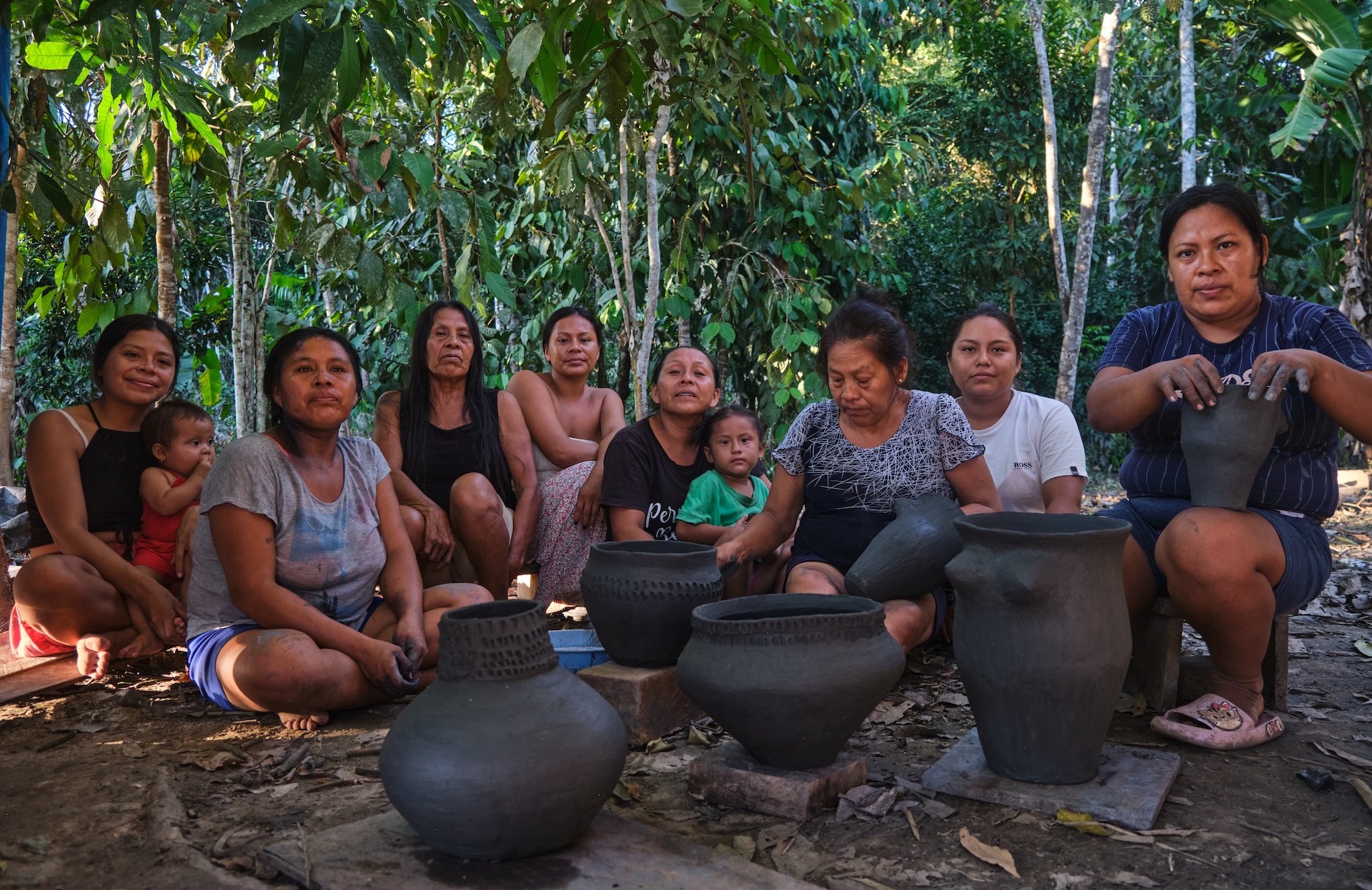
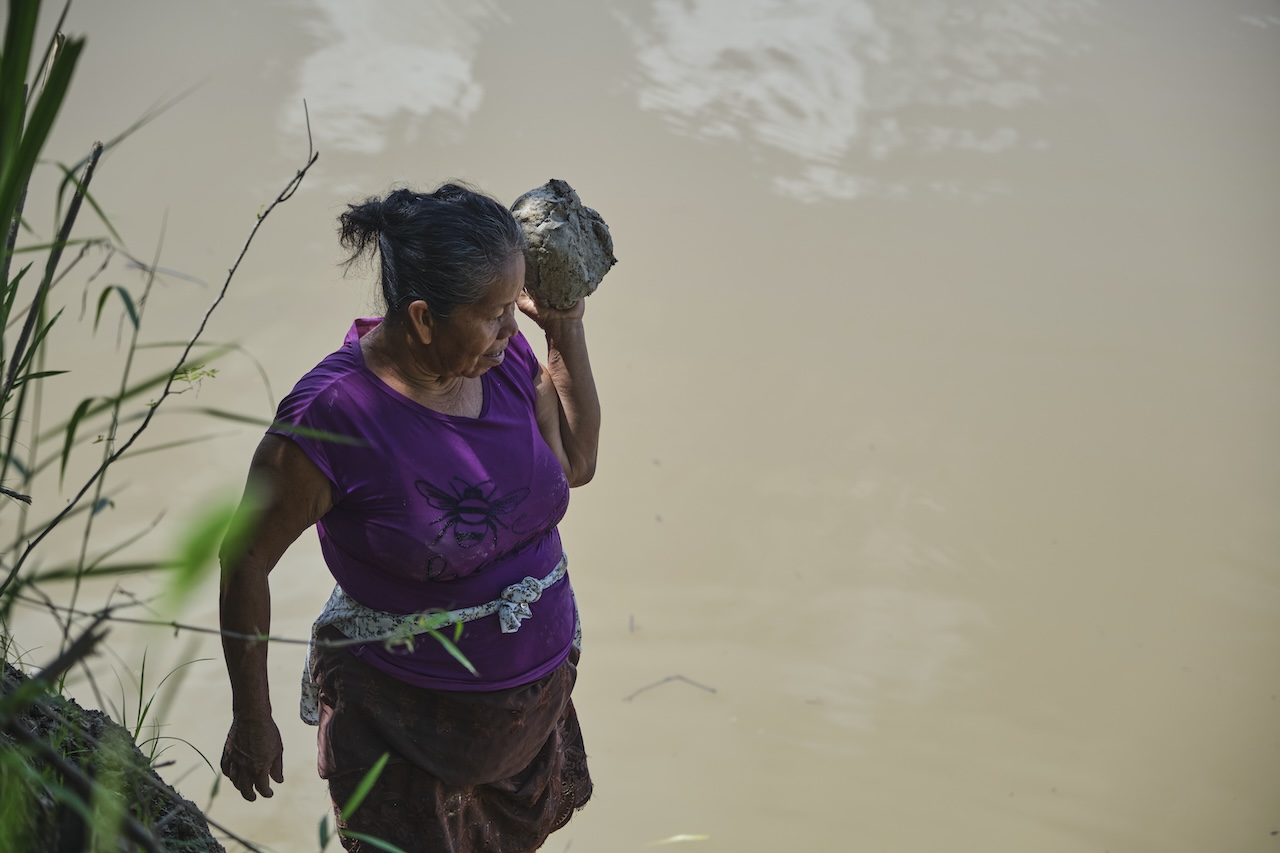
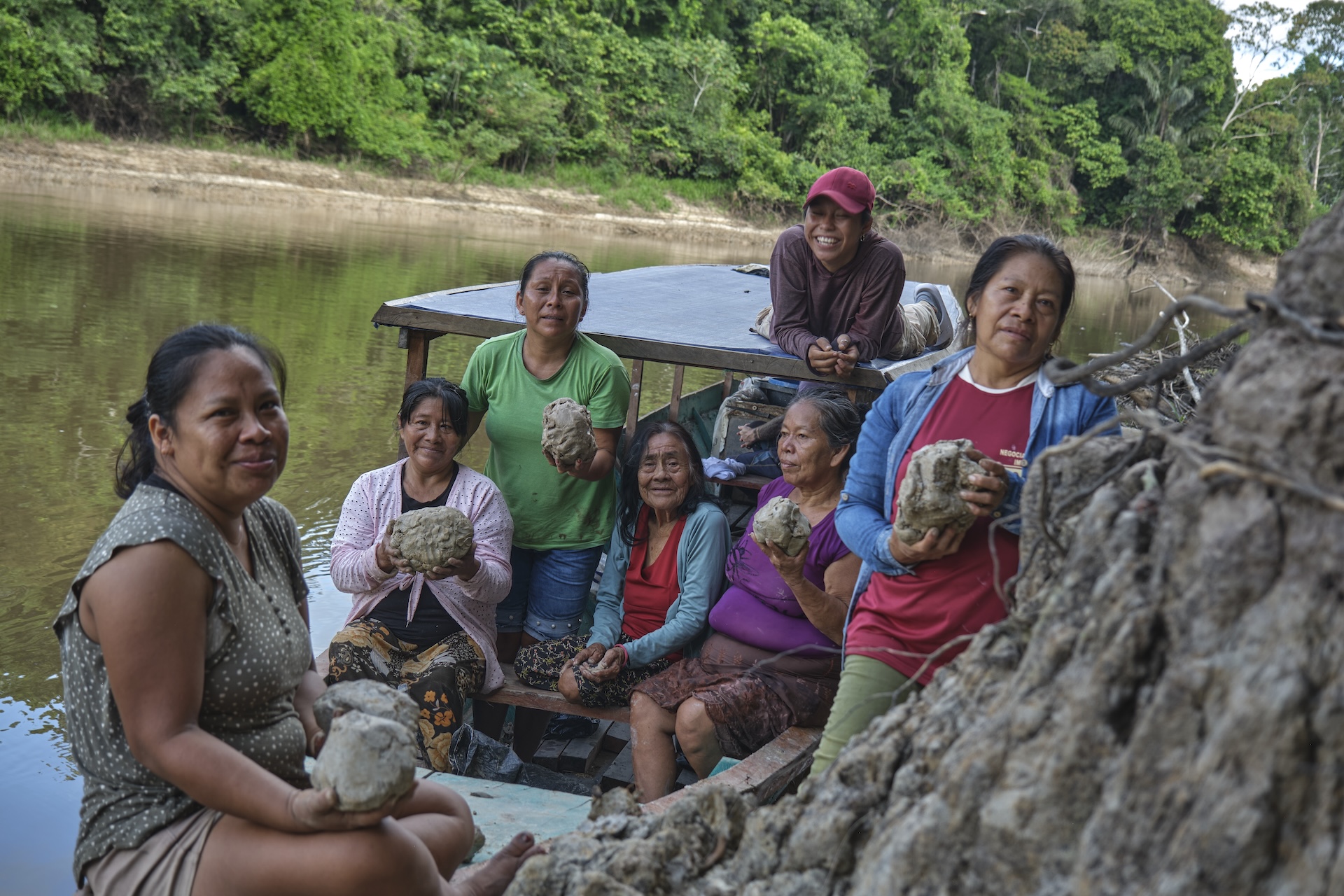
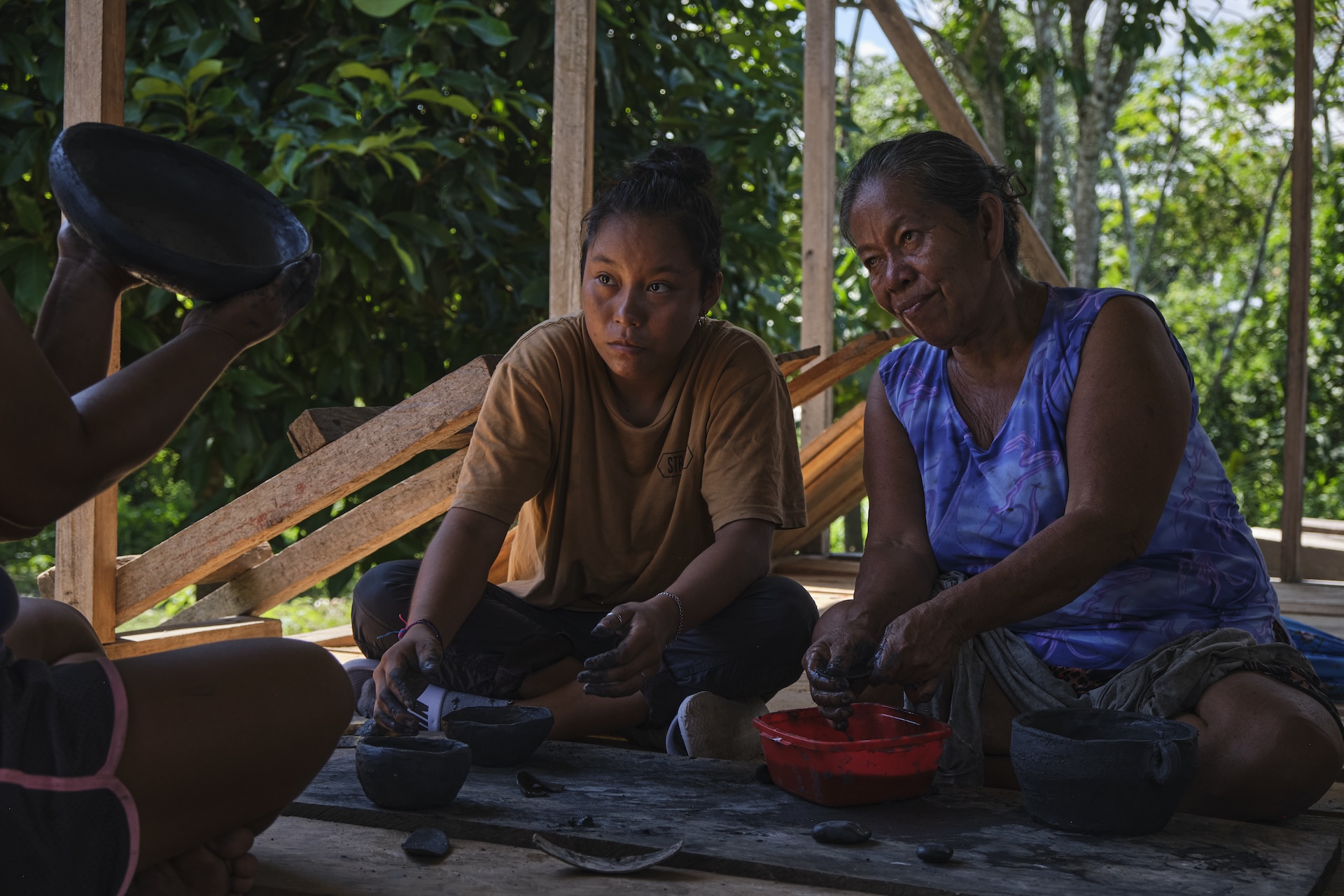
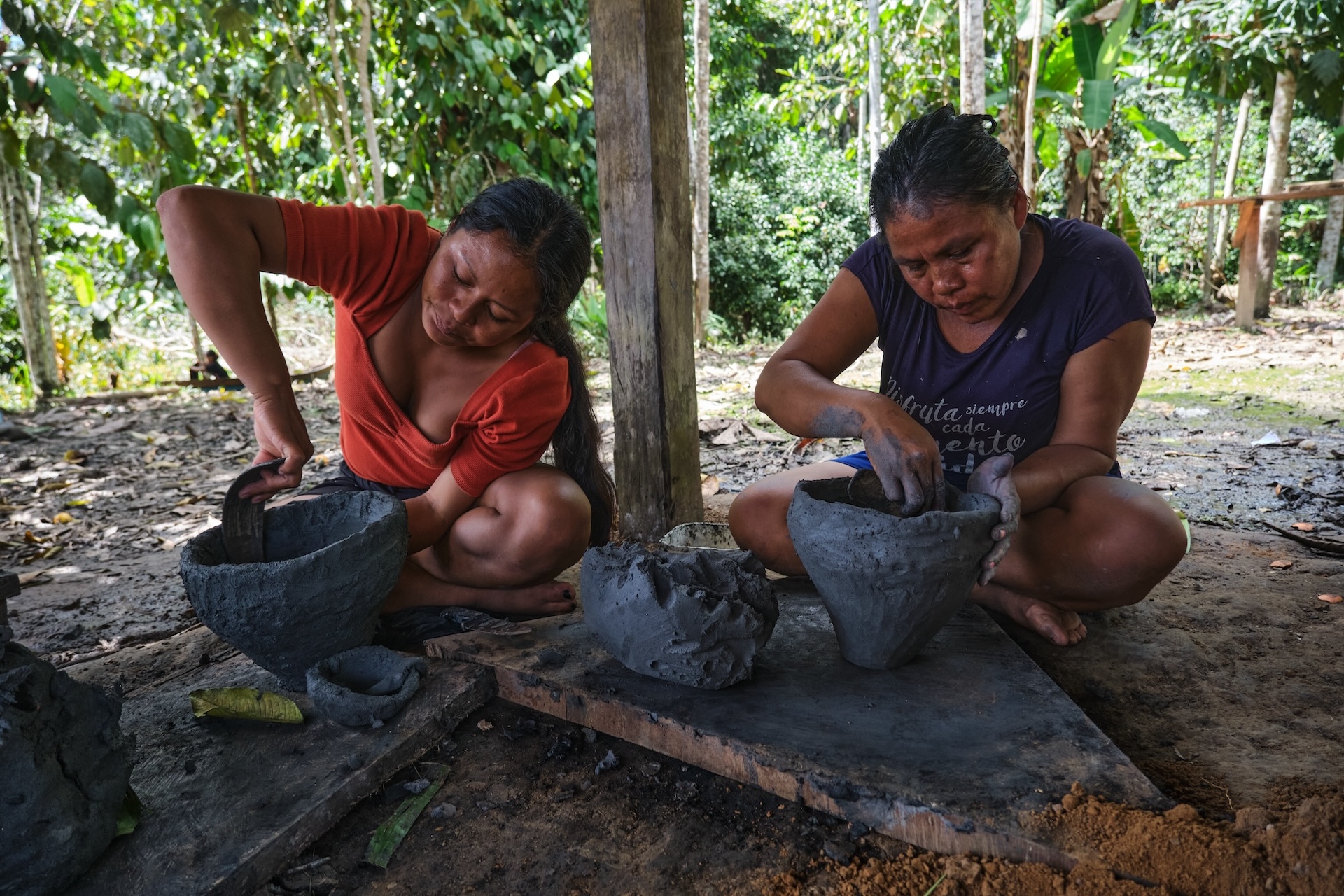
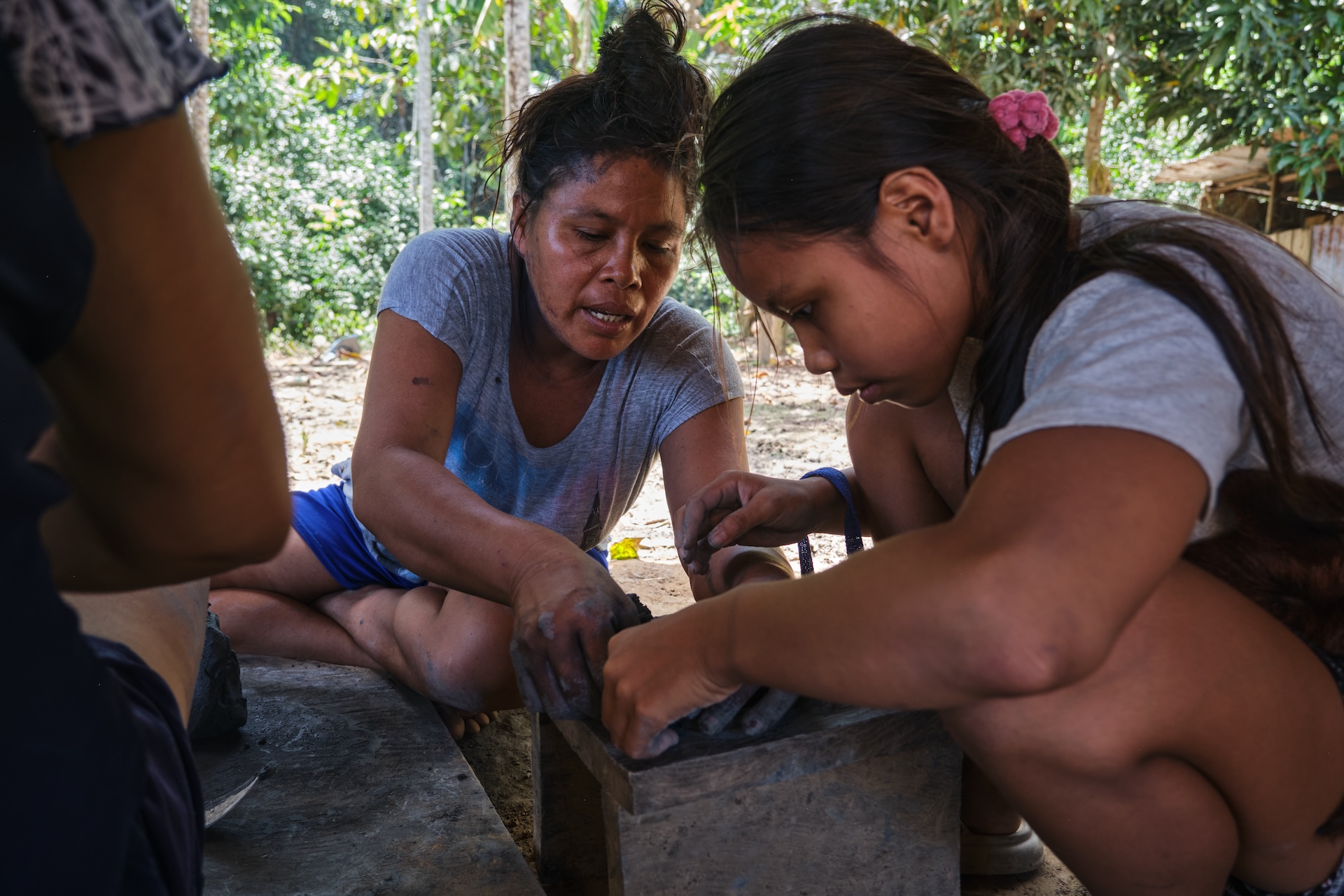
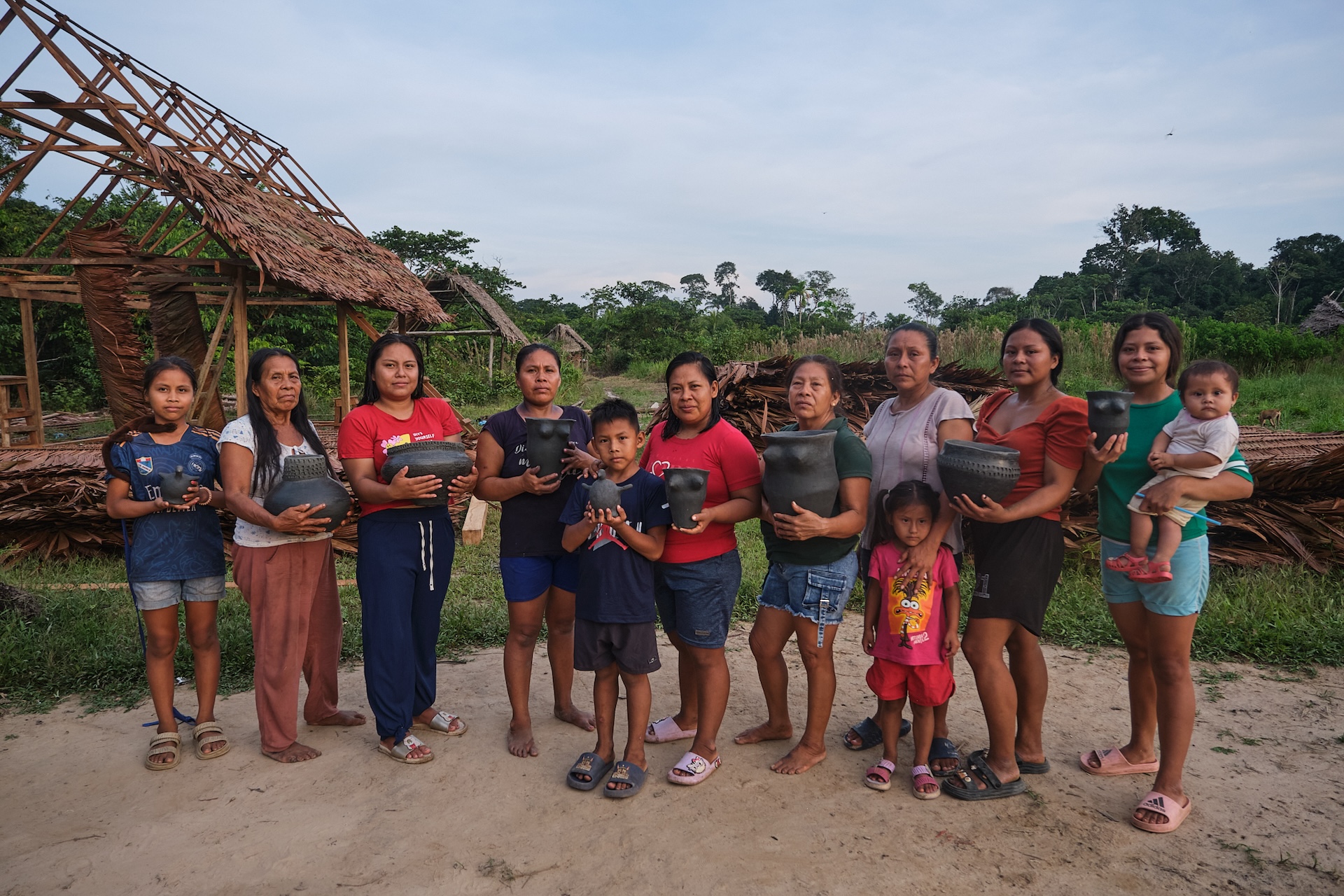
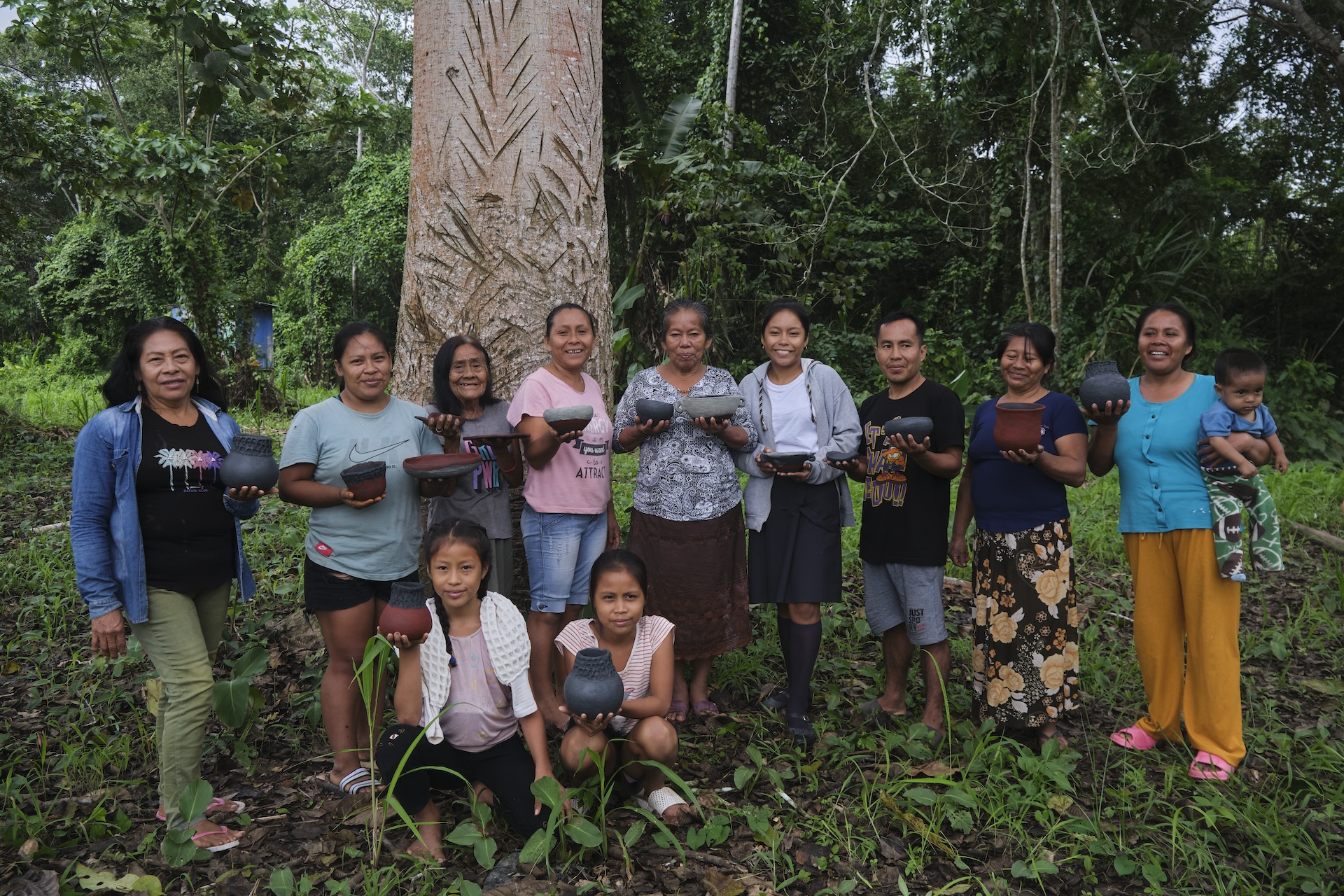
Ceramic production in Iskonawa culture is a traditional activity that is experiencing a revival. Clay harvesting is performed by women with the support of men, who are also responsible for preparing the working space (Rodriguez, 2020). Since 2024, the Xapiri Ground team has been developing workshops with the Iskonawa women, culminating in the first exhibition of their ceramic arts debuting on November 28, 2025 at our gallery in Cusco.
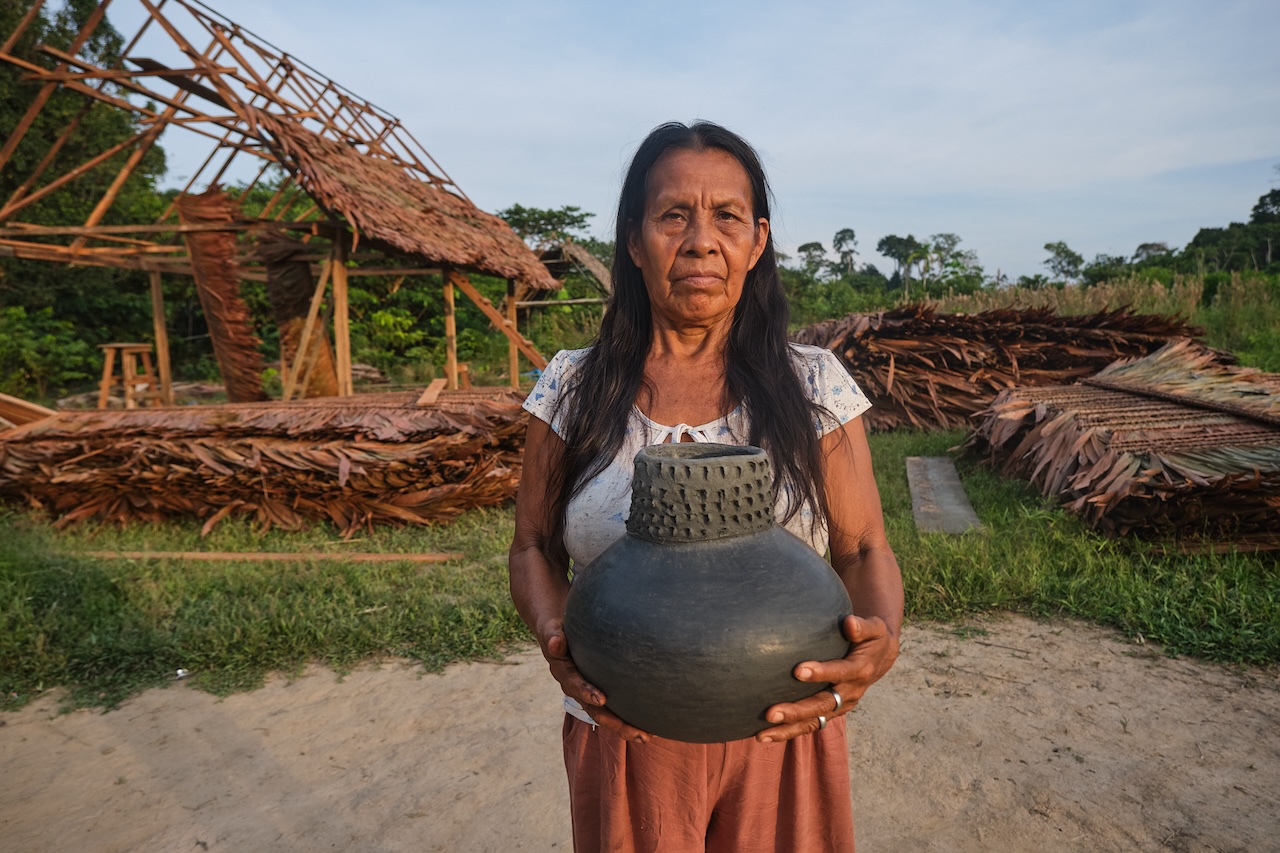
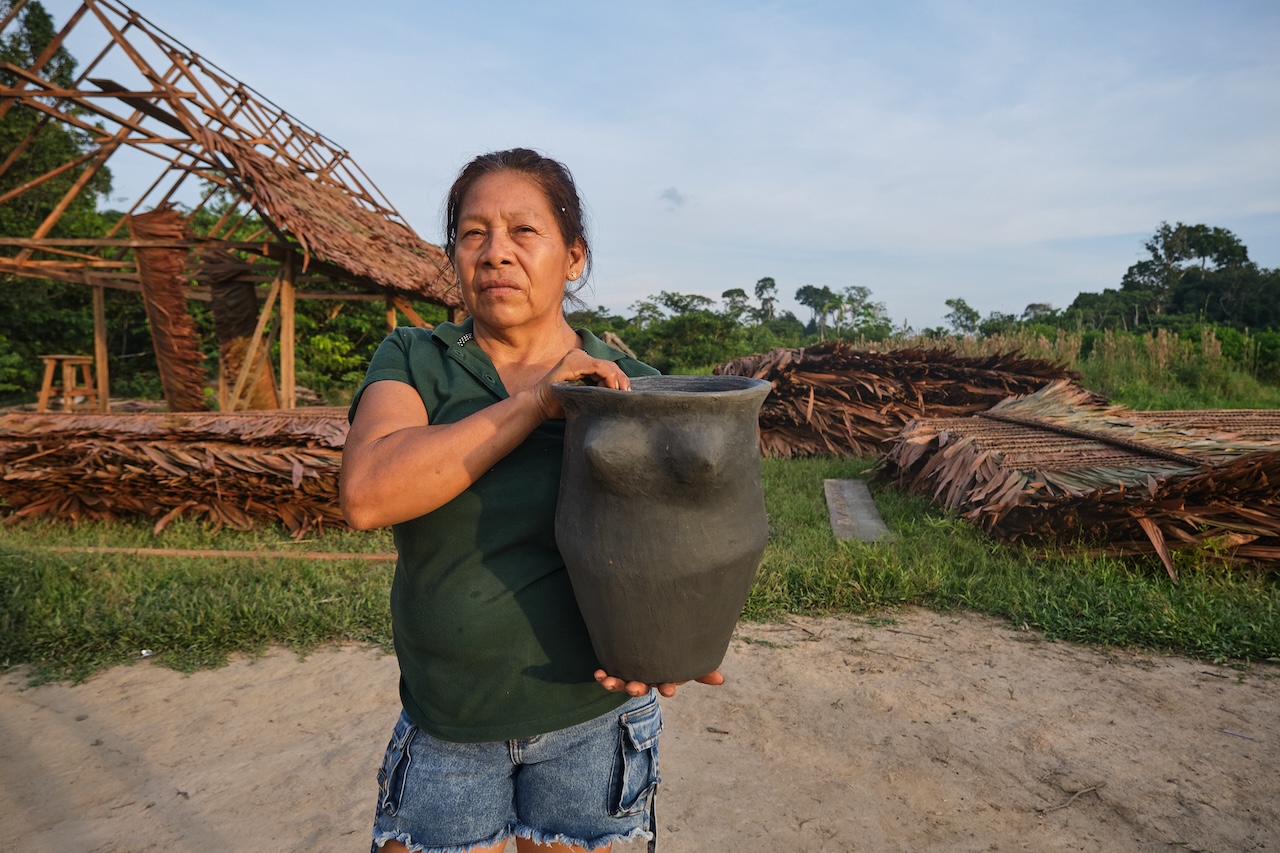
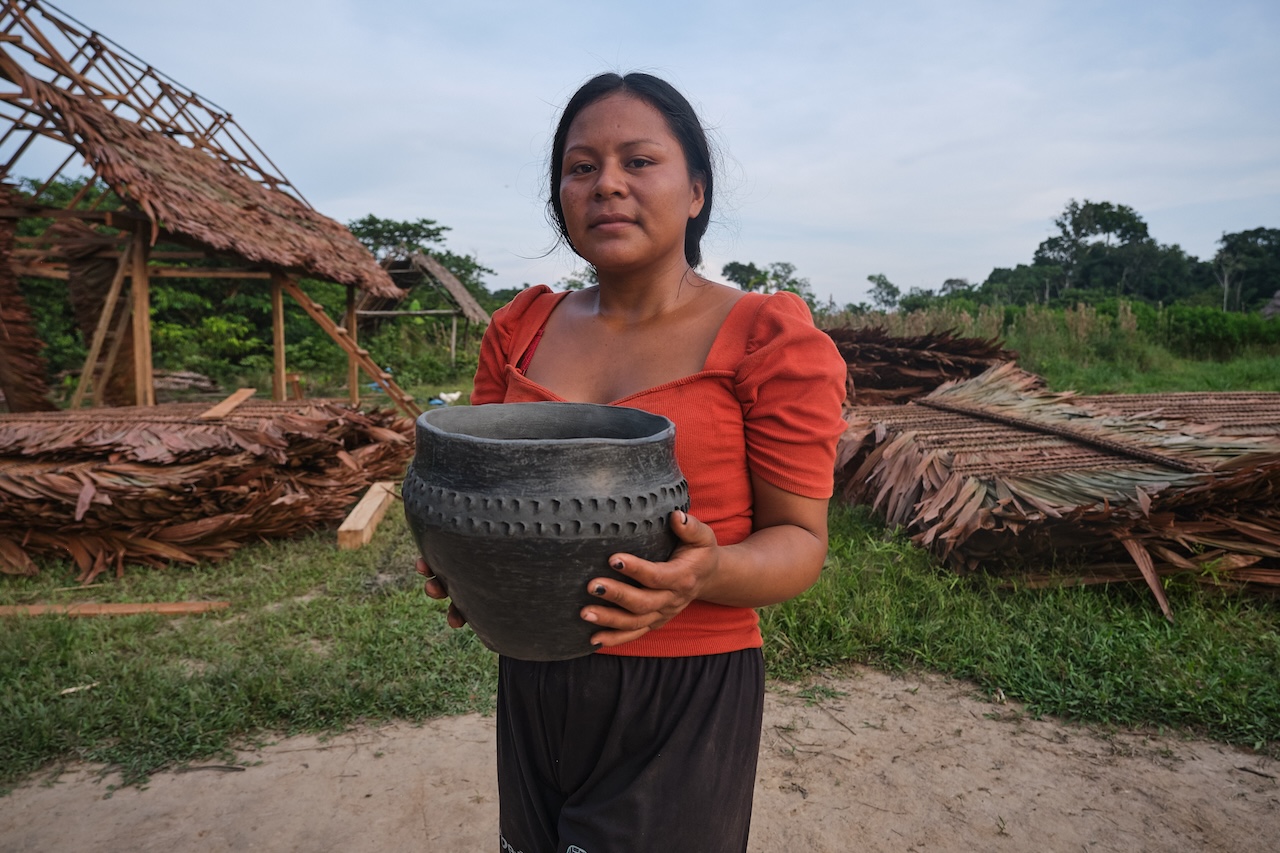
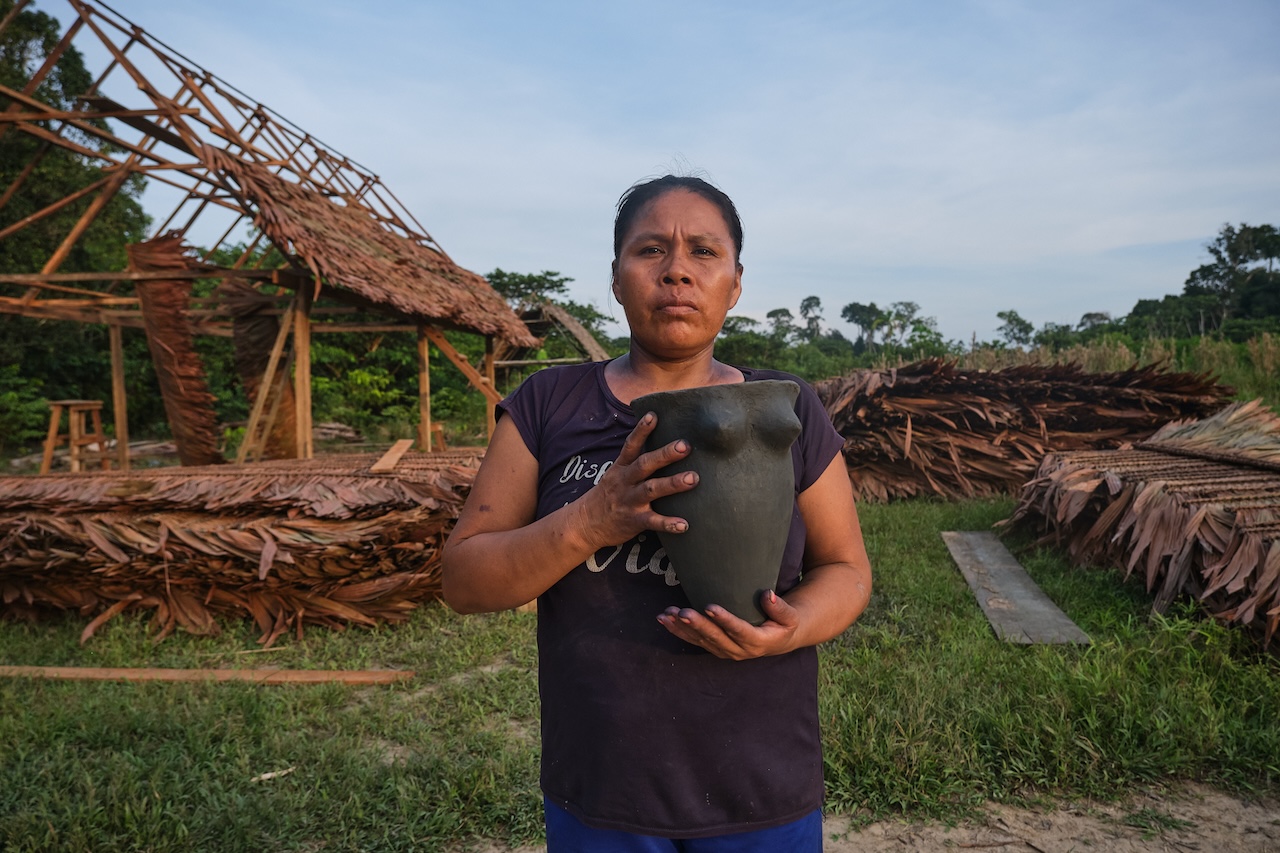
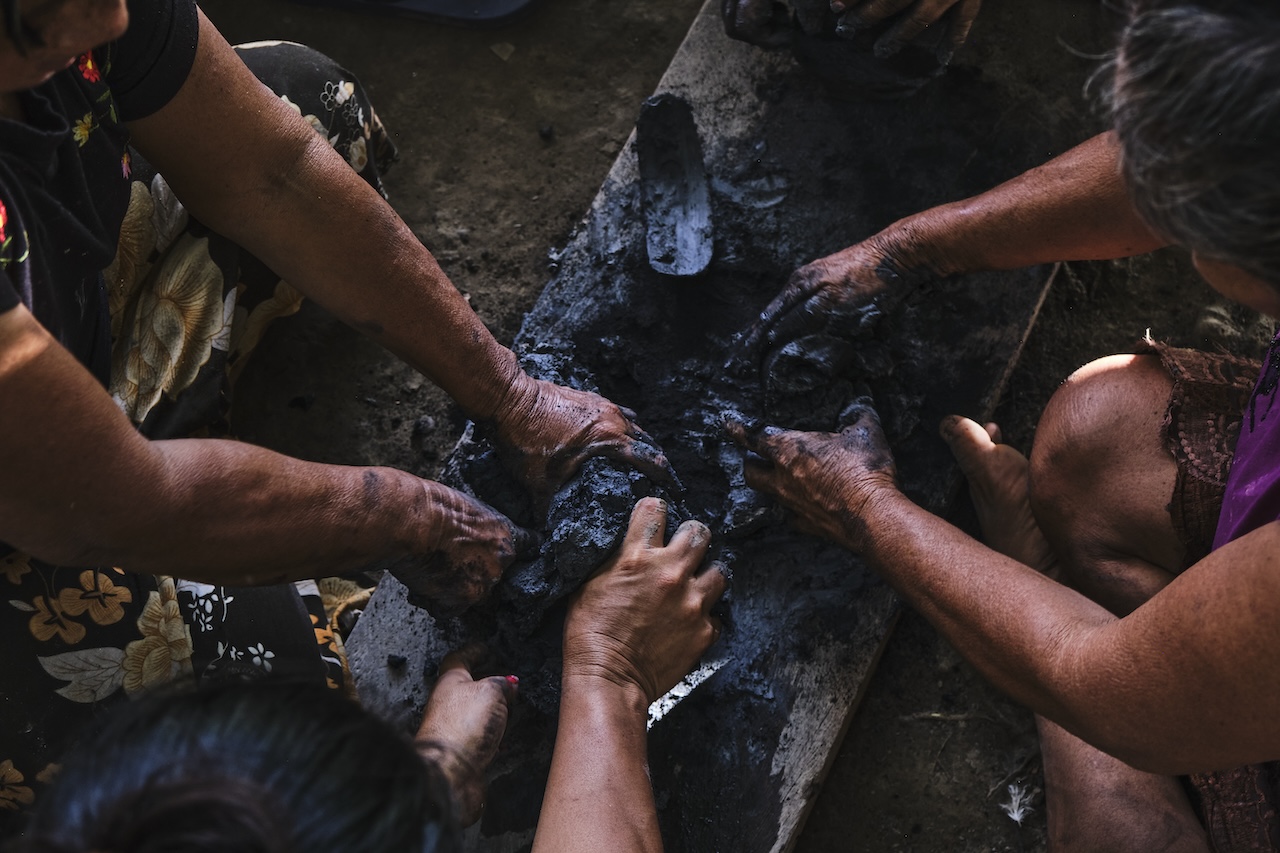
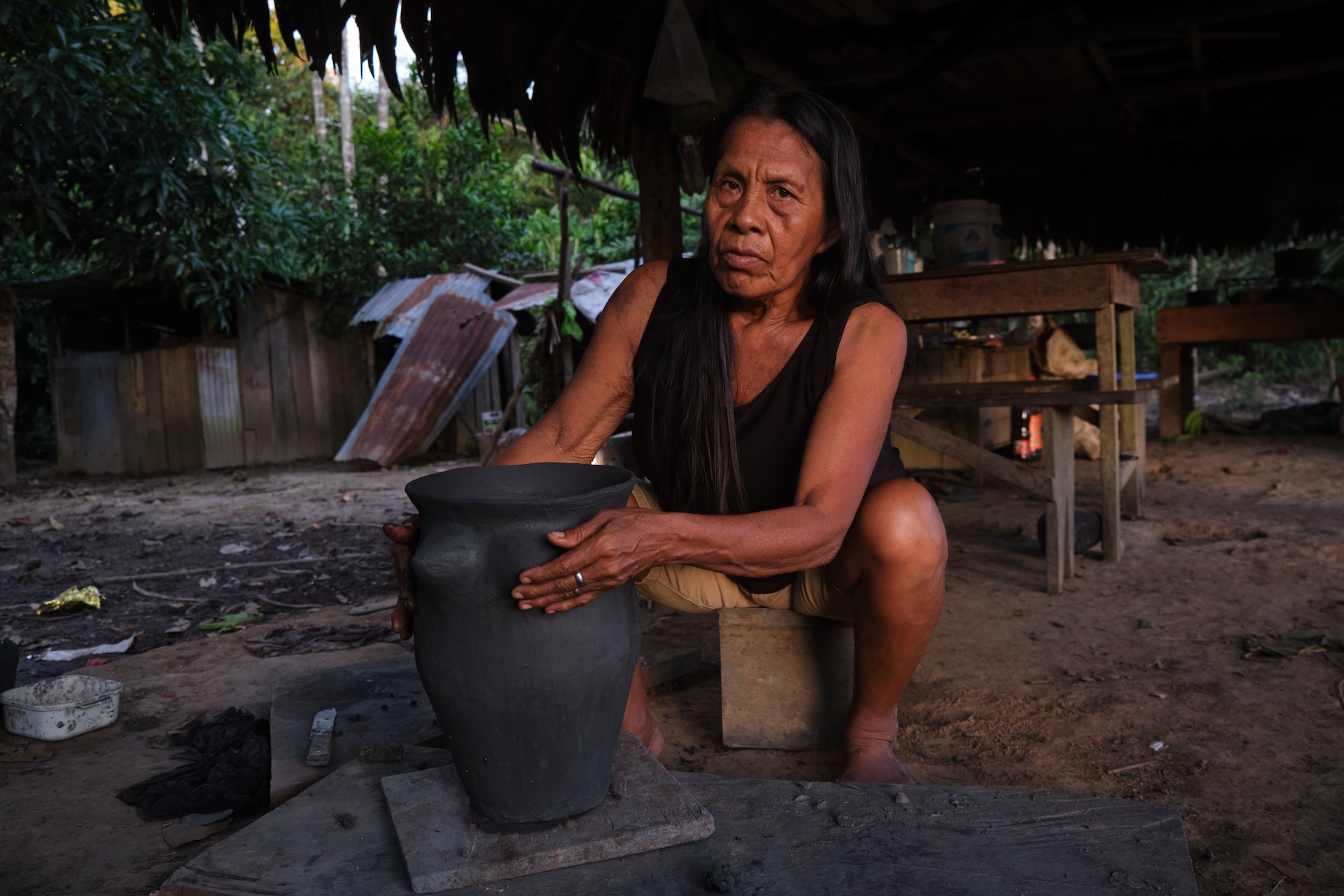
The Iskonawa women make various objects from river clay, utilizing two types of clay that cater to different applications. Black clay or “Cheje Mapu” is for ceramics intended for use in cooking, and white clay or “Mapu” is used for creating vessels that are used for drinking and storing liquids.
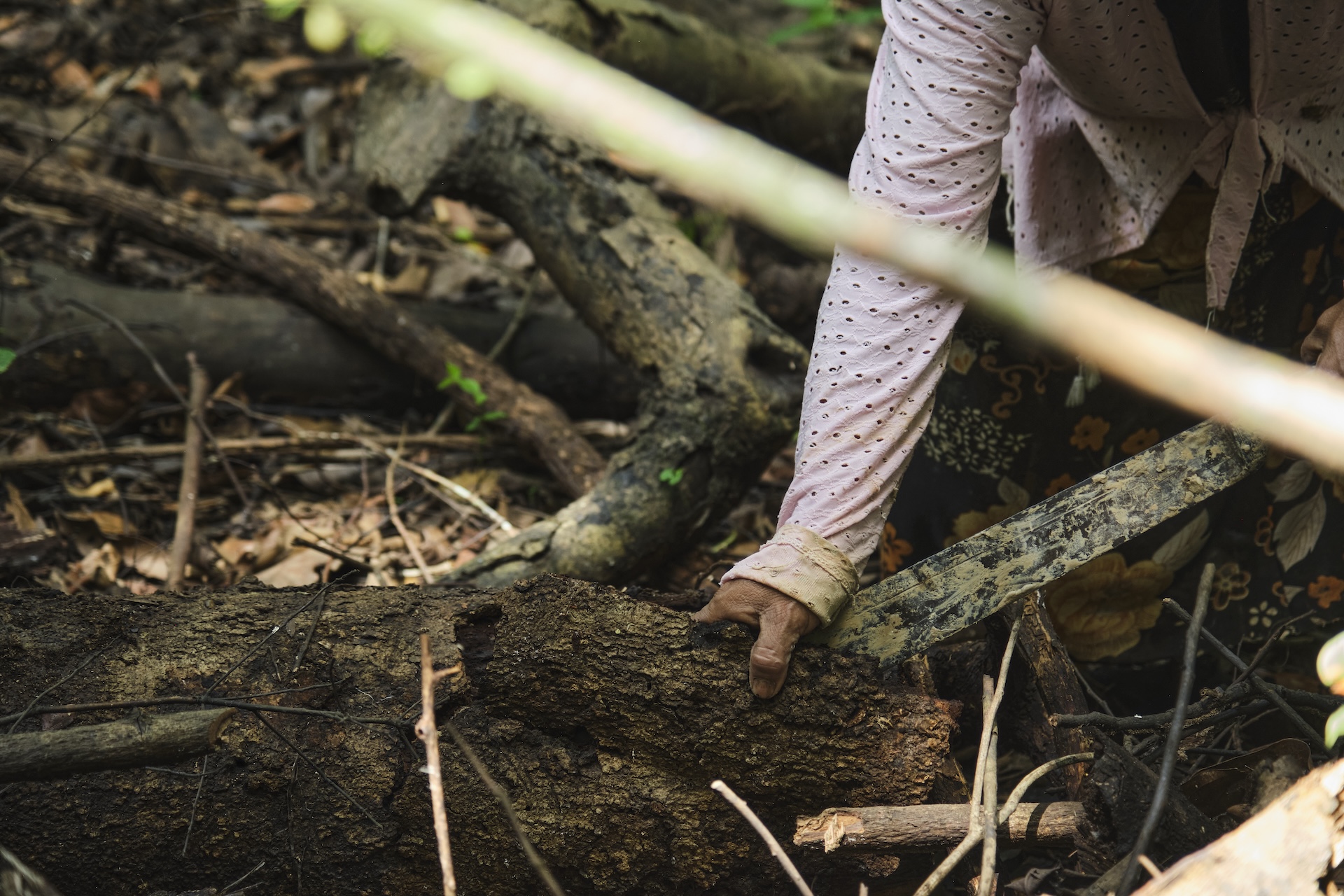
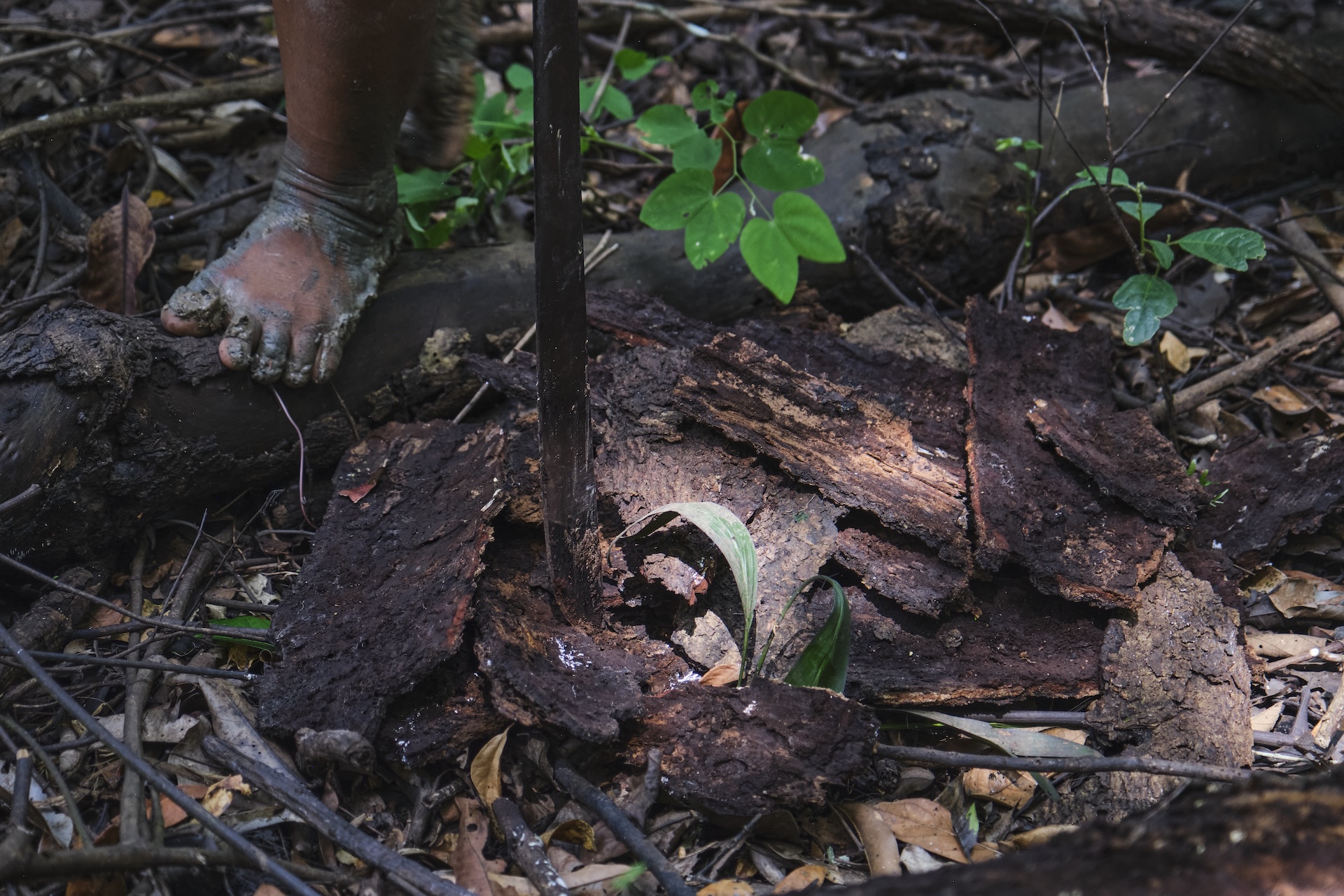
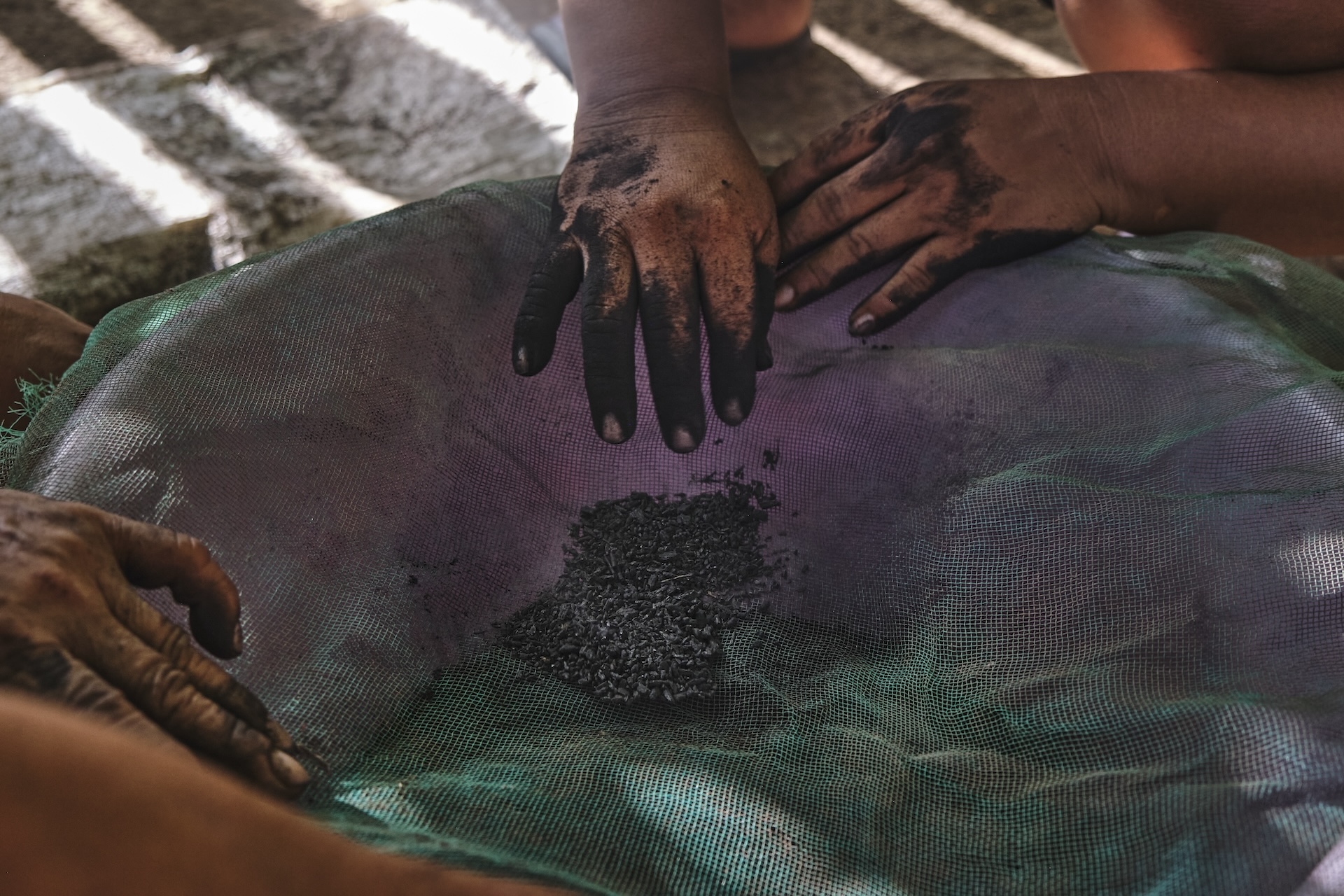
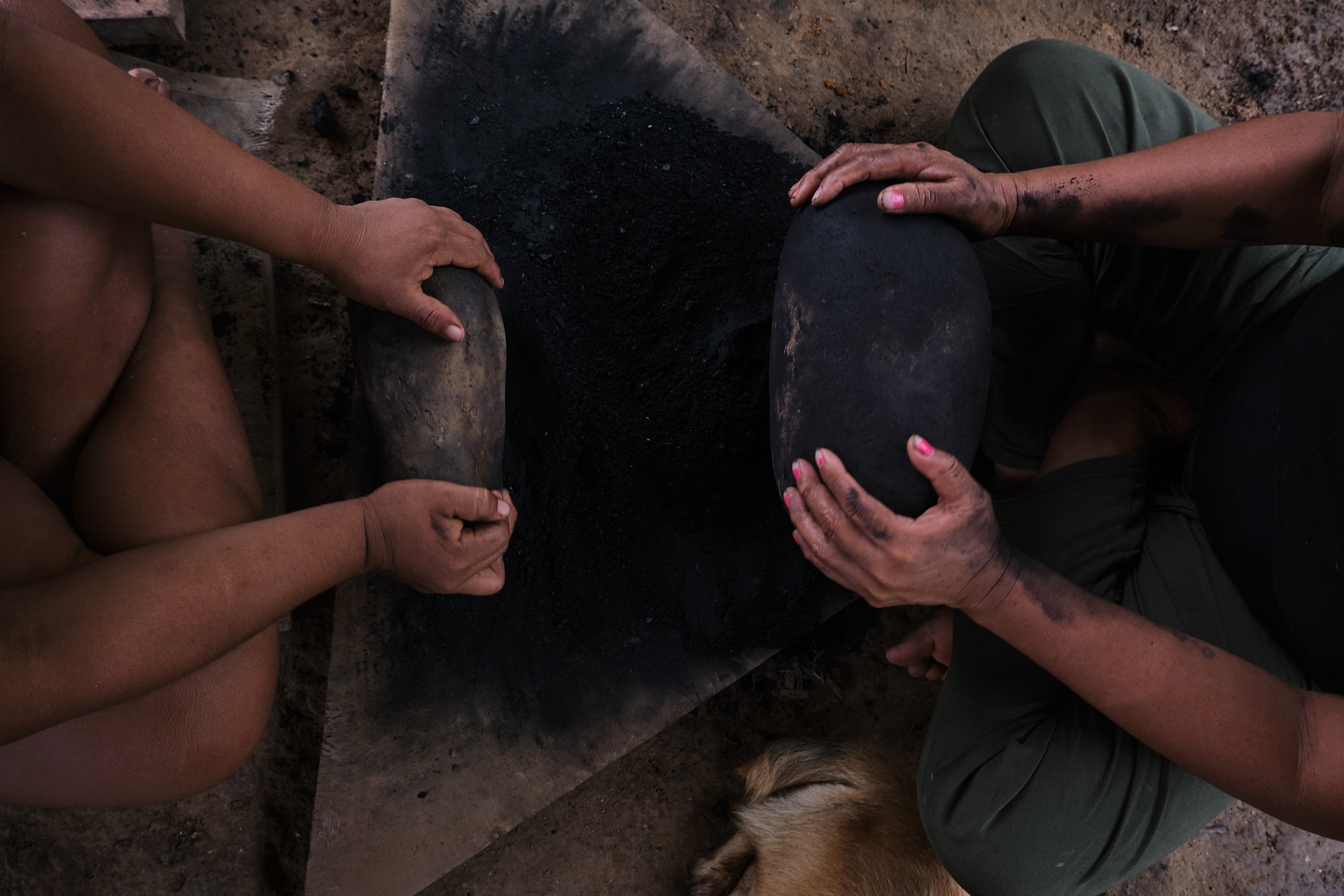
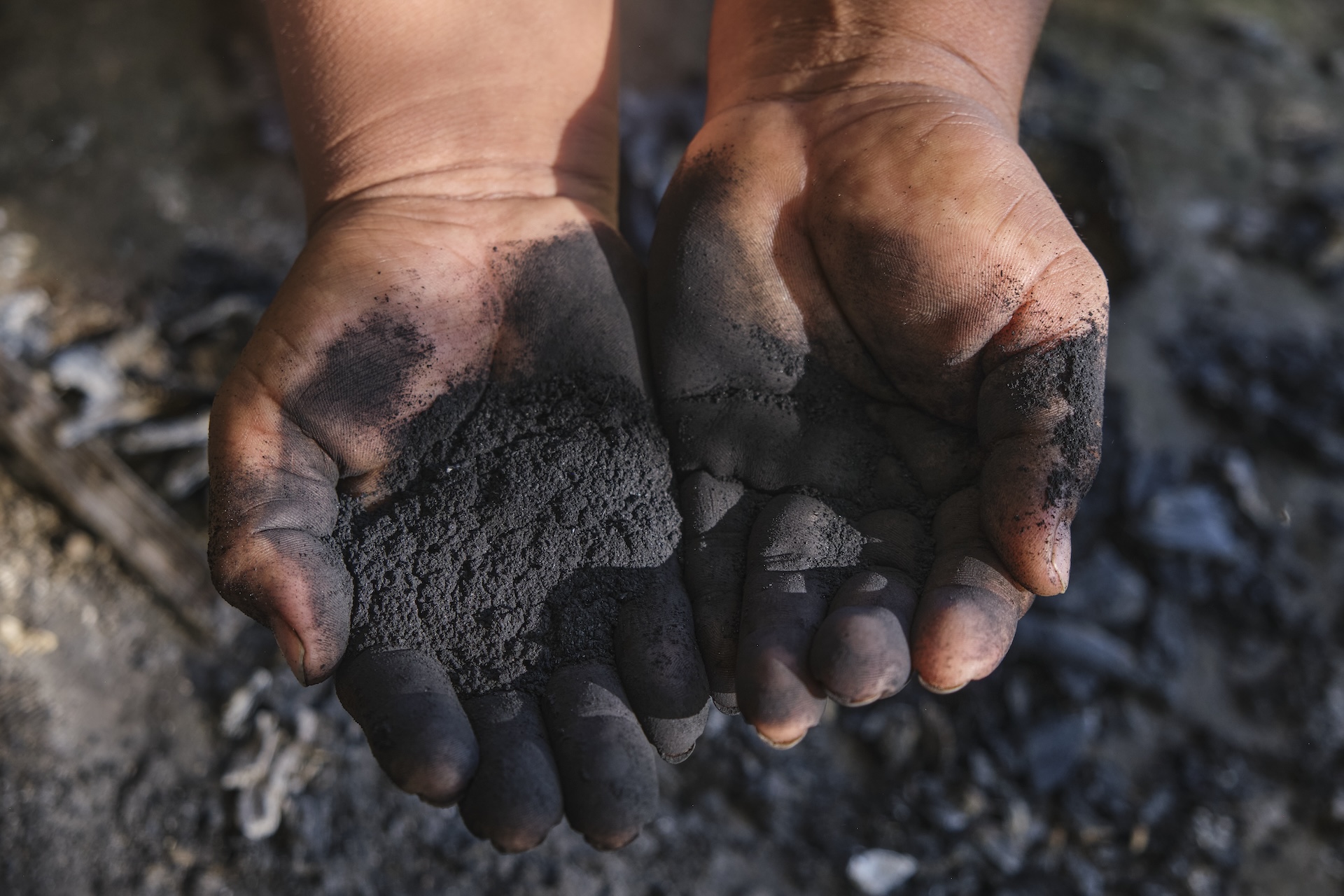
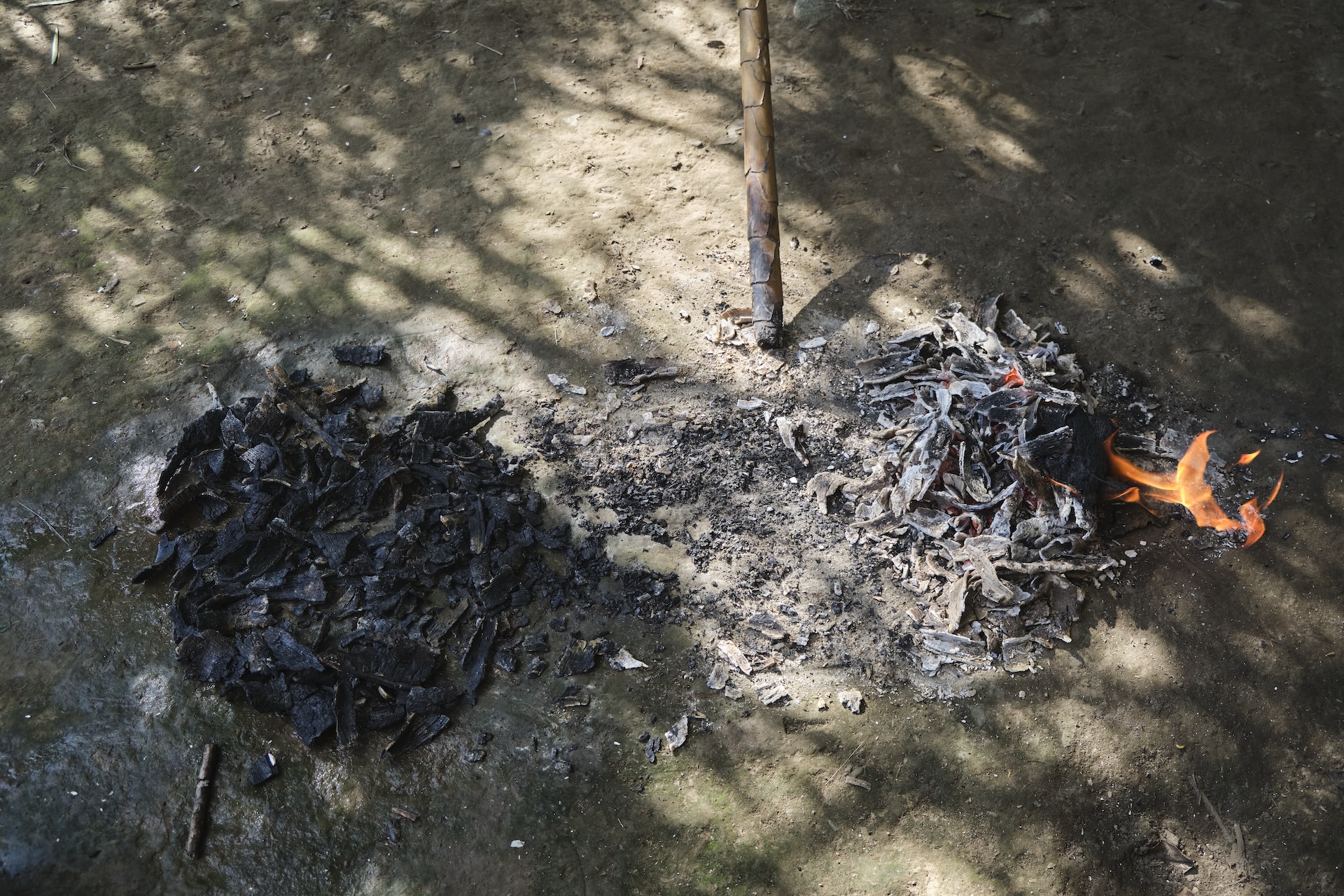
A key ingredient in the ceramic-making process is a tree called Apacharama (NC Hirtella sp.), from which they extract the bark,and burn it to obtain its ash. The ash is then mixed with the clay to ensure the consistency and durability of the ceramics.
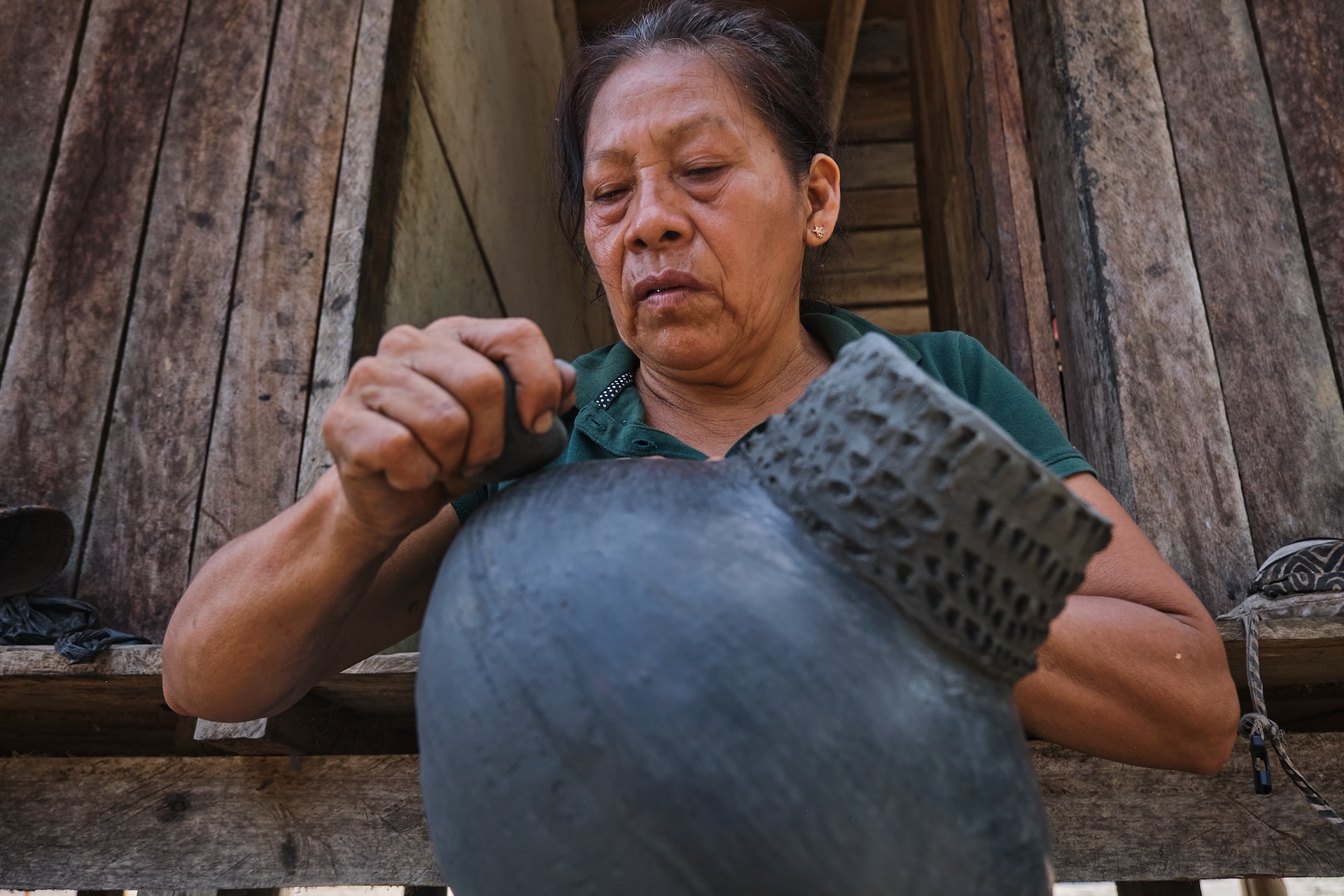
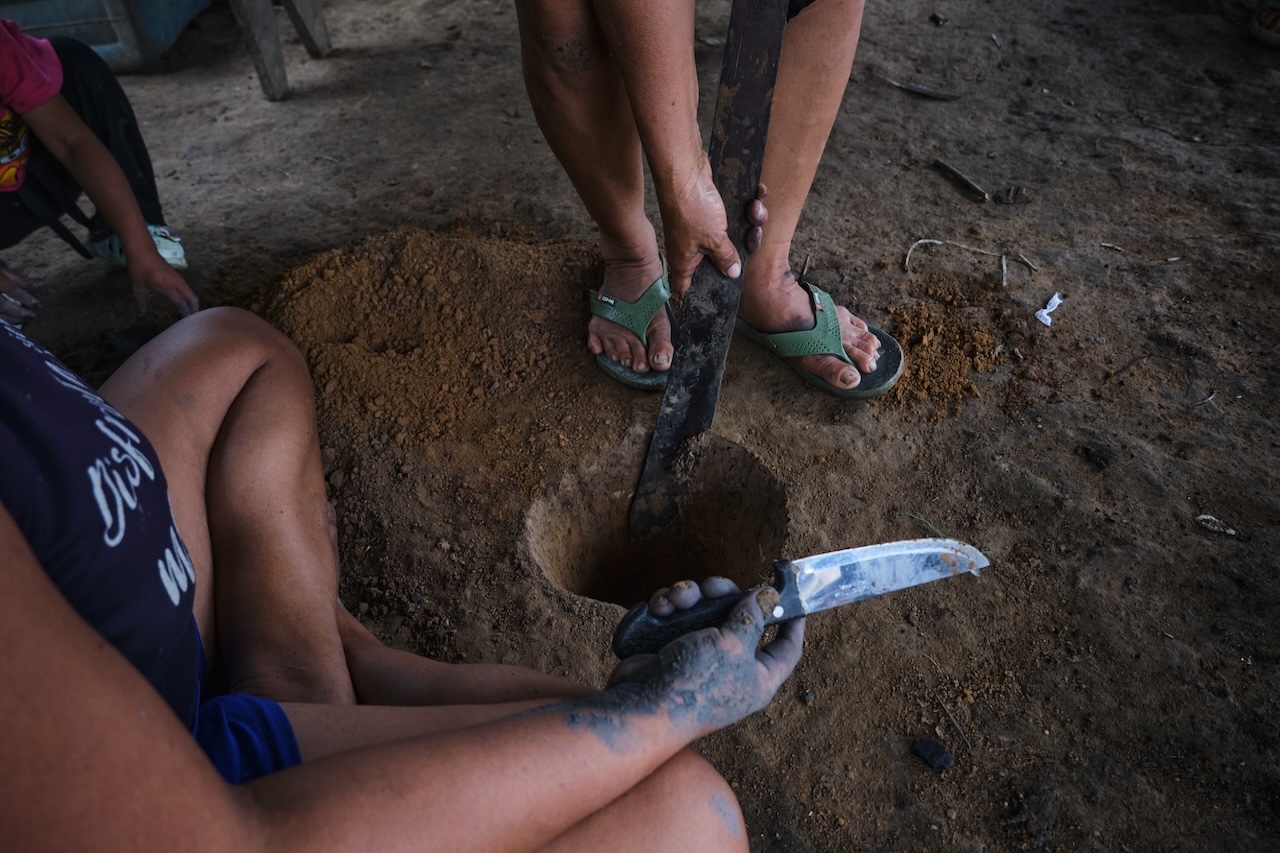
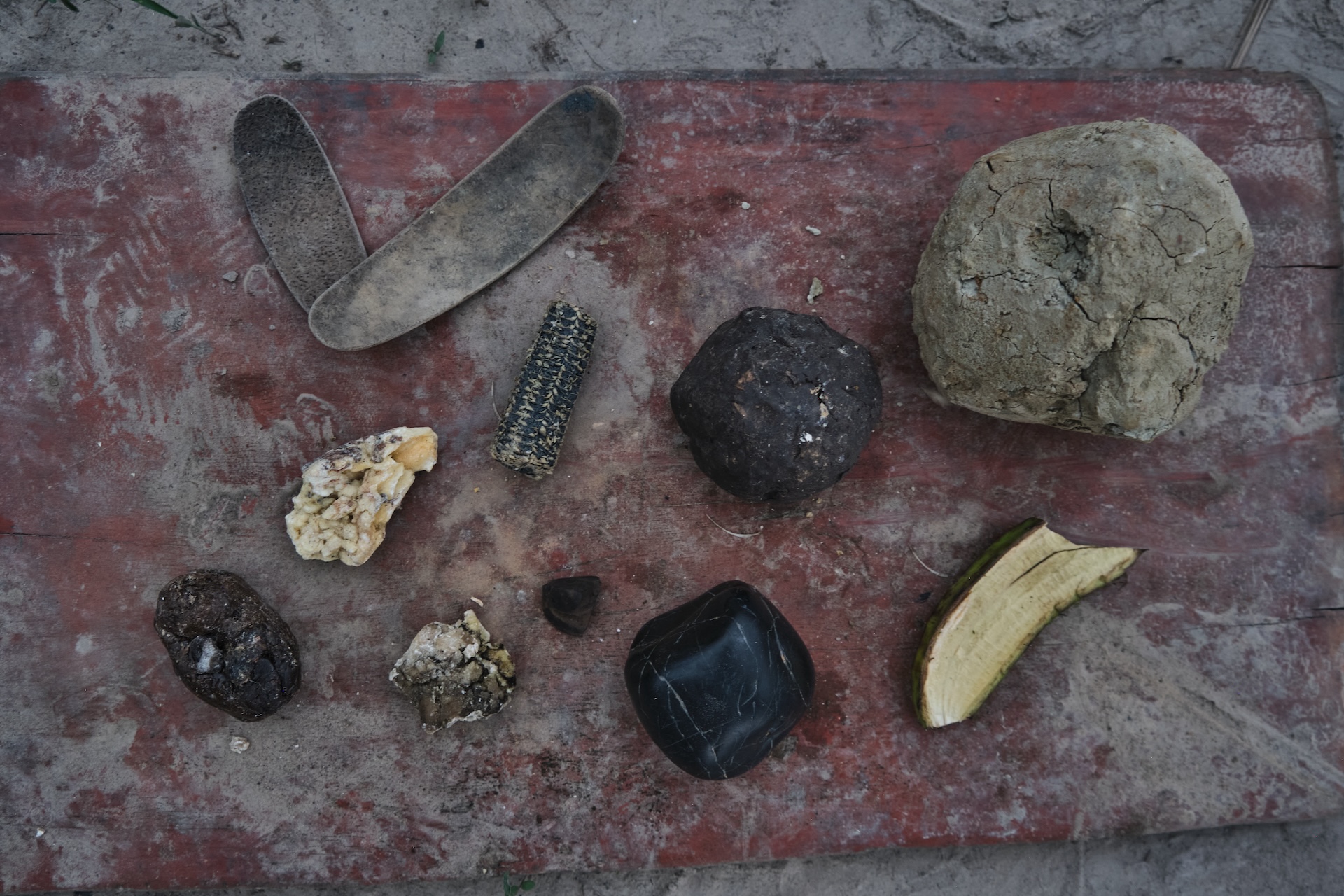
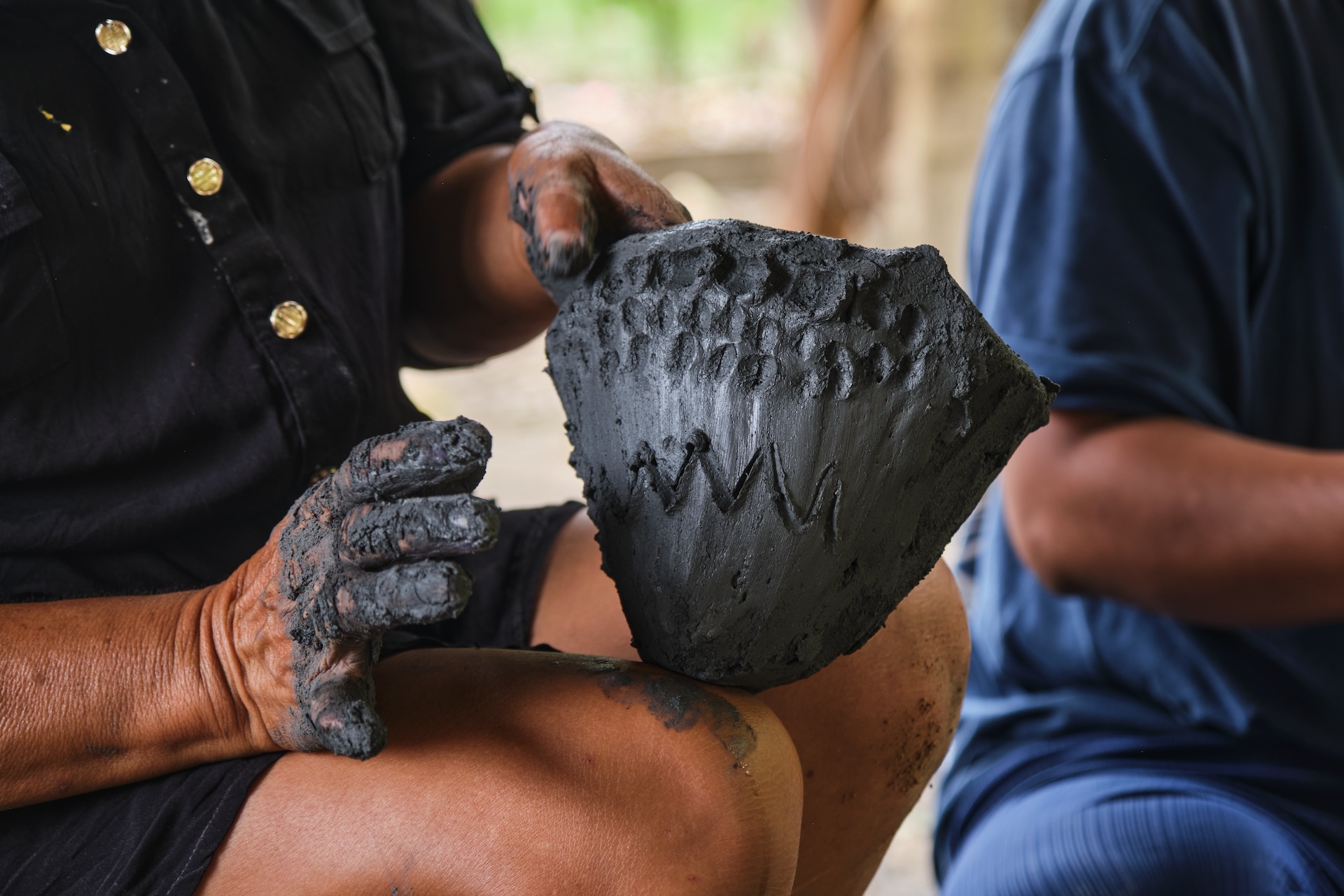
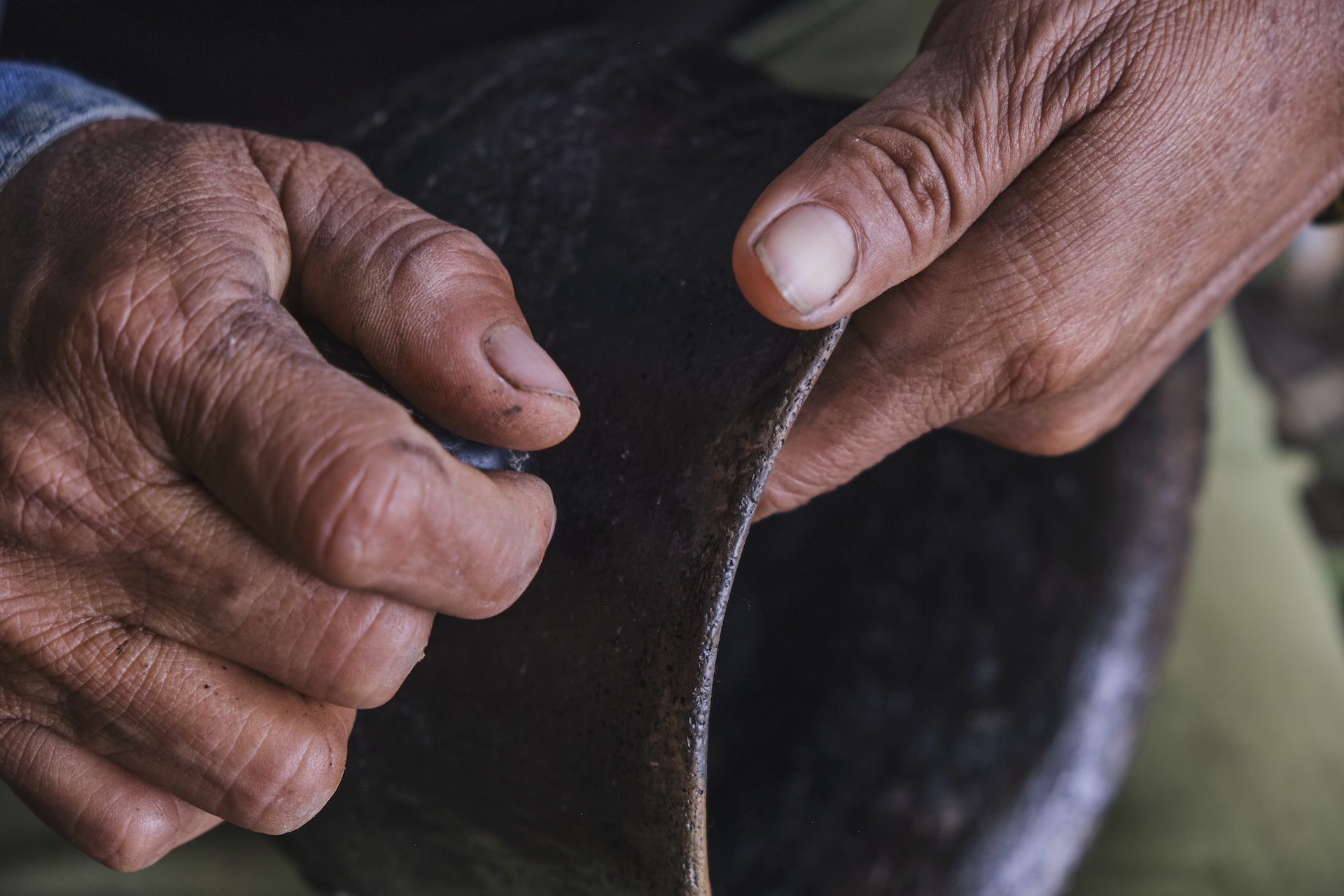
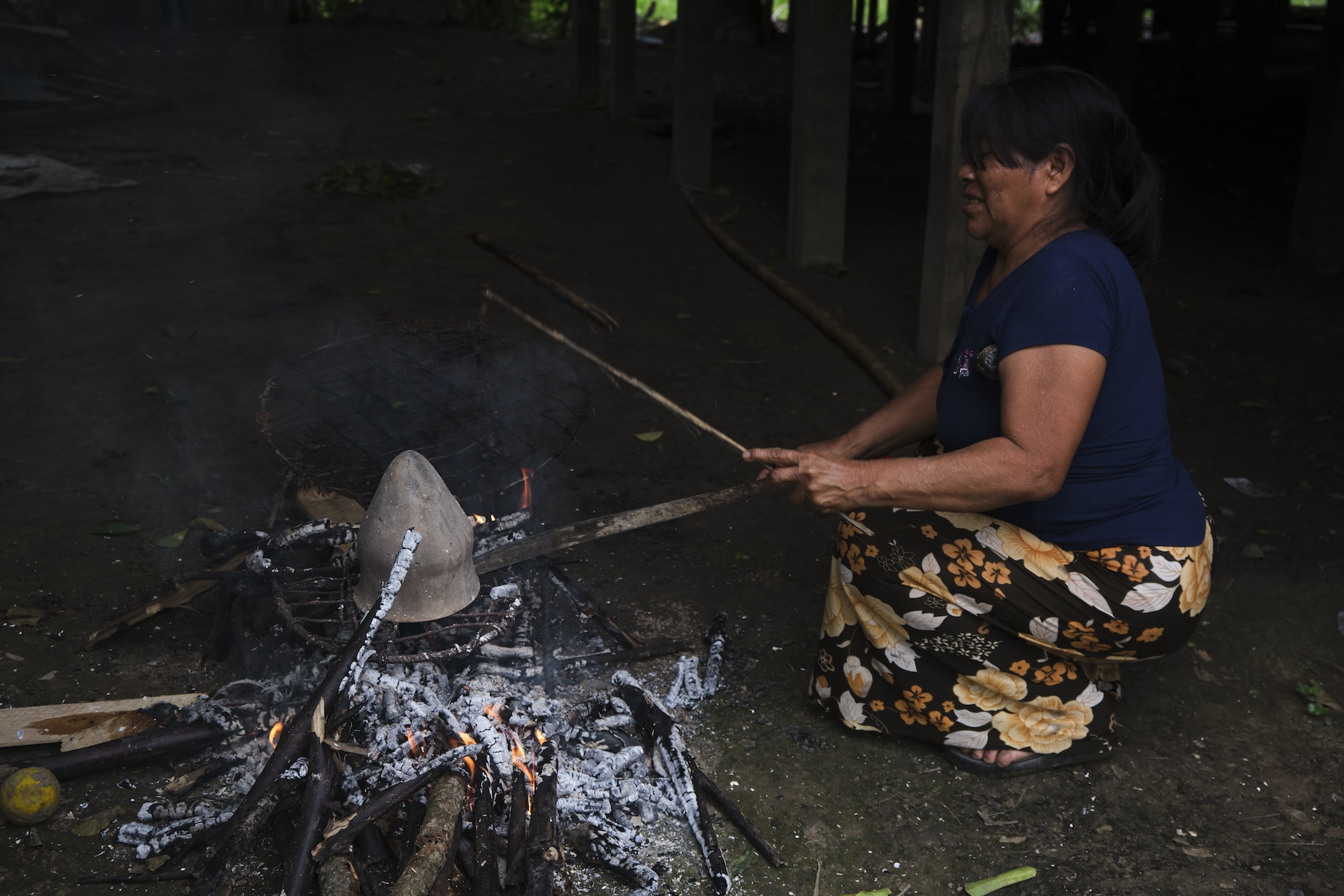
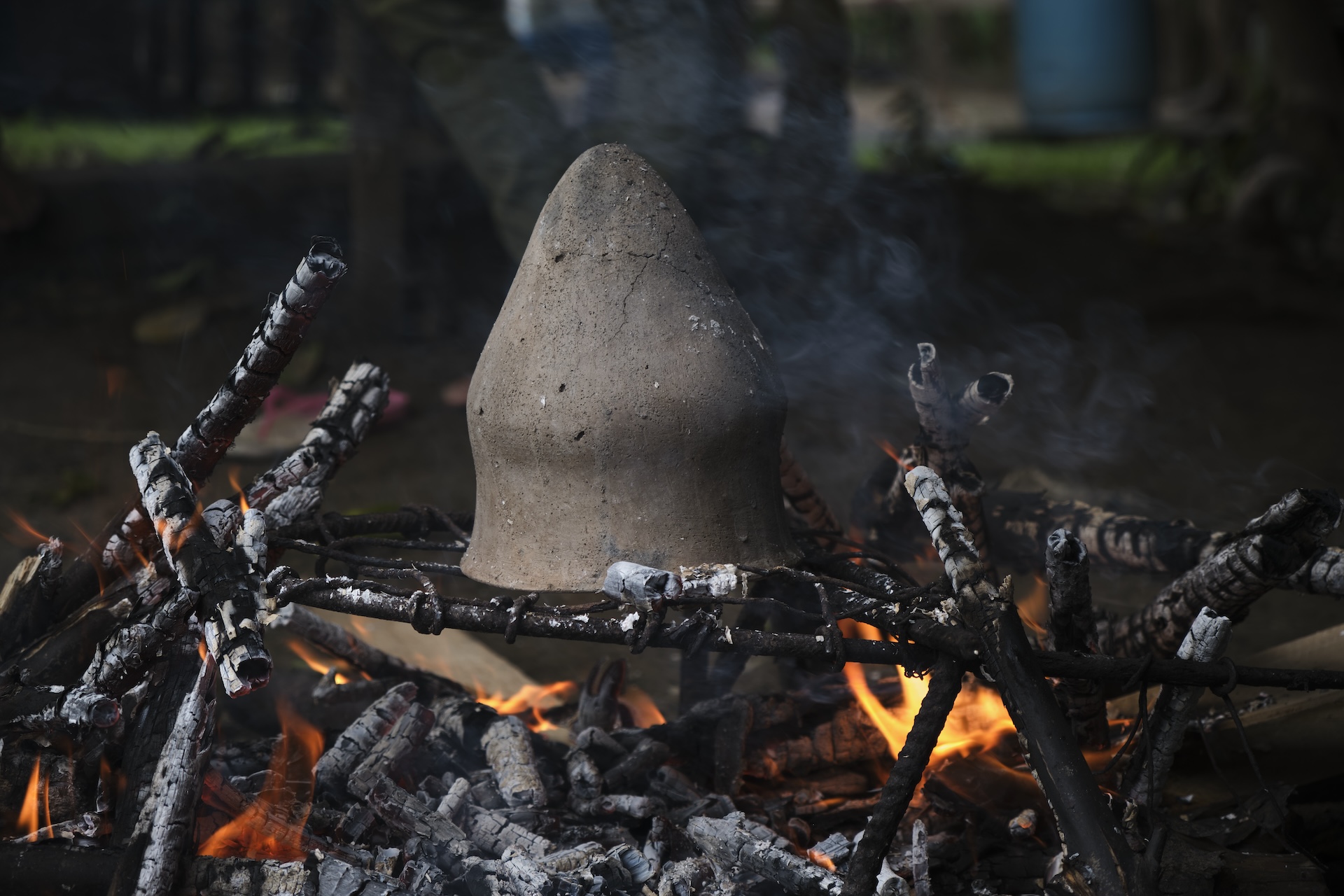
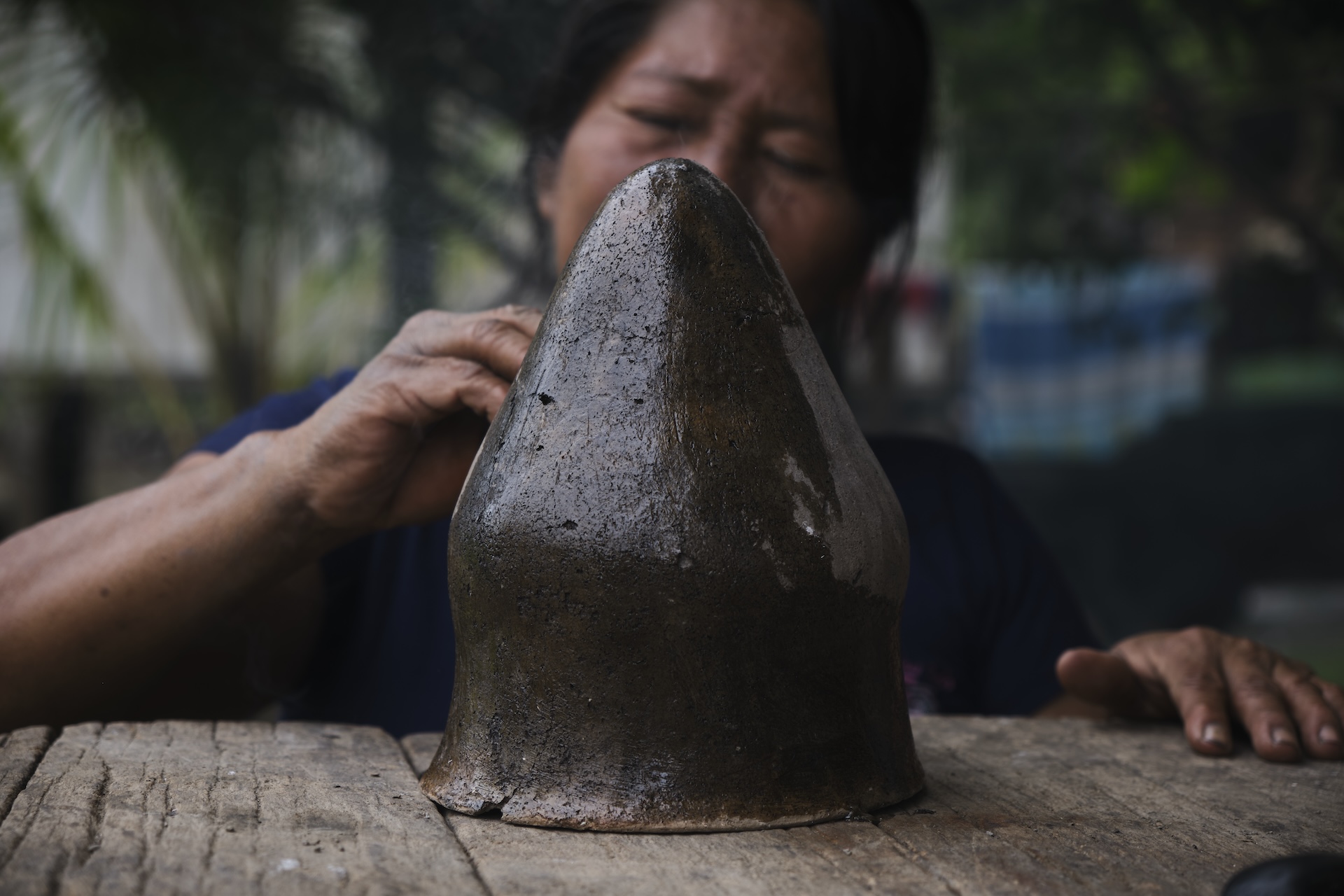
The women shape the clay in their desired forms before sculpting and smoothing the clay with various tools sourced from the forest. For constructing the cone-shaped ceramics, which are used for storing beverages, they must first dig a hole in the ground, lining it with leaves before molding the clay inside the hole to create the cone-shaped foundation. Then the clay is shaped to the desired design using tools such as a spatula made of gourd called "Masen," and a dried banana peel. The last step before firing is to polish the ceramics using a corn hob or "Heko" along with a special river stone or "Chejoroe."
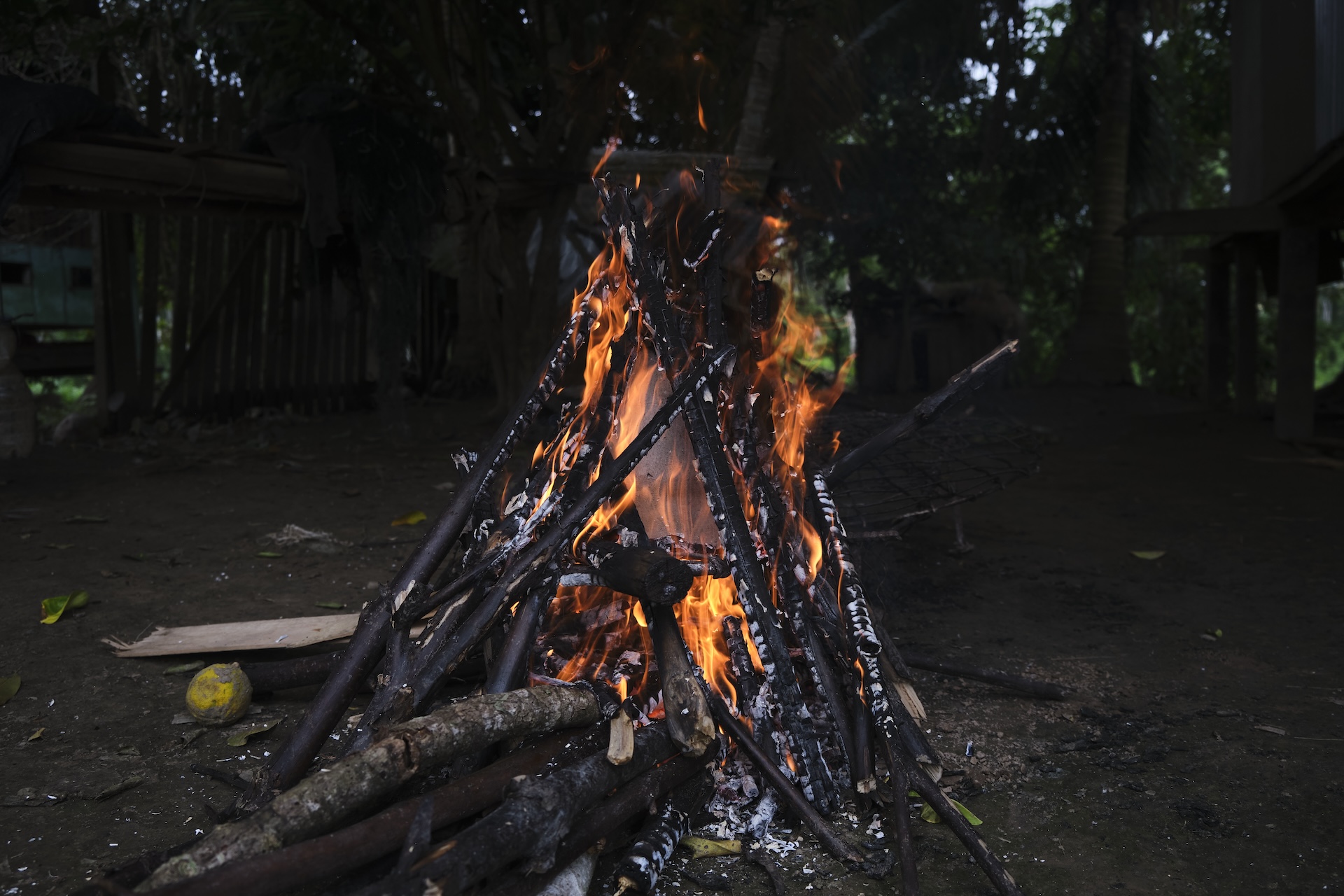
After firing the ceramics, while the pieces are still red hot, the women would add copal or “bin,” to the interior of the ceramic to seal the clay, followed by a natural tree resin to varnish the exterior.
Traditionally, during the ceramic-making process, the woman who molds the clay would be responsible for maintaining a strict diet, which meant that she had to rest and refrain from physically demanding activities, as this could cause the clay object she’d created to crack or break easily.
“You have to ask permission so that the clay doesn't break, so that you don’t get sick. The clay has its owner, and if you don't ask permission, you could also become sick.” ~ Teresa Rodriguez Campos.
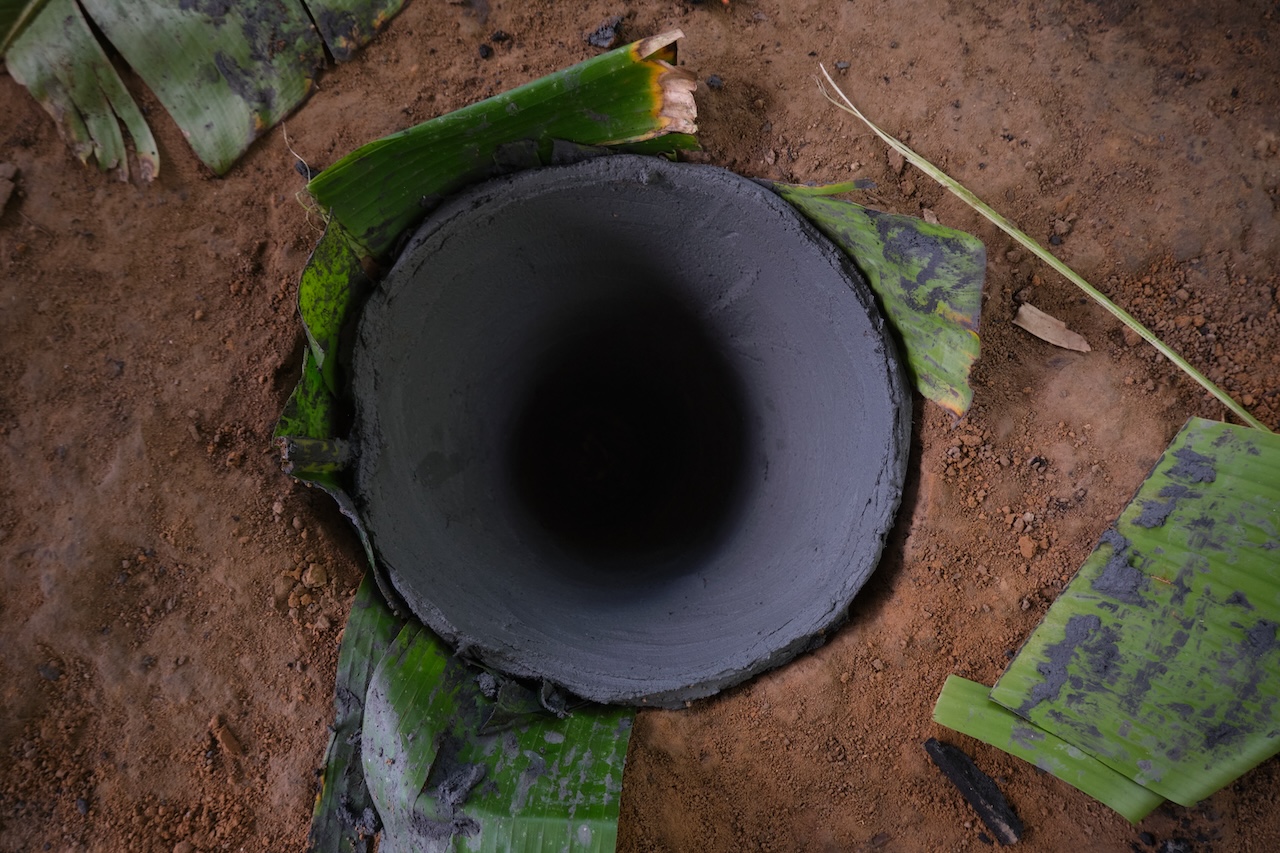
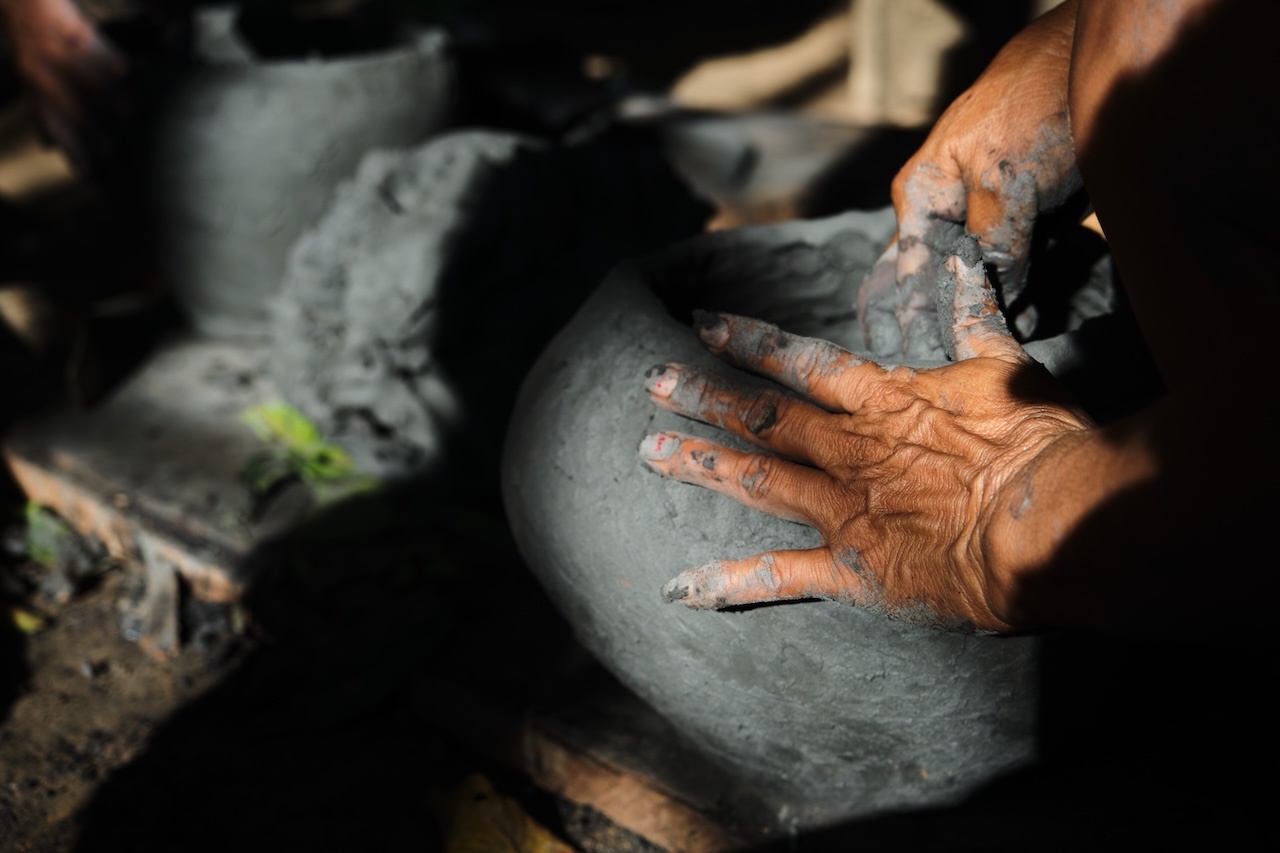
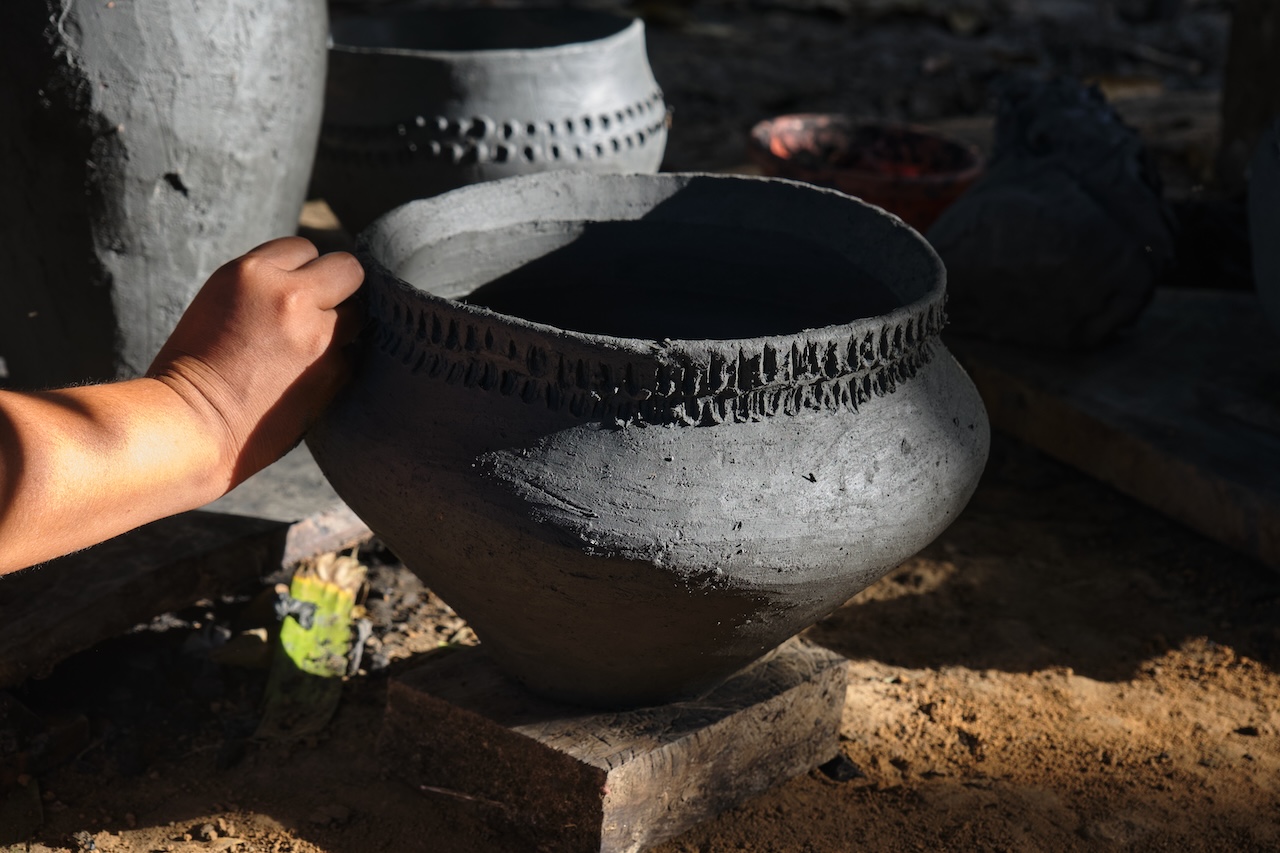
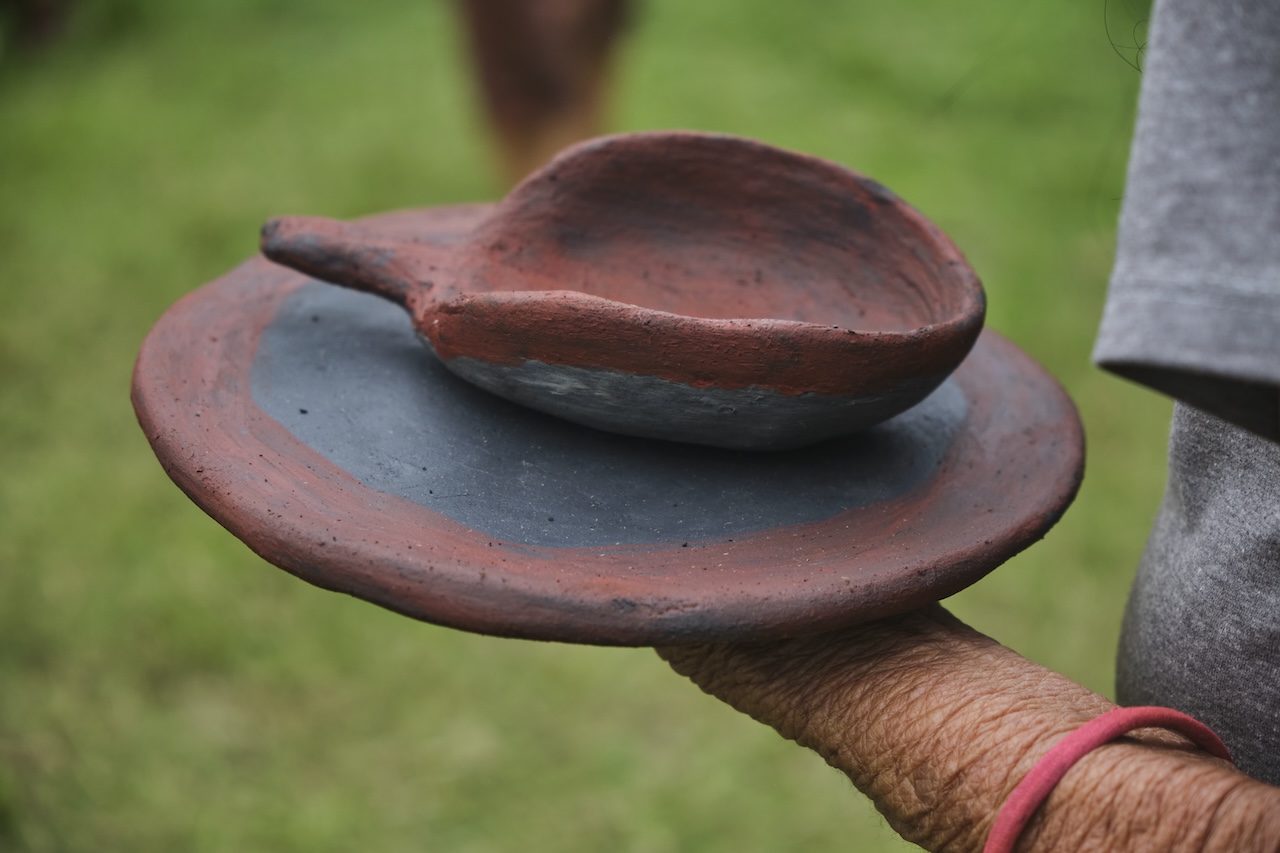
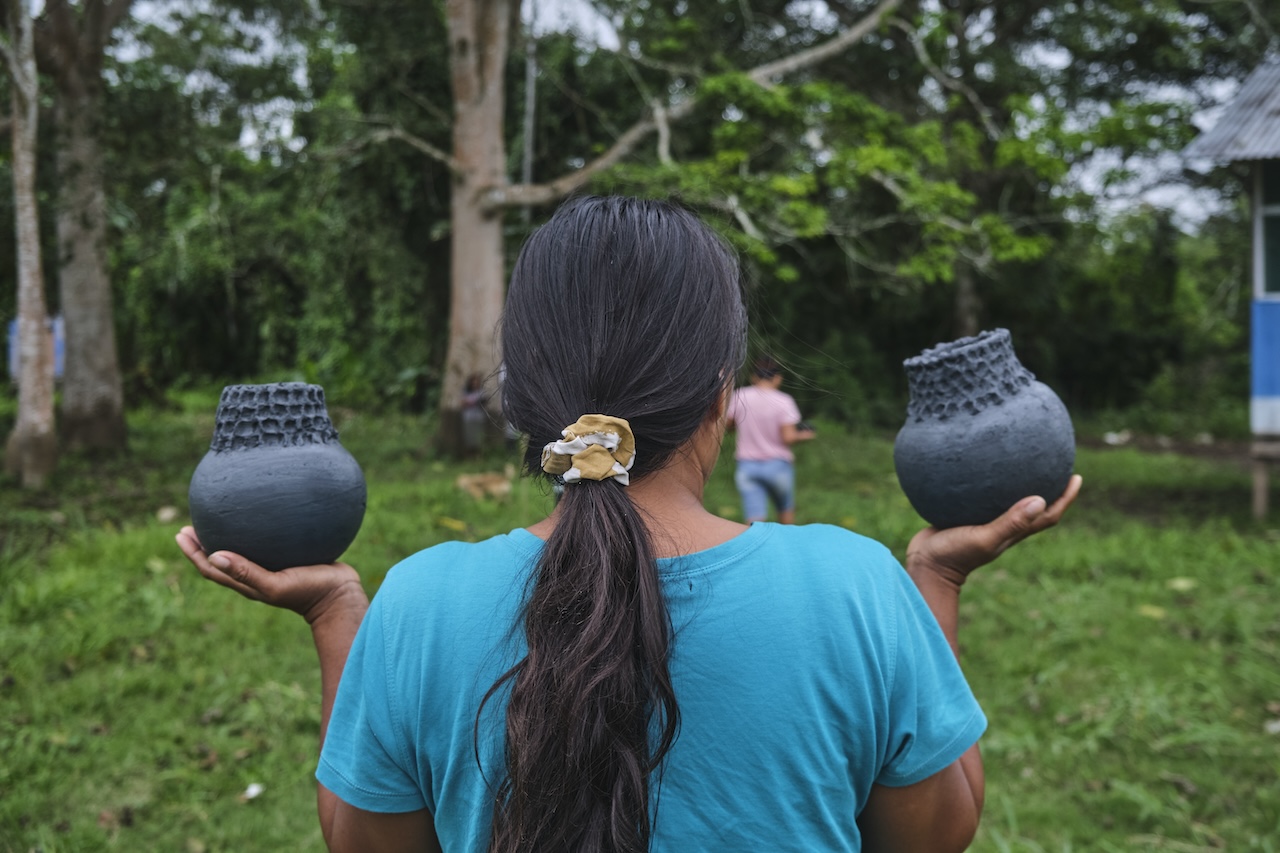
Special songs are also traditionally sung while making ceramics for the family to ensure its longevity and honor its functionality. Below are some names and styles of pottery made by the Iskonawa women, based on research conducted by the anthropologist Carolina Rodriguez Alzza:
“Washpa,” a large pot with a wide opening and a flat base, is used by the Iskonawas to cook meat. To cover it, a plate called a “Sapa” was used as a lid. This pot was usually decorated with a serrated rim around the mouth, shaped by a series of lines marked by finger pressure.
“Keti,” a large pot with a wide opening and a conical base, is used by the Iskonawa to cook and store liquids in general. During special festivities, this pot was used to preserve chica made from fermented corn.
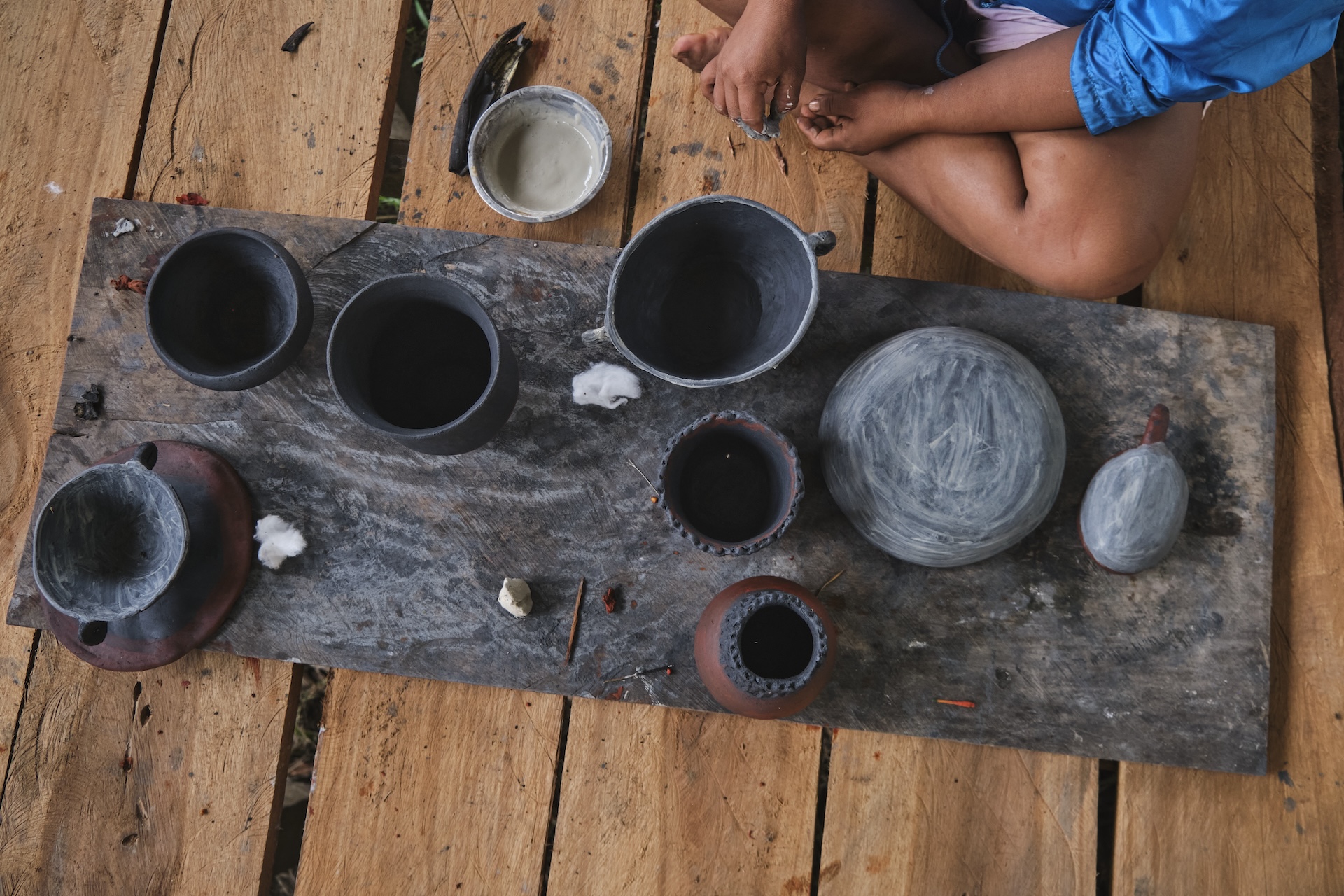
“Mapa Roe” is a small pot with a narrow neck used for storing water. It is usually decorated with a serrated rim around the mouth, which is often adorned with a series of lines marked by finger pressure. Sometimes, the body of the pot was painted entirely red using achiote.
“Nain mapo” is a medium-sized pot with a wide mouth and a flat base, identified by two handles on the sides. It was mainly used to transport water. The Iskonawa also refer to metal pots by this same name.
“Choma” is a medium-sized bowl that has a wide mouth and a flat base, and in some cases, it has a small spout. The Iskonawas used it to pour and serve various types of liquids.
Tobanti is a medium-sized platter and was used by the Iskonawas to toast cassava and corn flour.



.png)