

Worlds between worlds
During October and November 2025, we developed a large-scale art project in Pucallpa, in co-creation with the USKO-AYAR school of Amazonian painting. A 16-metre-long mural, consisting of five sections, was painted over the course of a month by five USKO-AYAR professors and ex-alumnos of Pablo Amaringo, and local Indigenous artists. This mural was in celebration of the life and teachings of Don Pablo Amaringo, the artist and master who founded the USKO-AYAR school in 1989.
This project was in response to an earlier exhibition, “Neo-Amazónico / Pablo Amaringo” which debuted at the Xapiri Ground gallery in December 2024, featuring the early works of a master whose painting style established the Neo-Amazonian school of depicting the Amazonian flora and fauna to help spread the message of nature conservation. Fredy Kugler, whose collection of Pablo’s artwork was the emphasis of the exhibit, always had it as his wish that once the exhibition had ended, the monies raised from the sale of the art could go towards a social project in the Pucallpa region that Xapiri Ground would develop.

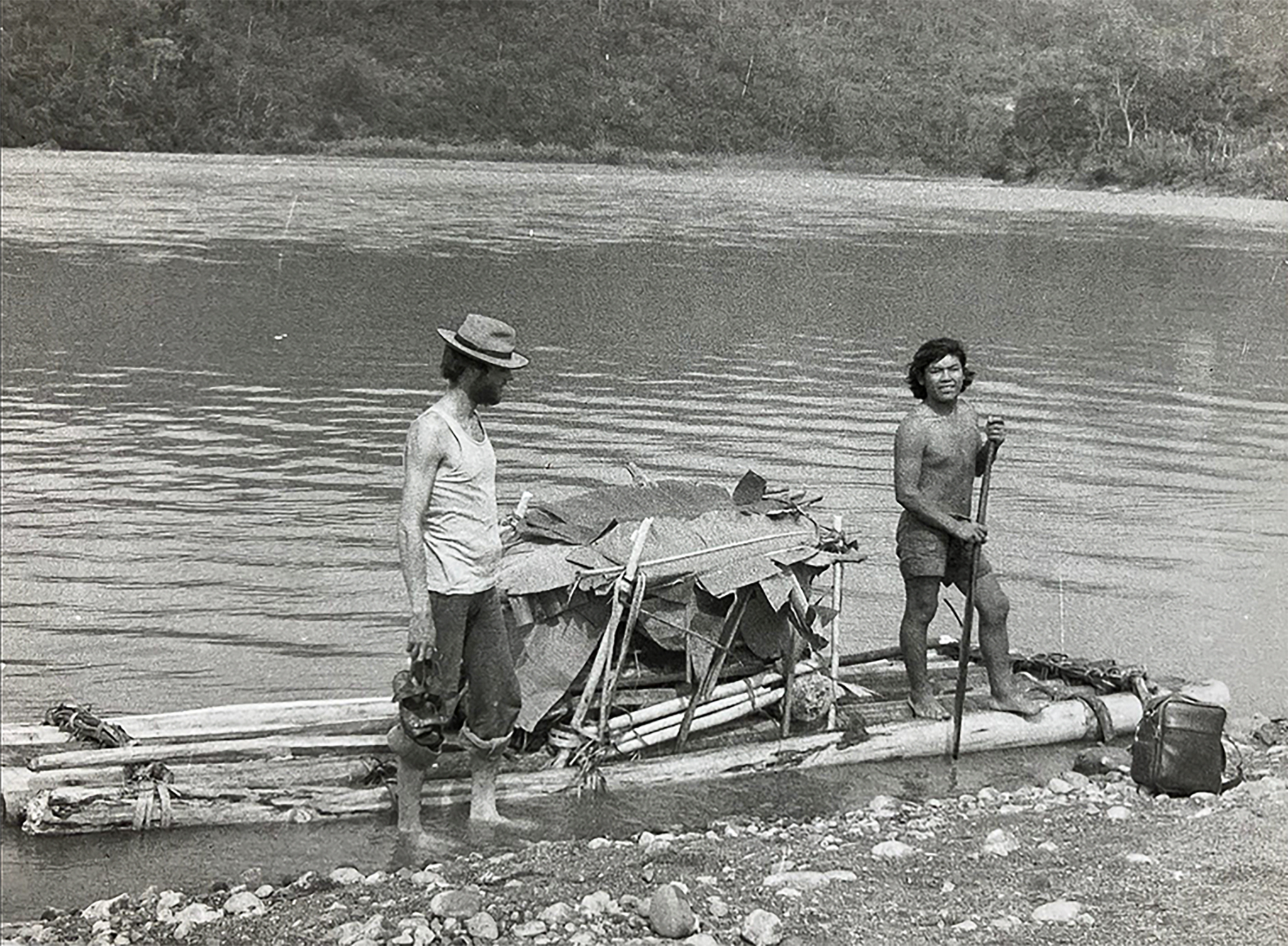
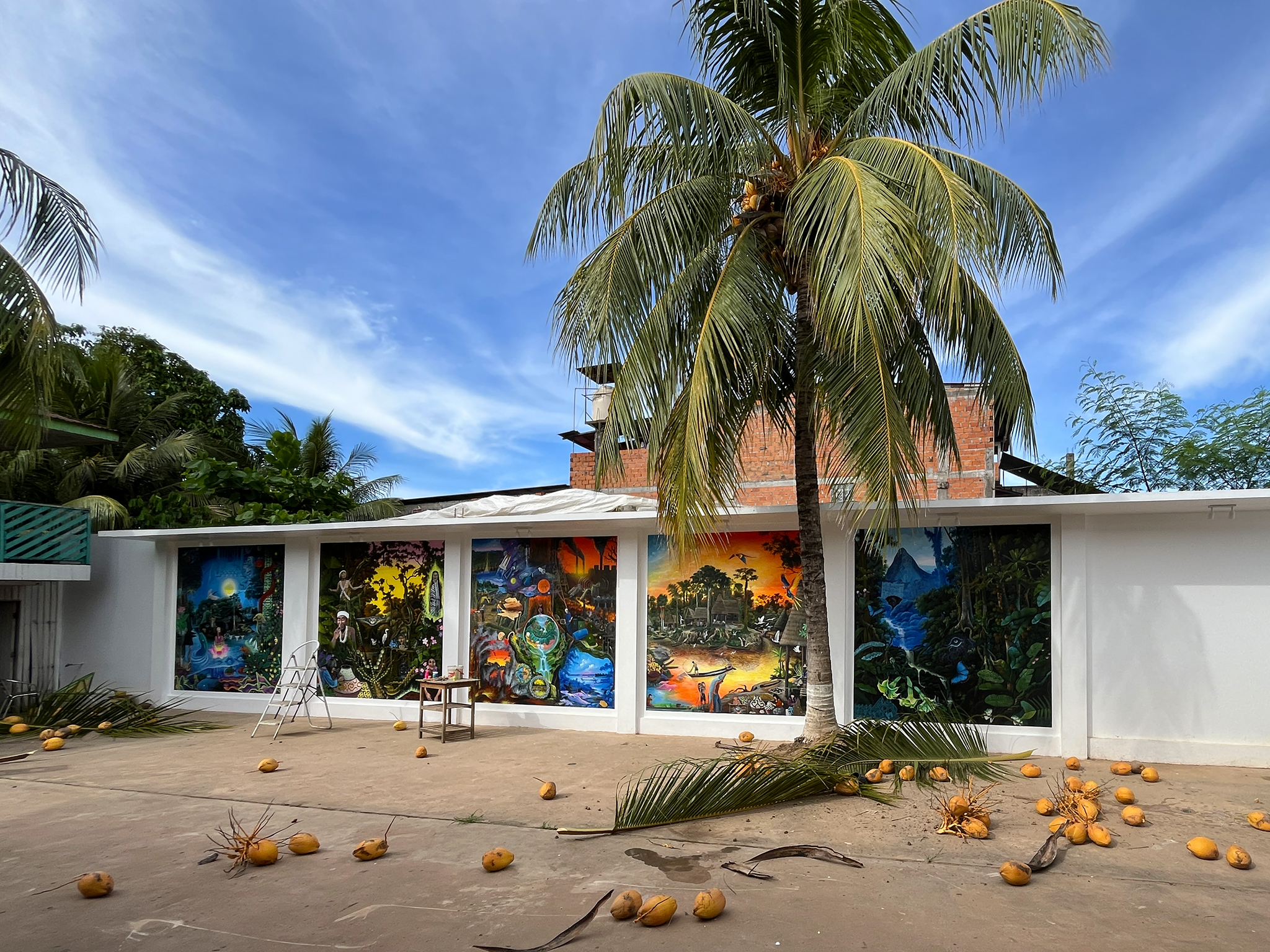
After a few visits to Pucallpa in the early part of 2025, we had held many meetings with Pablo Amaringo’s family and the USKO-AYAR team. It was during this time that the idea for the mural project was born. As you enter the school, a large white wall spans the space of their outdoor courtyard, which in the end proved to be the perfect canvas to embellish what would be five different murals painted in the Neo-Amazónico style that defined the legacy of Pablo Amaringo.
The USKO-AYAR school’s director and son of Pablo Amaringo, Juan Vásquez Amaringo, was so taken by the idea and suggested that work begin in October, with the aim to inaugurate the mural on the 16th anniversary of Pablo’s passing, on November 15th.
The project asked for a 1-month commitment from the USKO-AYAR school and its professors. The aspiration of the mural was to celebrate Amaringo’s legacy, mixing the two styles of painting for which he was known, Neo-Amazónico and Visionary art. We also received the participation of a group of local Indigenous artists and friends of Xapiri Ground who shared their hand and vision for the mural and its overall message. A message to safeguard nature and our relationship to her.
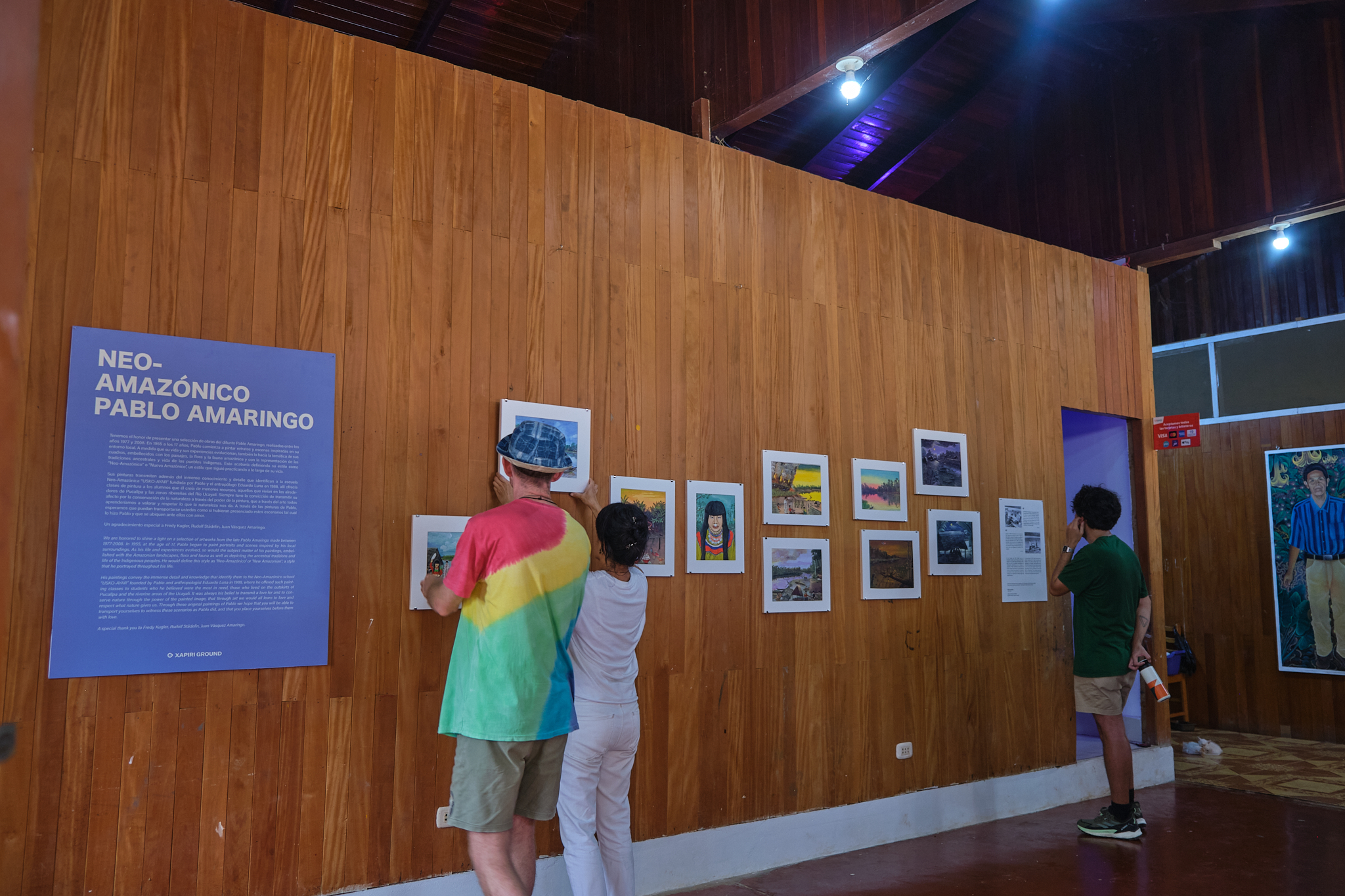
In addition, we had agreed to feature a selection of original works from the “Neo-Amazónico” exhibition that we debuted at our Cusco gallery inside one of the rooms at the school. This exhibition accompanied the inaugural event that saw the unveiling of the finished mural on November 15, 2025, in what felt like the perfect moment to share these earlier paintings in the city of Pucallpa. The plan was sealed!
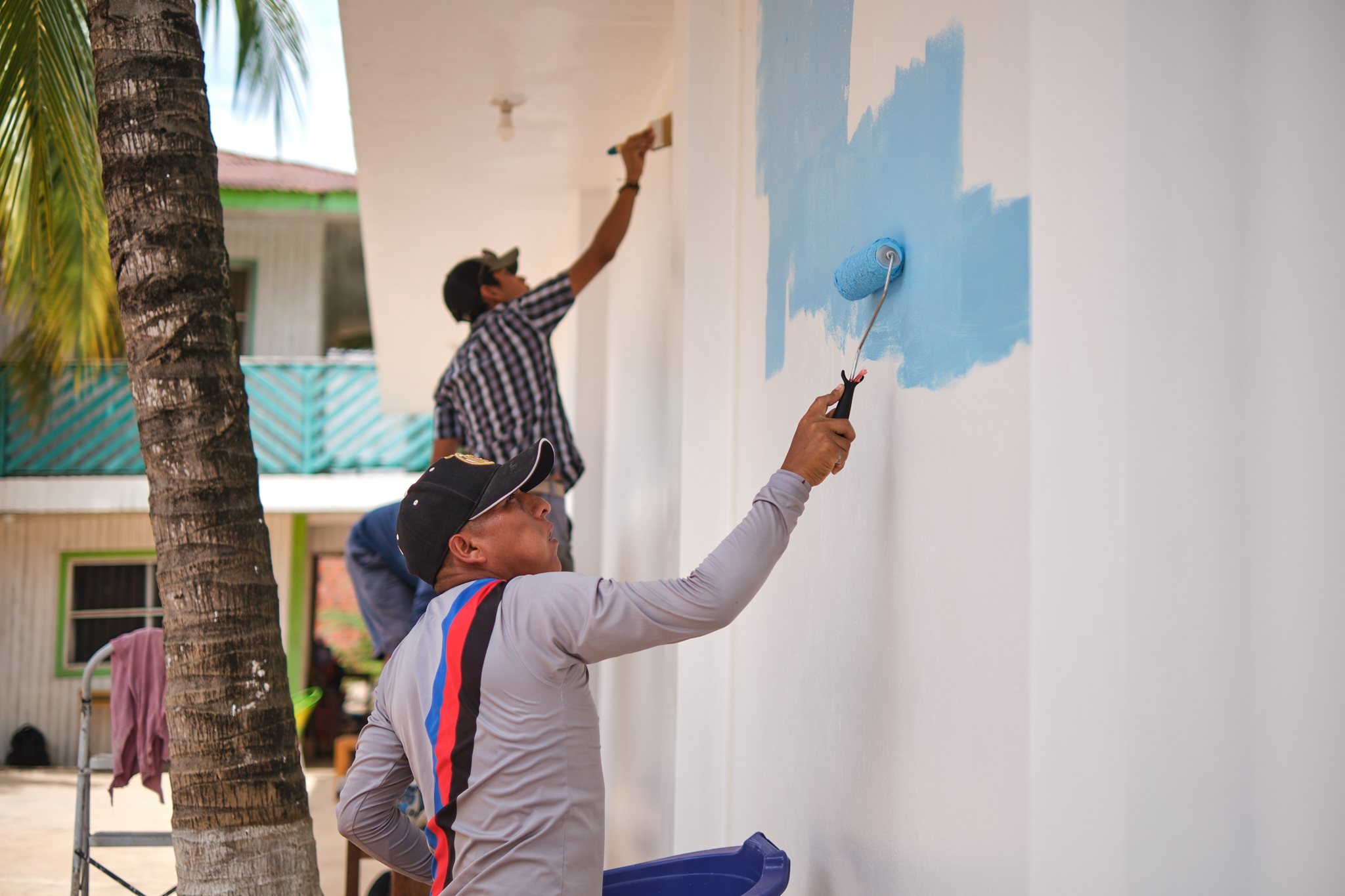
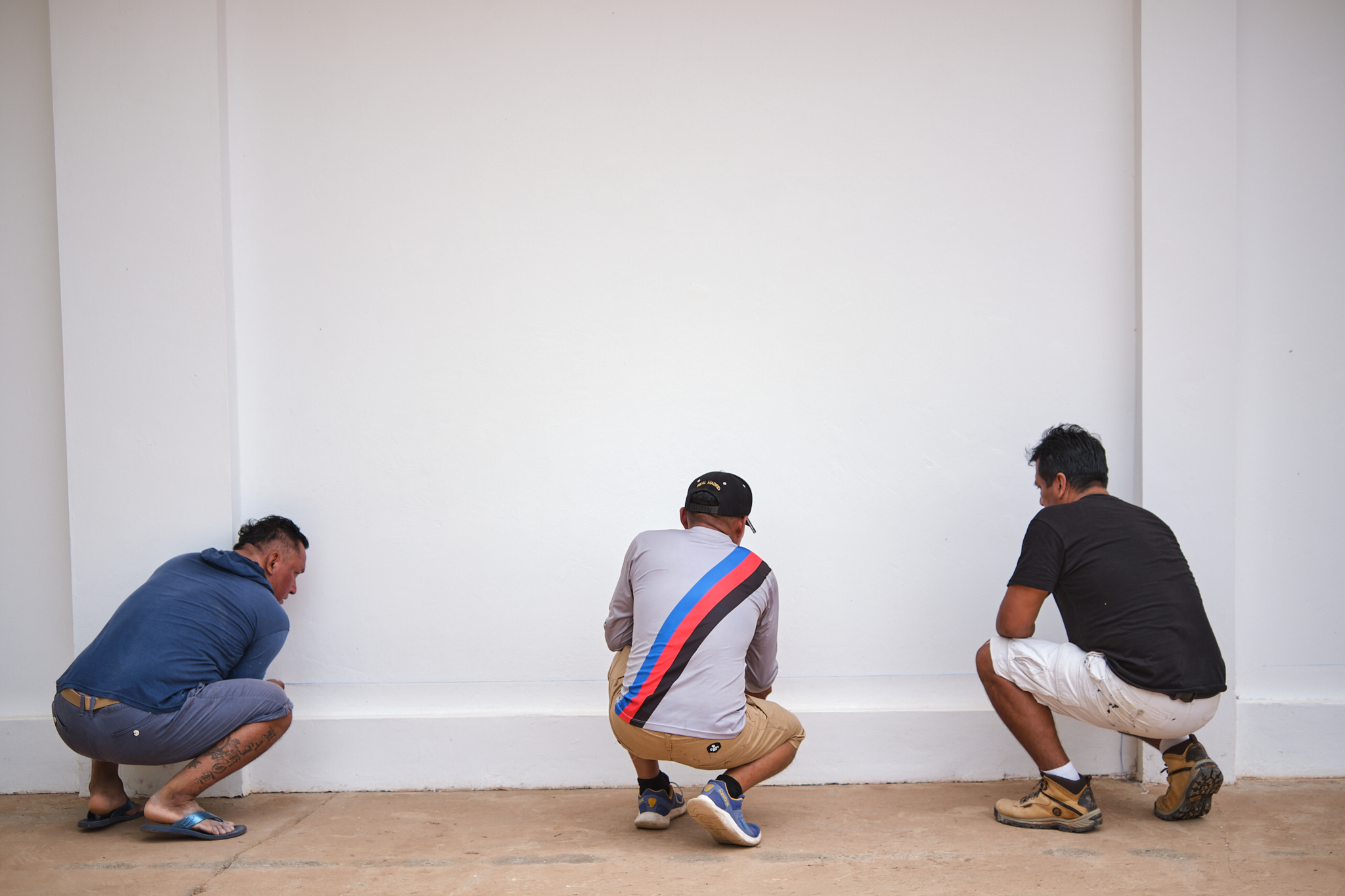
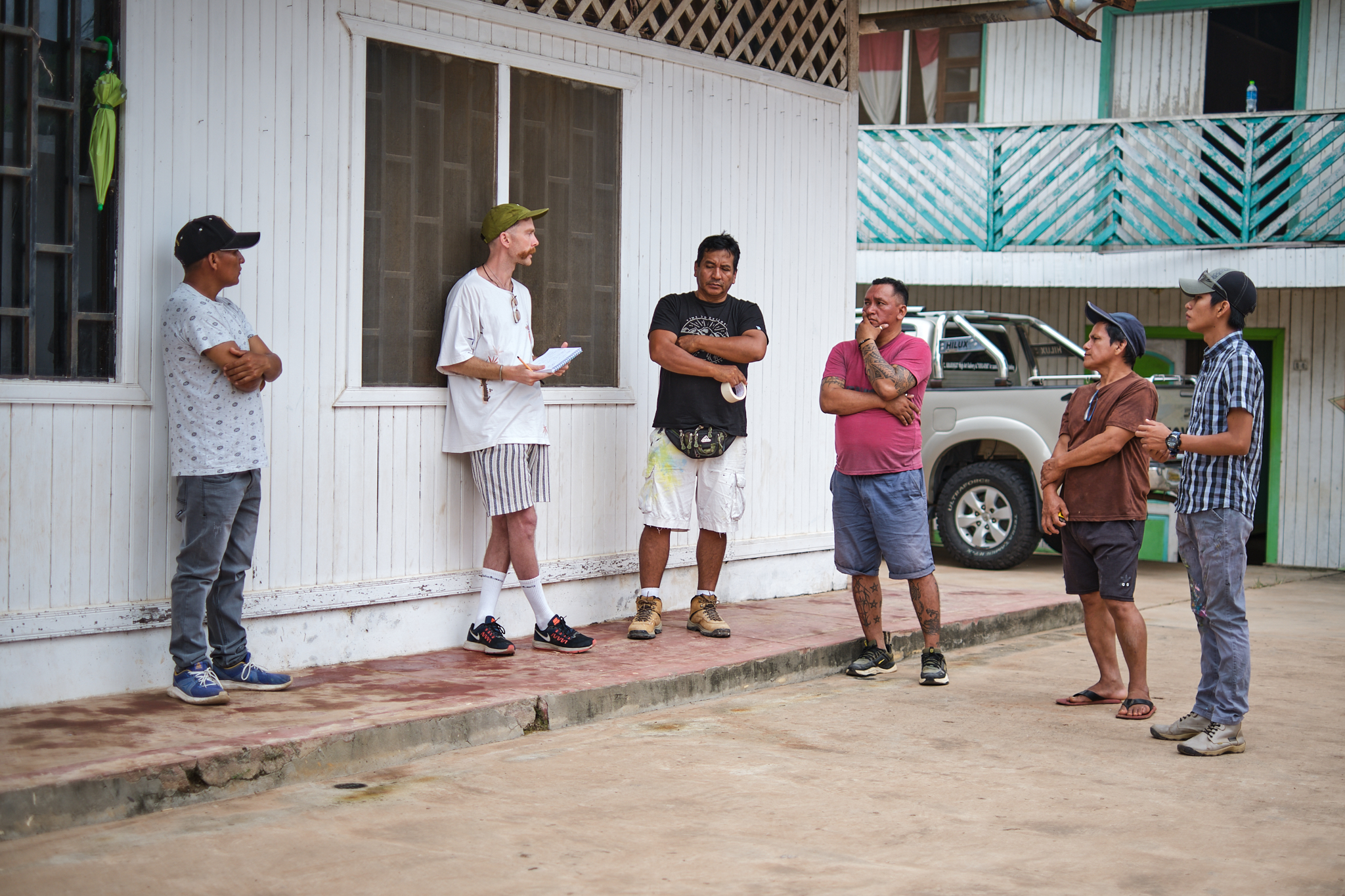
By September 2025, the white wall was repaired, cleaned, and finished to ensure a strong and lasting substrate for the work, so that once the Xapiri team arrived, Jack Wheeler and Davis Torres, in the middle of October, the drawing and painting process could begin. On arrival, Jack and Davis discussed the mural ideas with the USKO-AYAR alumni artists, sharing concepts of painting styles, themes, and their wishes to work together with local Indigenous artists and friends.
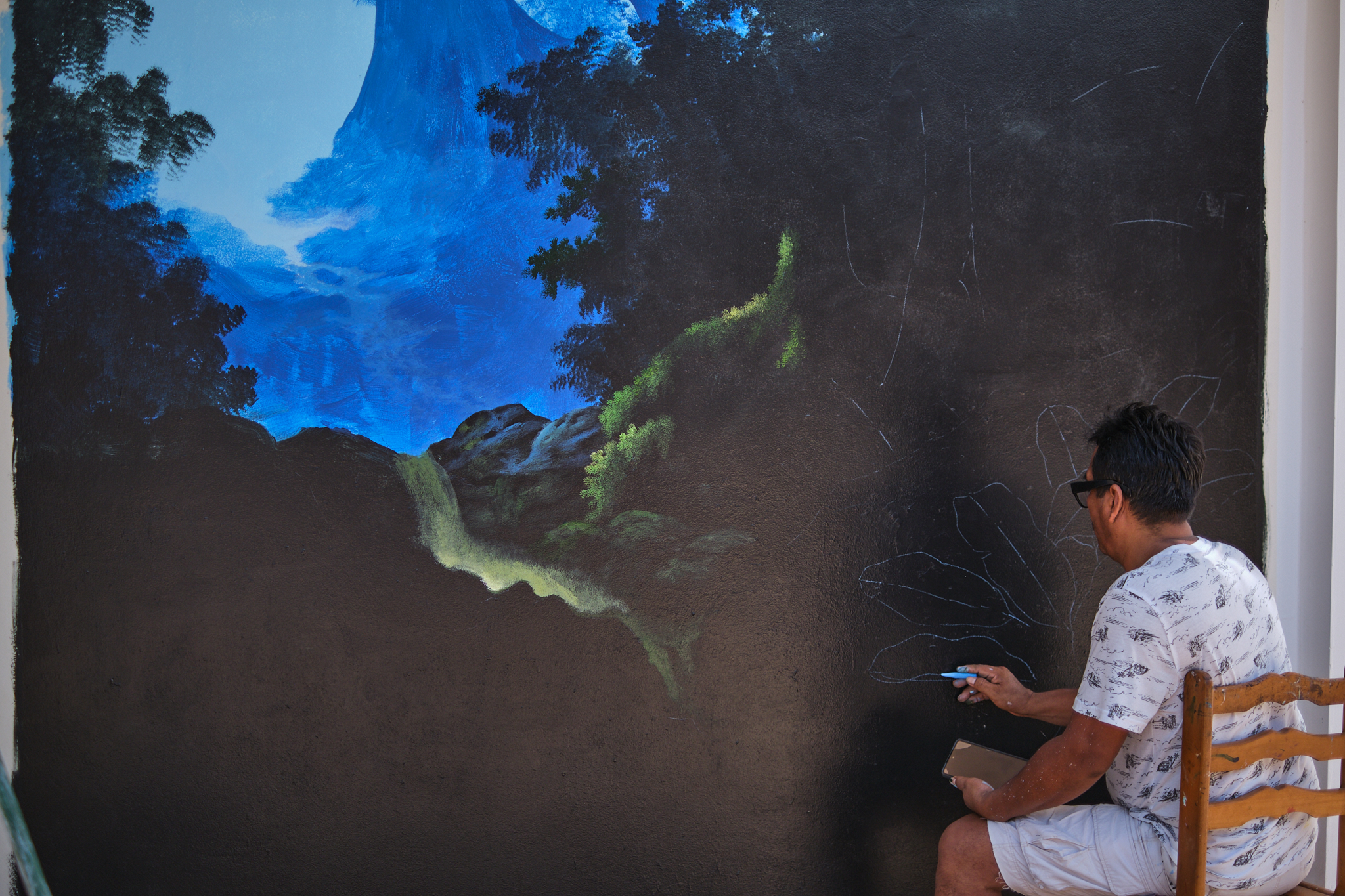
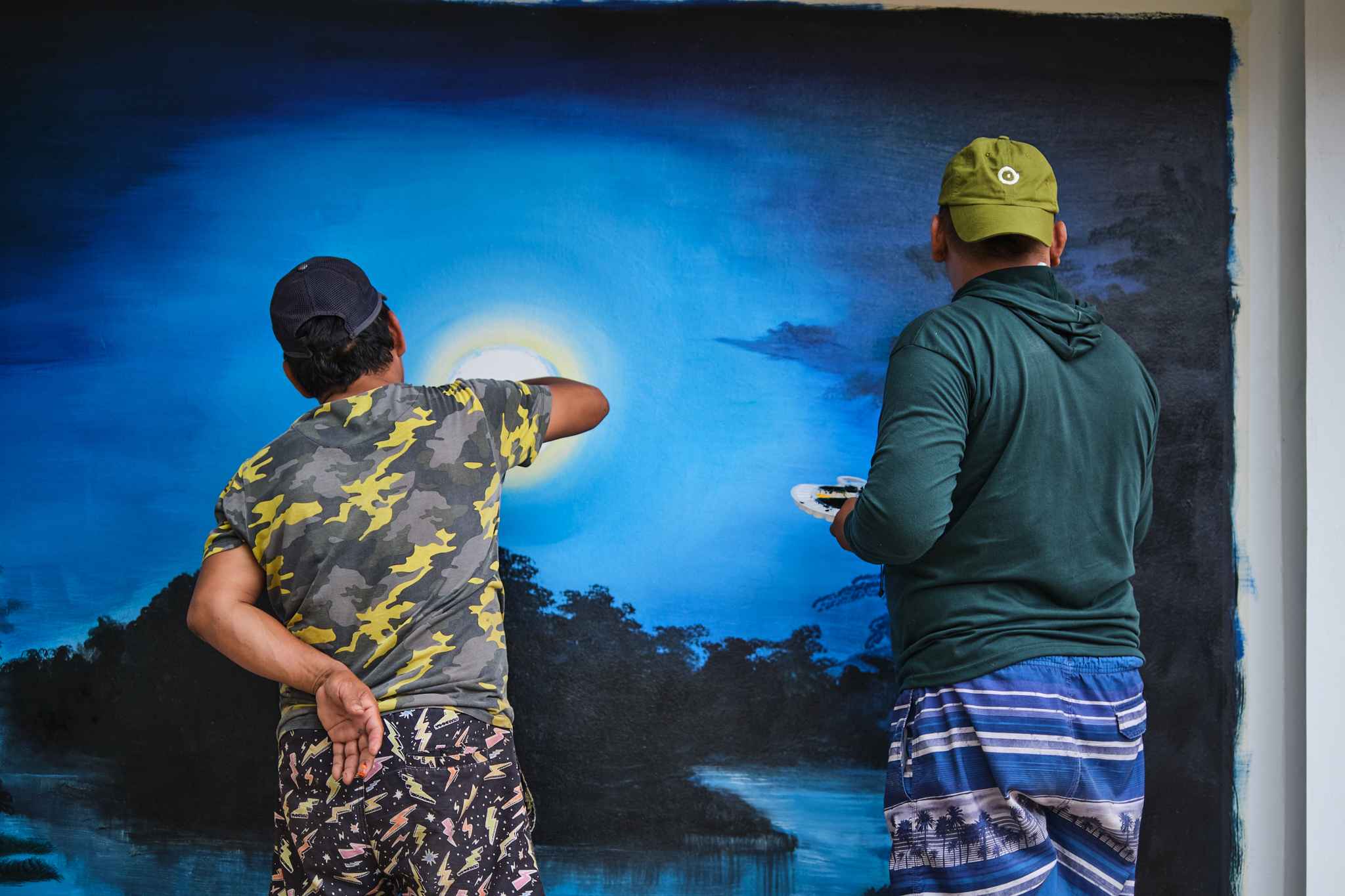
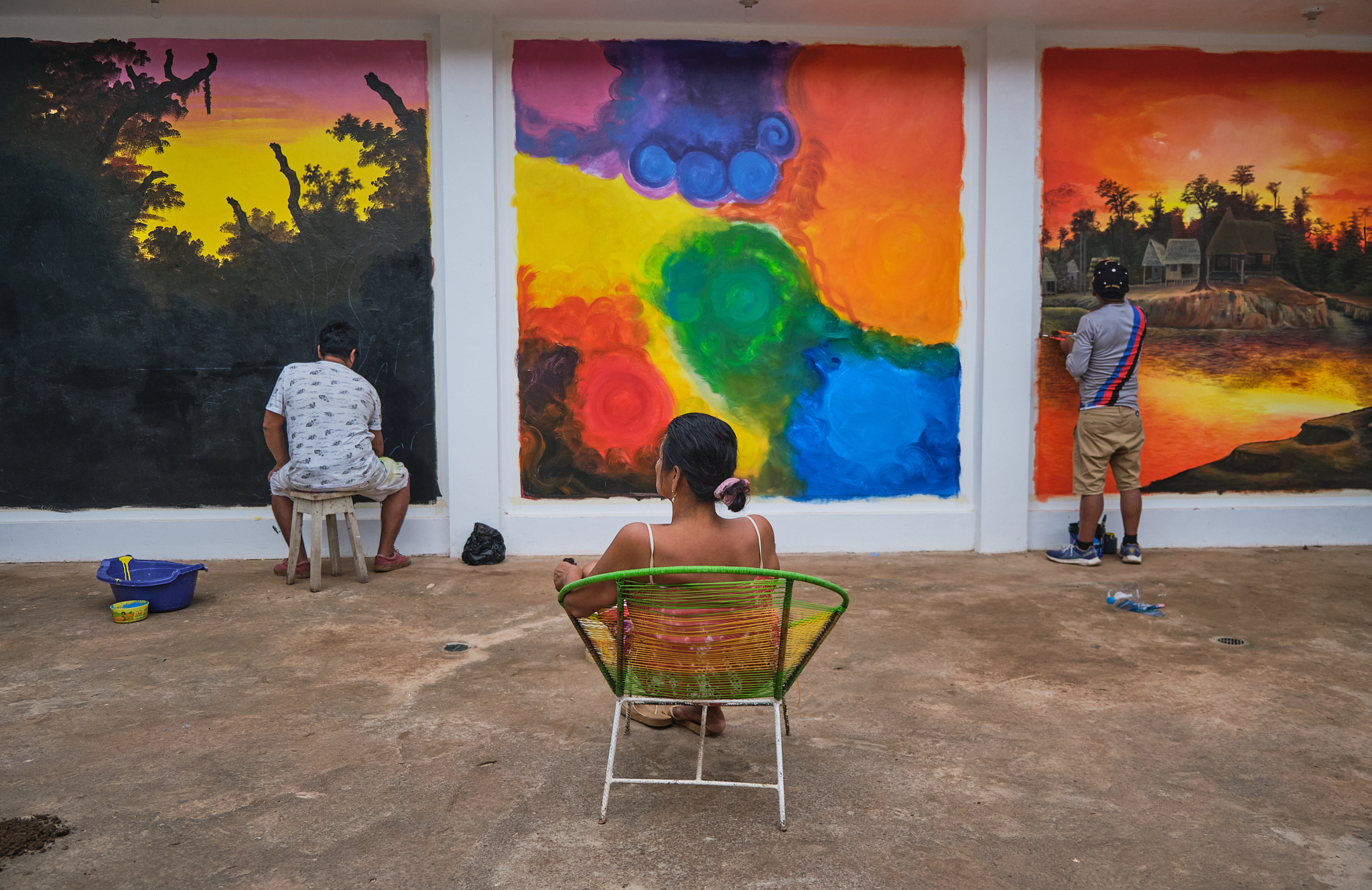
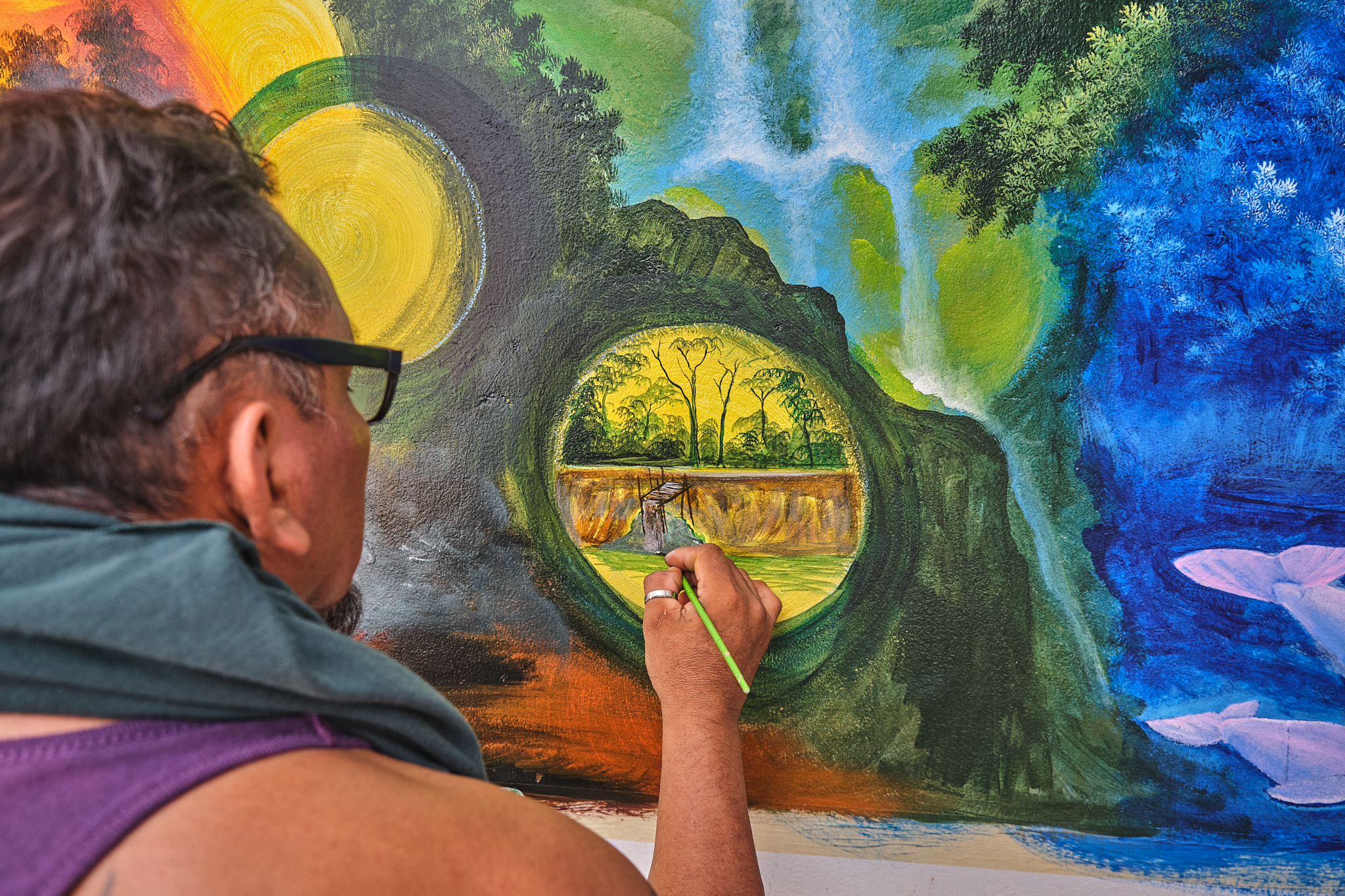
Between us all, the ideas flowed well. And it came to our surprise how the USKO-AYAR artists had their ideas so etched in their minds that after painting the base colors down, they began to draw freely onto the wall without hesitation. During his first brush strokes, Miguel explained to us that this was Pablo’s way, his teachings, to get the inspiration and imagination out directly onto the surface; this was the USKO-AYAR way, to let nature inspire you without overthinking it. This was so impressive to witness, and we quickly realised we were with a group of masters who would take us on a very creative journey!
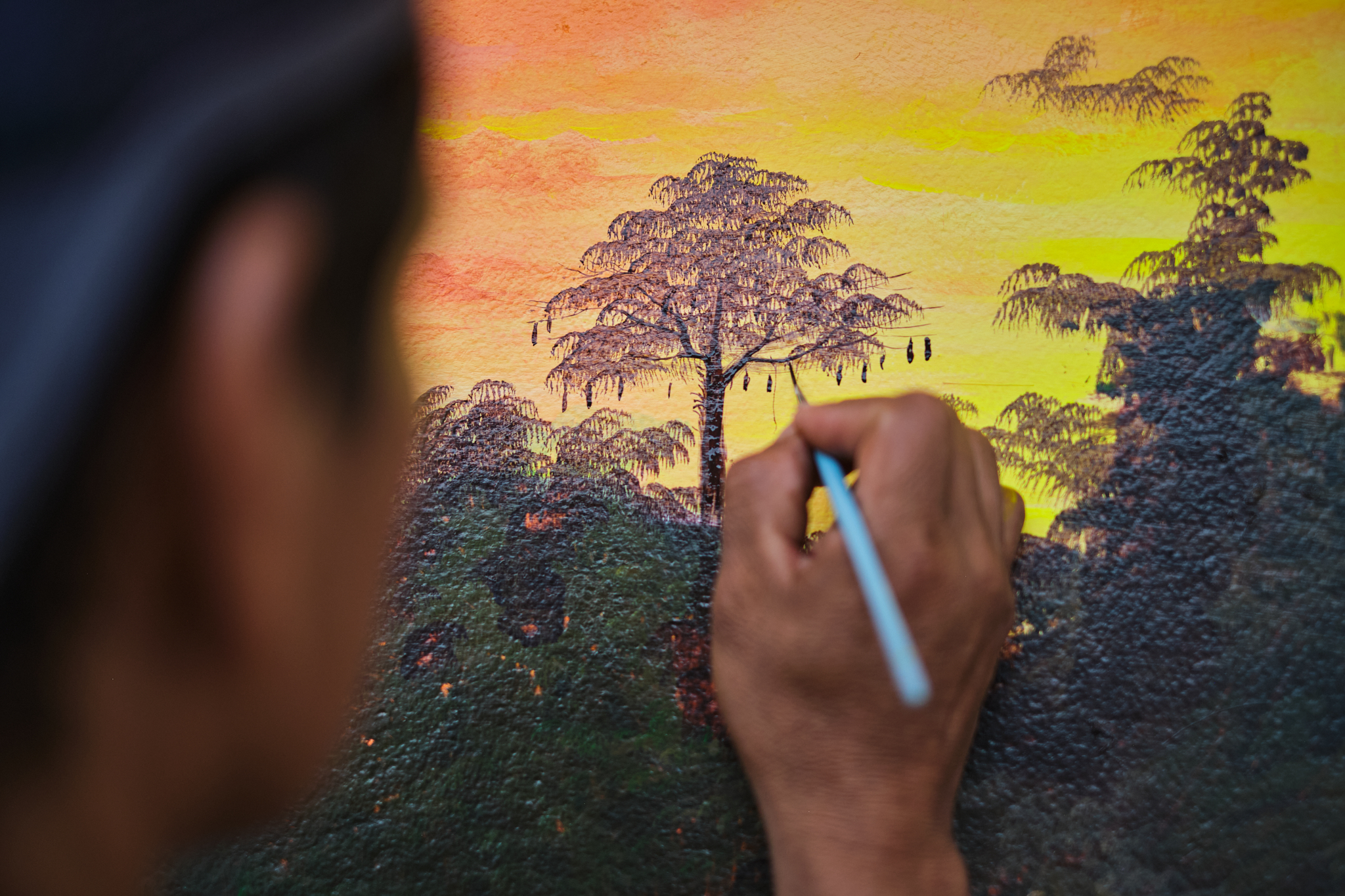
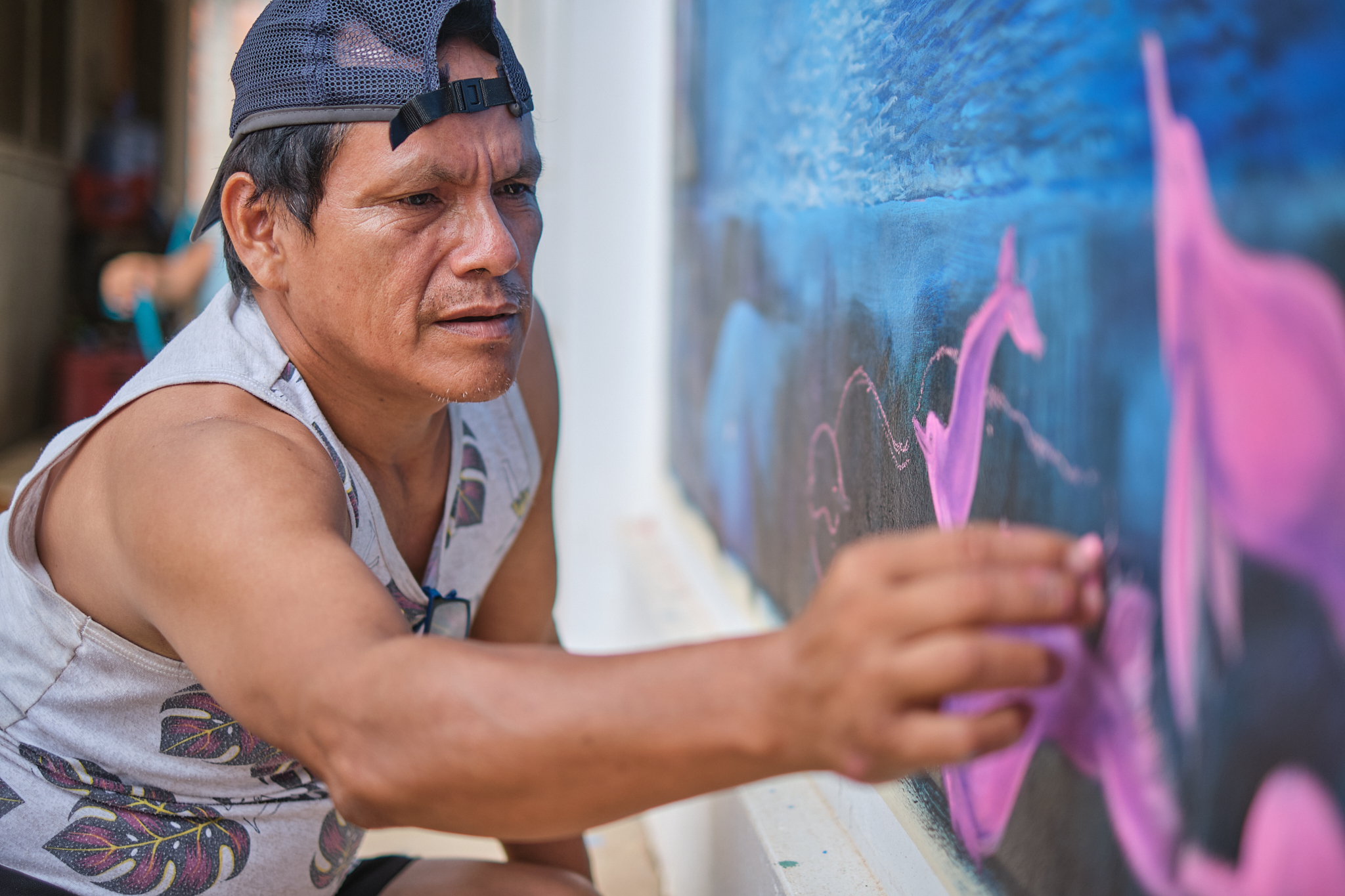
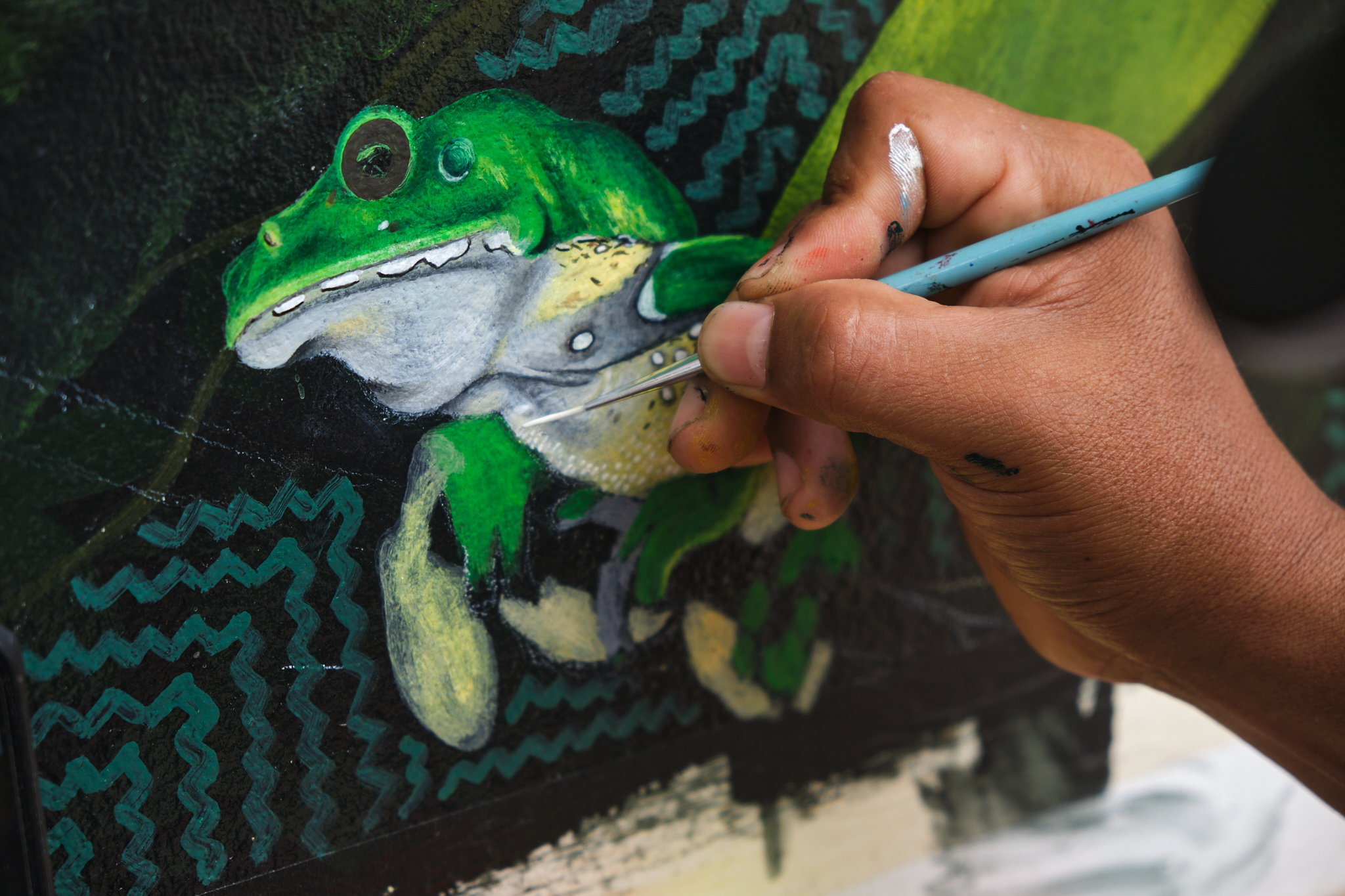
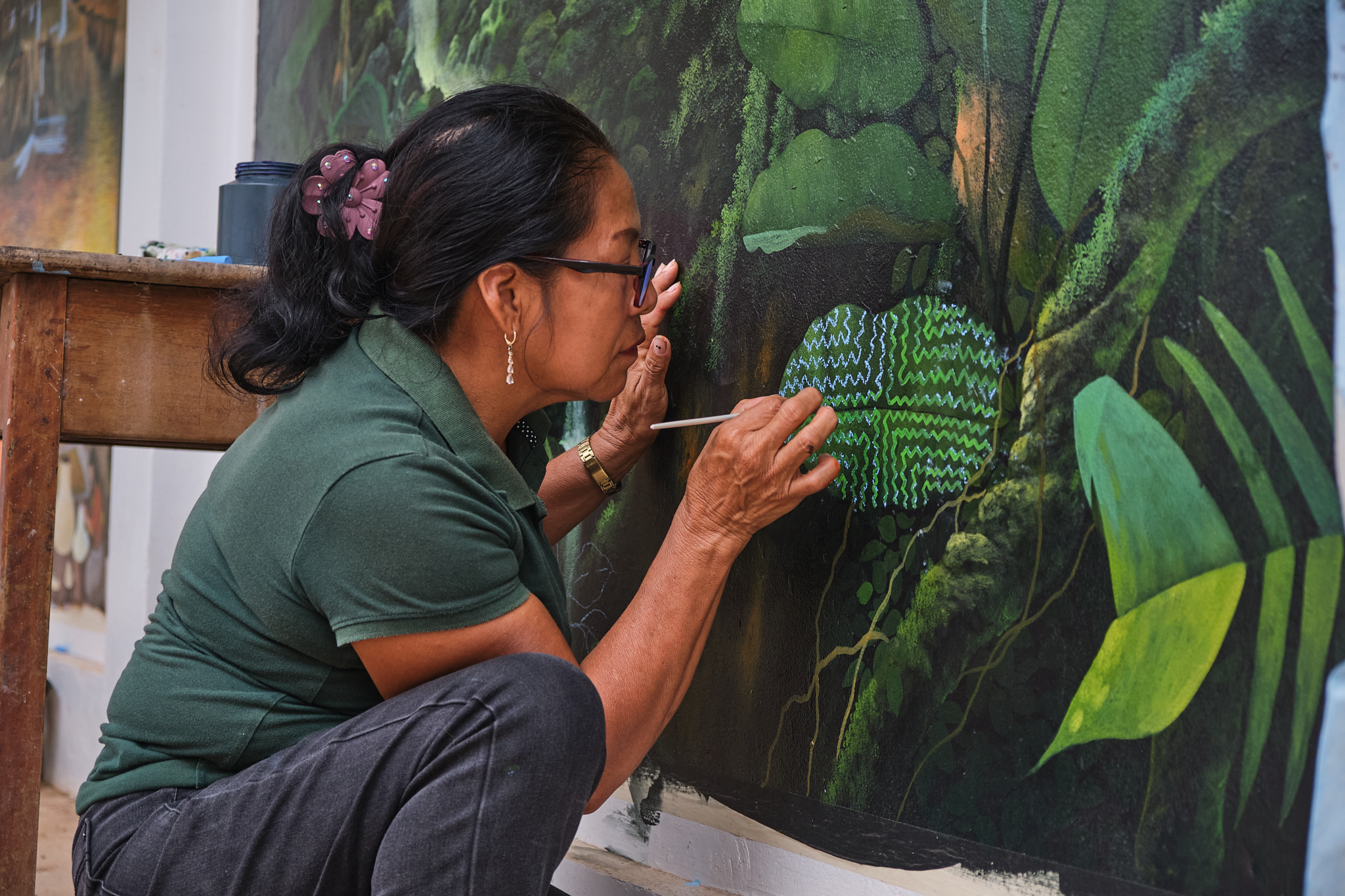
The days passed with each artist finding their flow and focusing on small sections of the wall to add the initial details: the forming of a tree, the shapes of bodies, and nature’s silhouettes. After the first week, bit by bit, the theme of each mural revealed itself. Here is where the meticulous process of detailing began, using special brushes, strokes, and techniques that were signature to the USKO-AYAR Amazonian School of Painting.
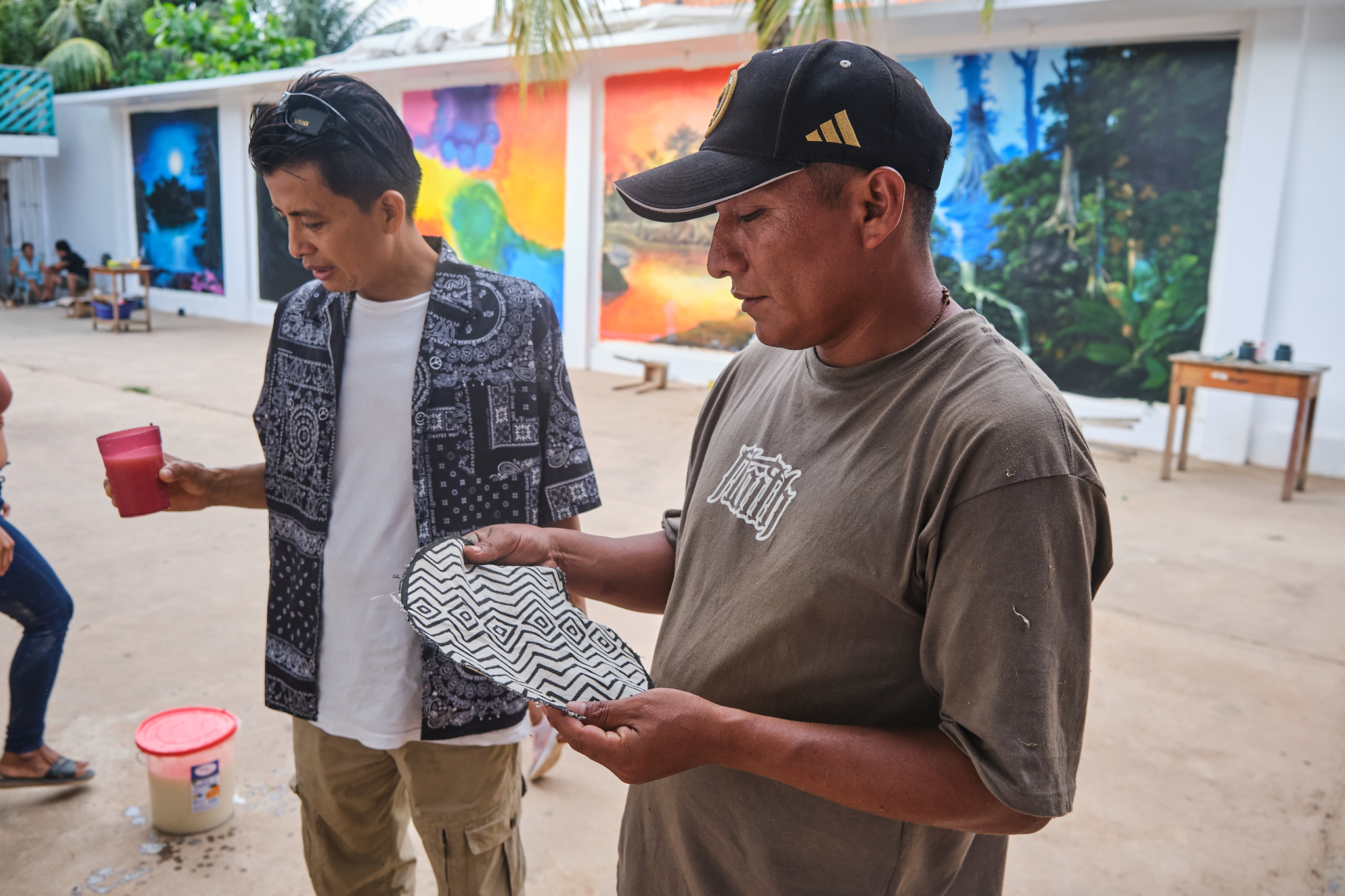
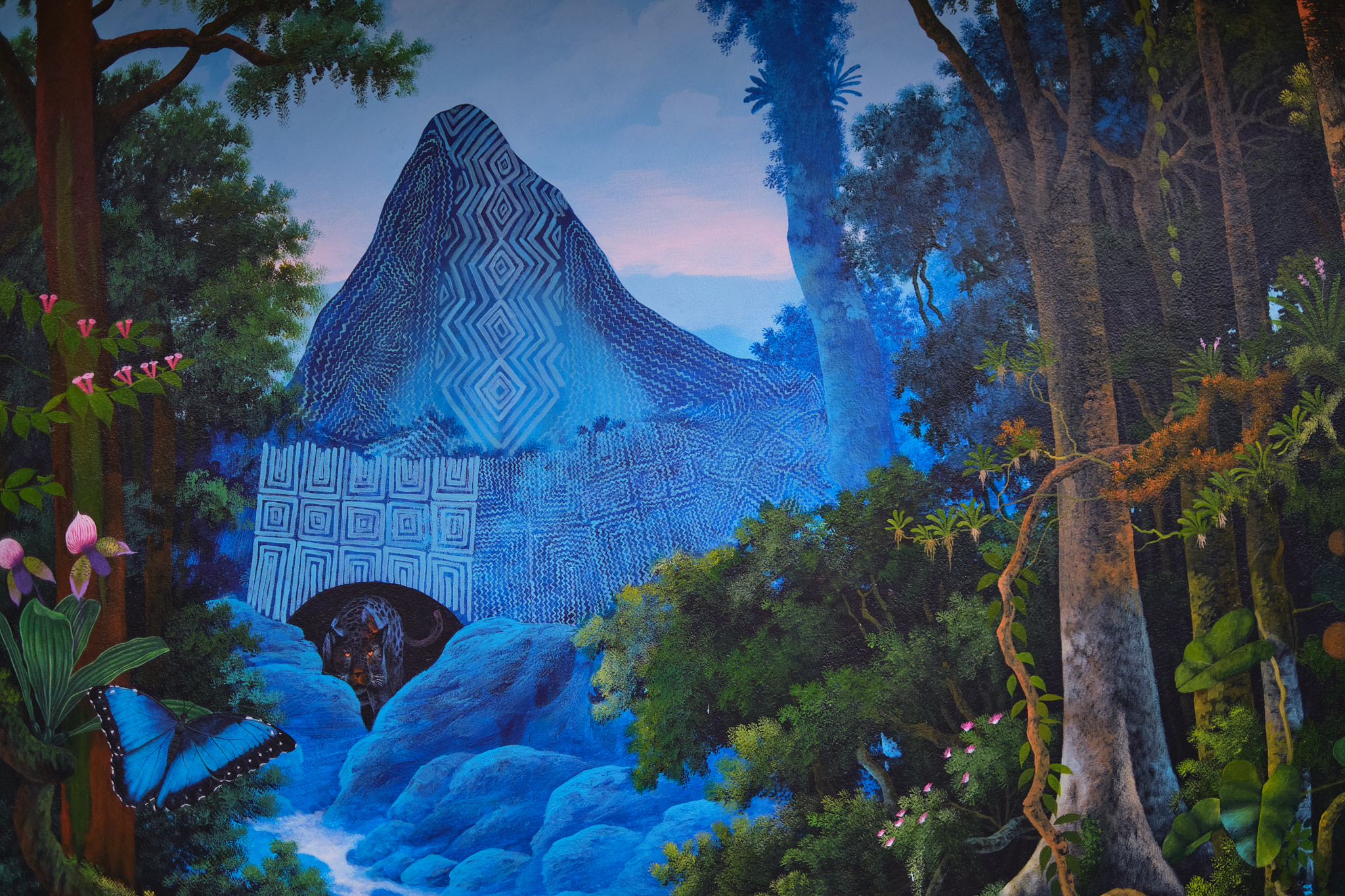
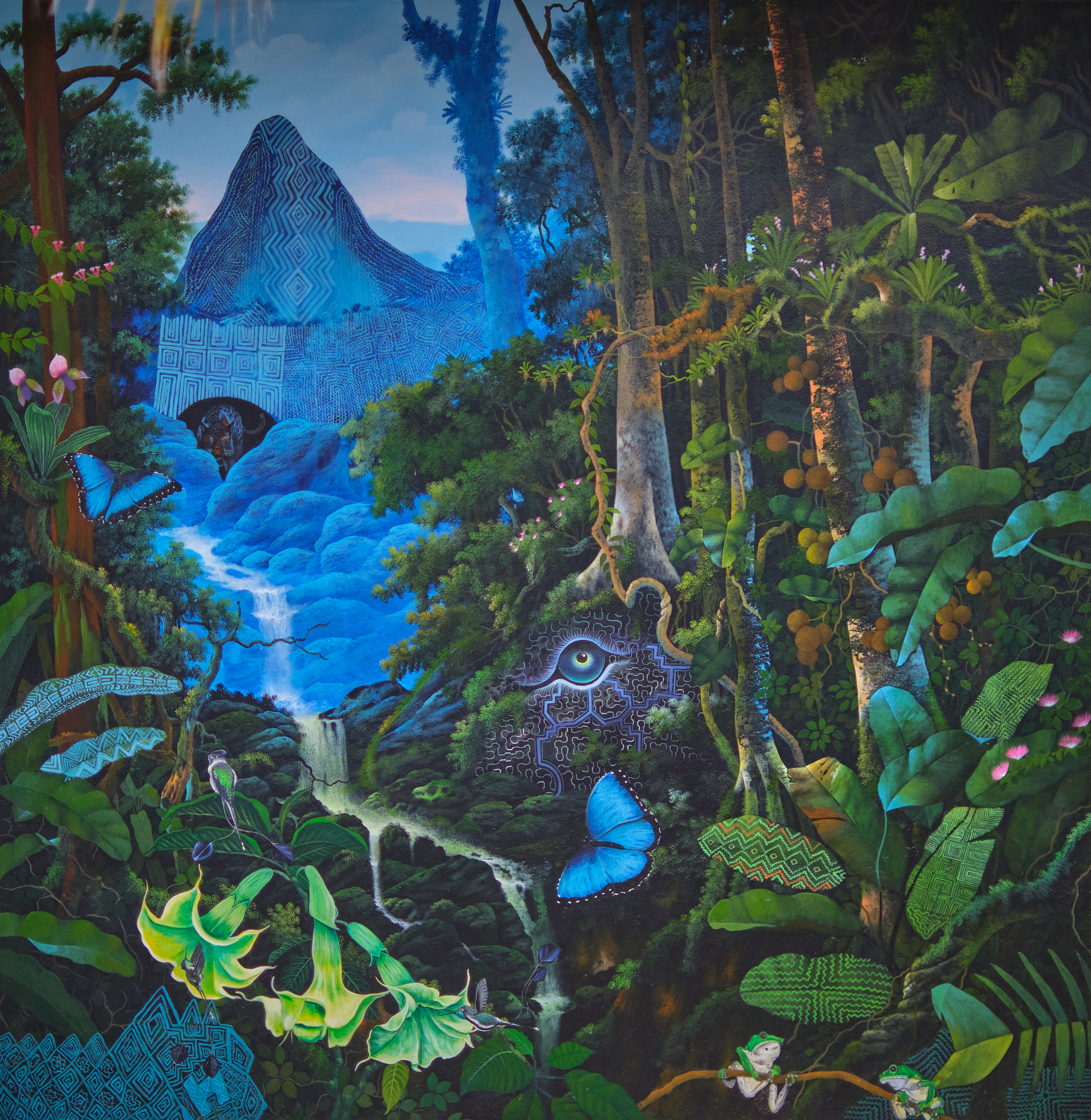
In late October, a group of Iskonawa friends arrived as the first group of participants, and we discussed ideas on how to infuse their Indigenous identity into the mural. Luz, Teresa, and Iskonawa leader Felix led discussions on how “Roeibiri” or El Cerro el Cono could have a presence in the mural; an enigmatic pyramidal peak that represents the ancestral territory of their people. The sharing of knowledge was inspiring for the professors, connecting them with the Iskonawa community and their history, while exchanging painting techniques and creative guidance.
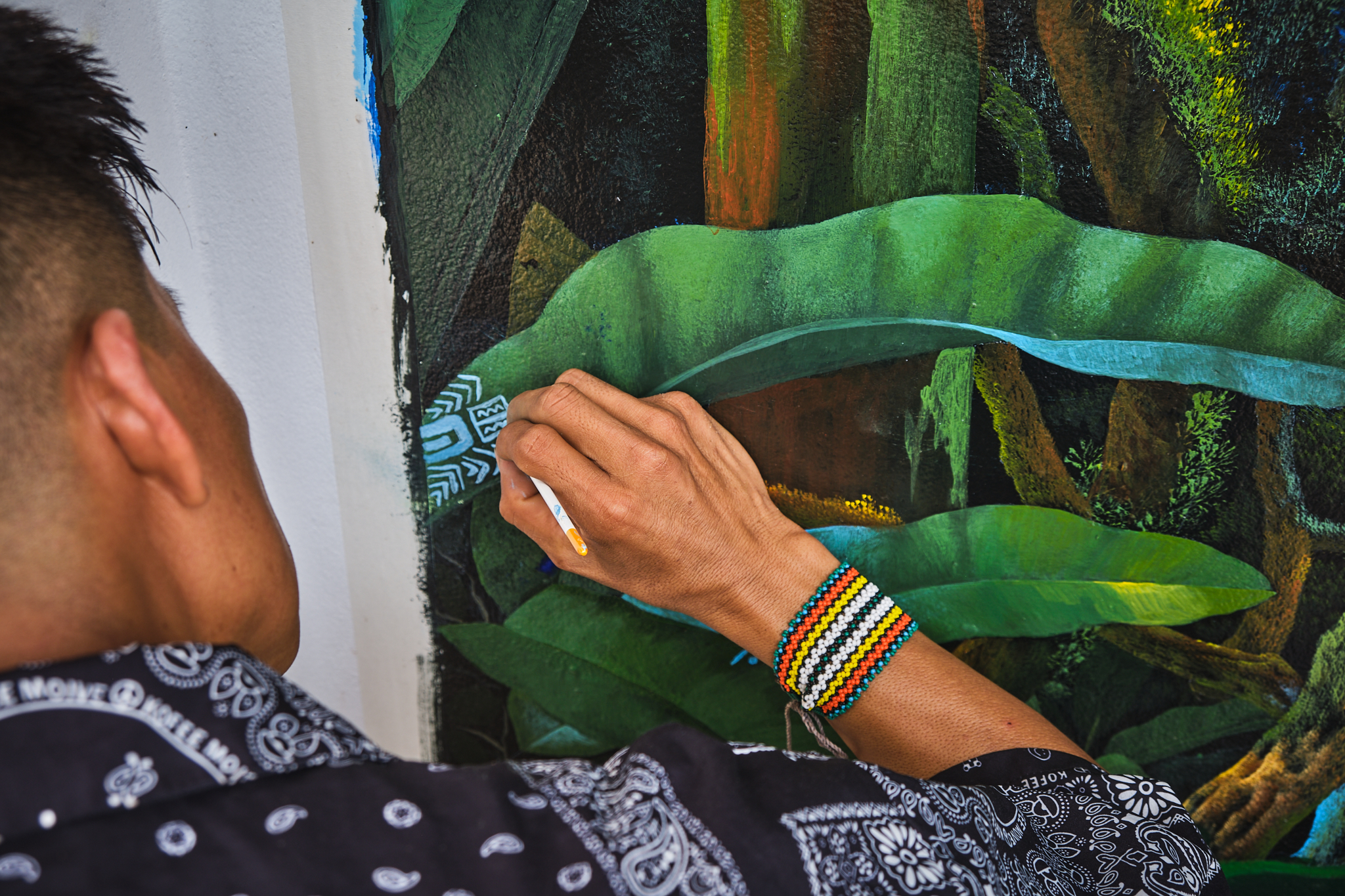
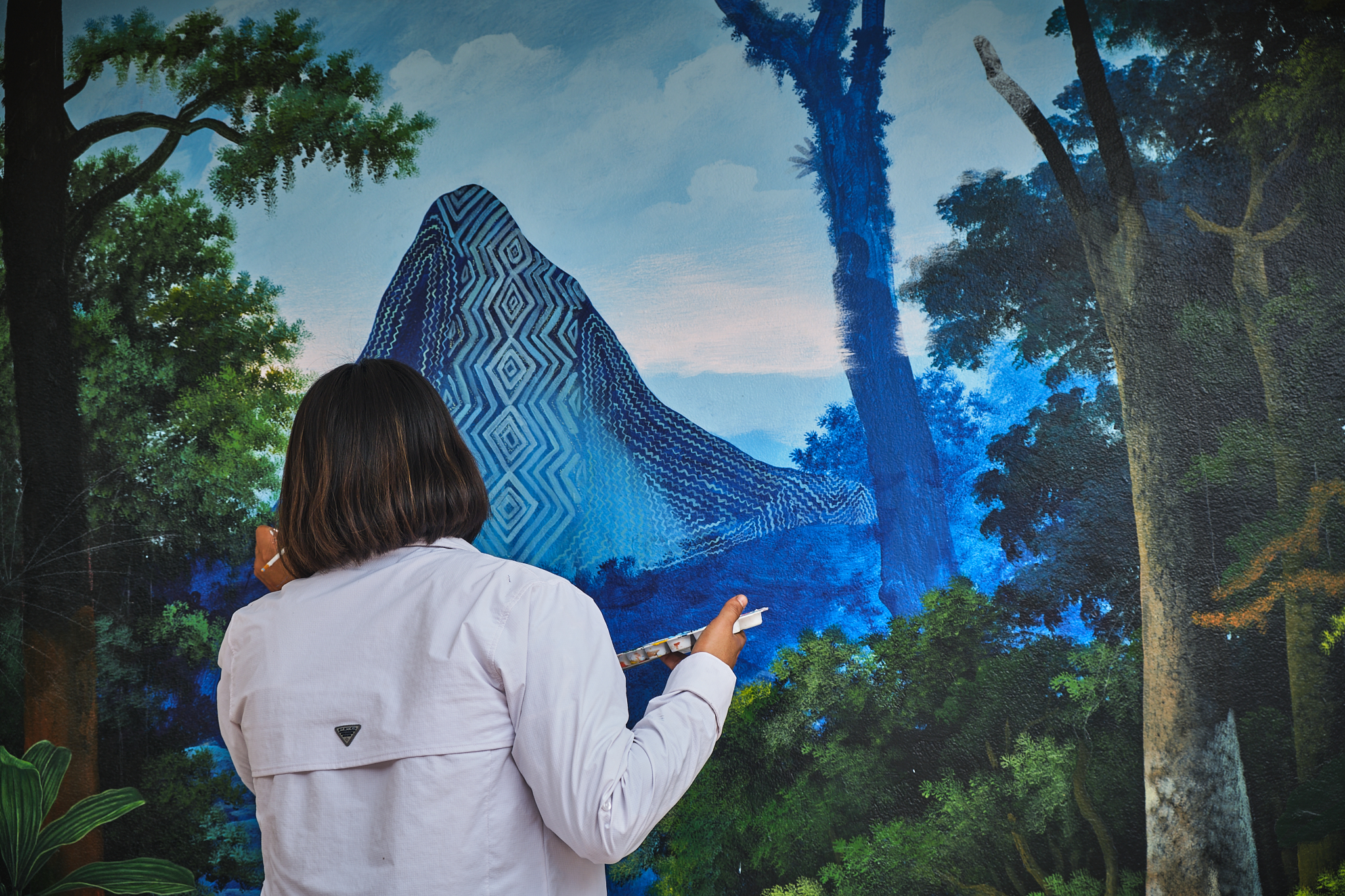
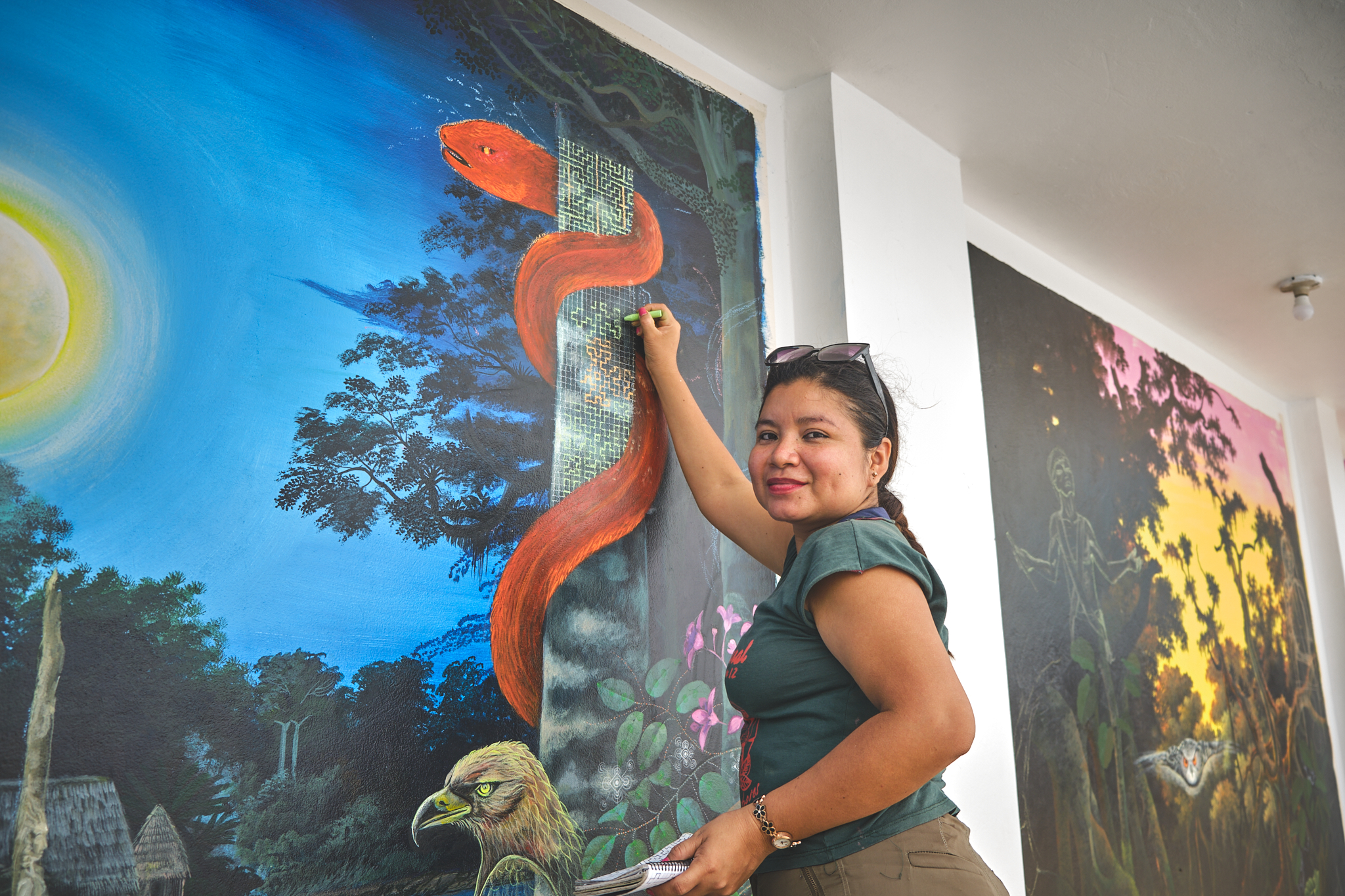
Teresa arrived the next day full of energy. Aside from being the first Indigenous artist present that day, it marked the very first time she’d paint on a wall. She chose to adorn the surface of leaves that were already painted by one of the professors using her ancestral motifs, as well as helping to choose the placement of the “Roebiri” peak.
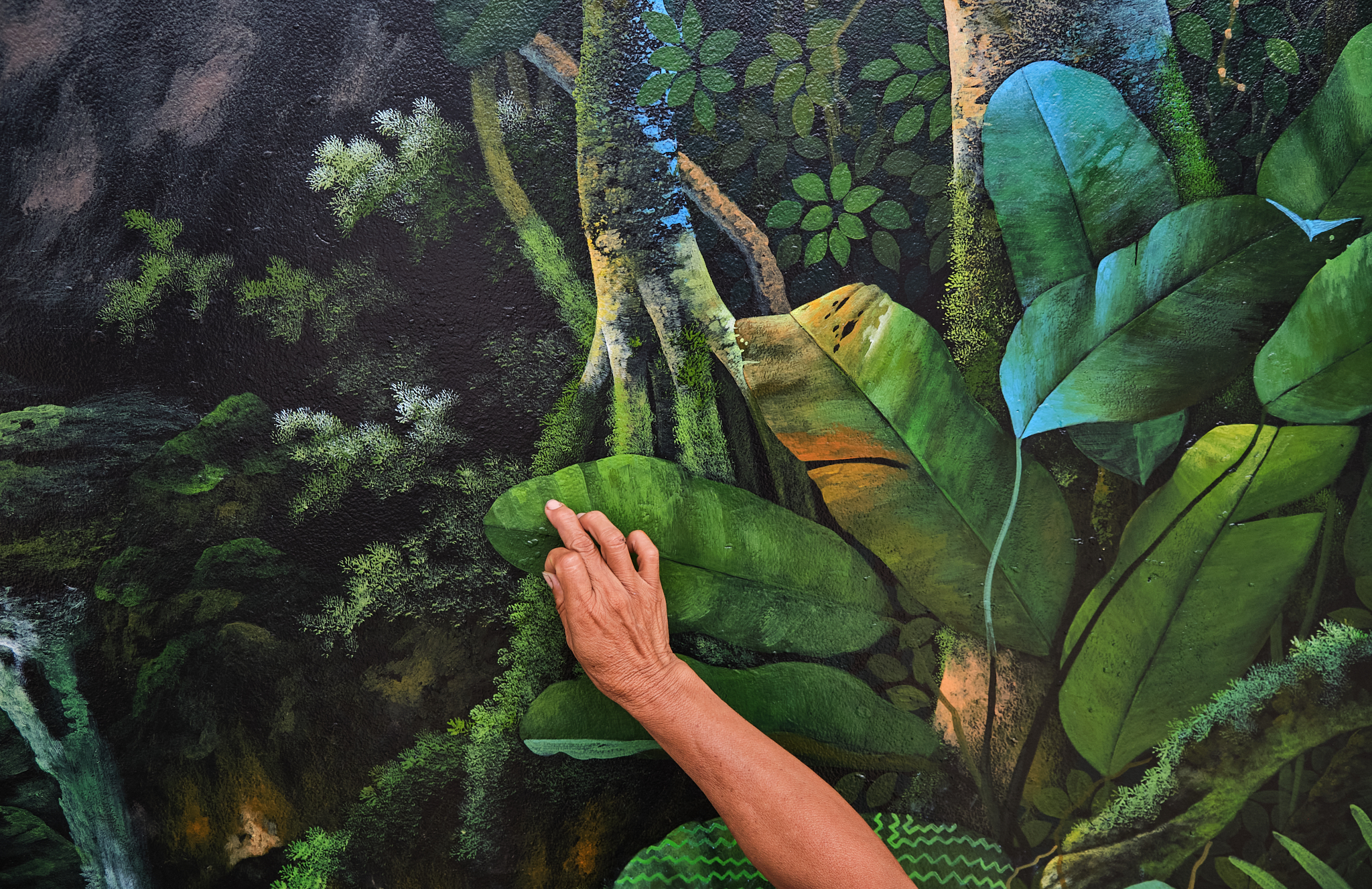
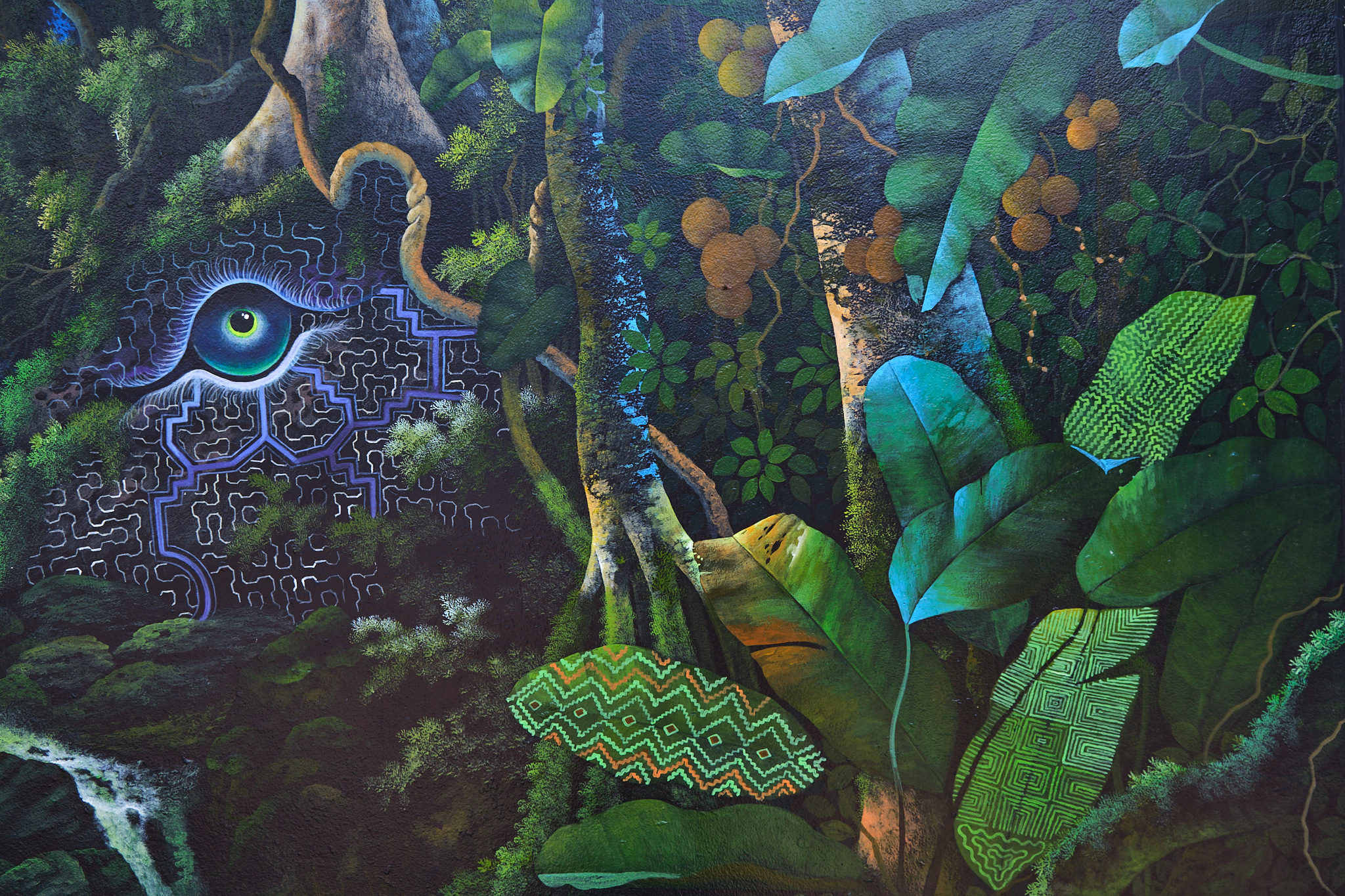
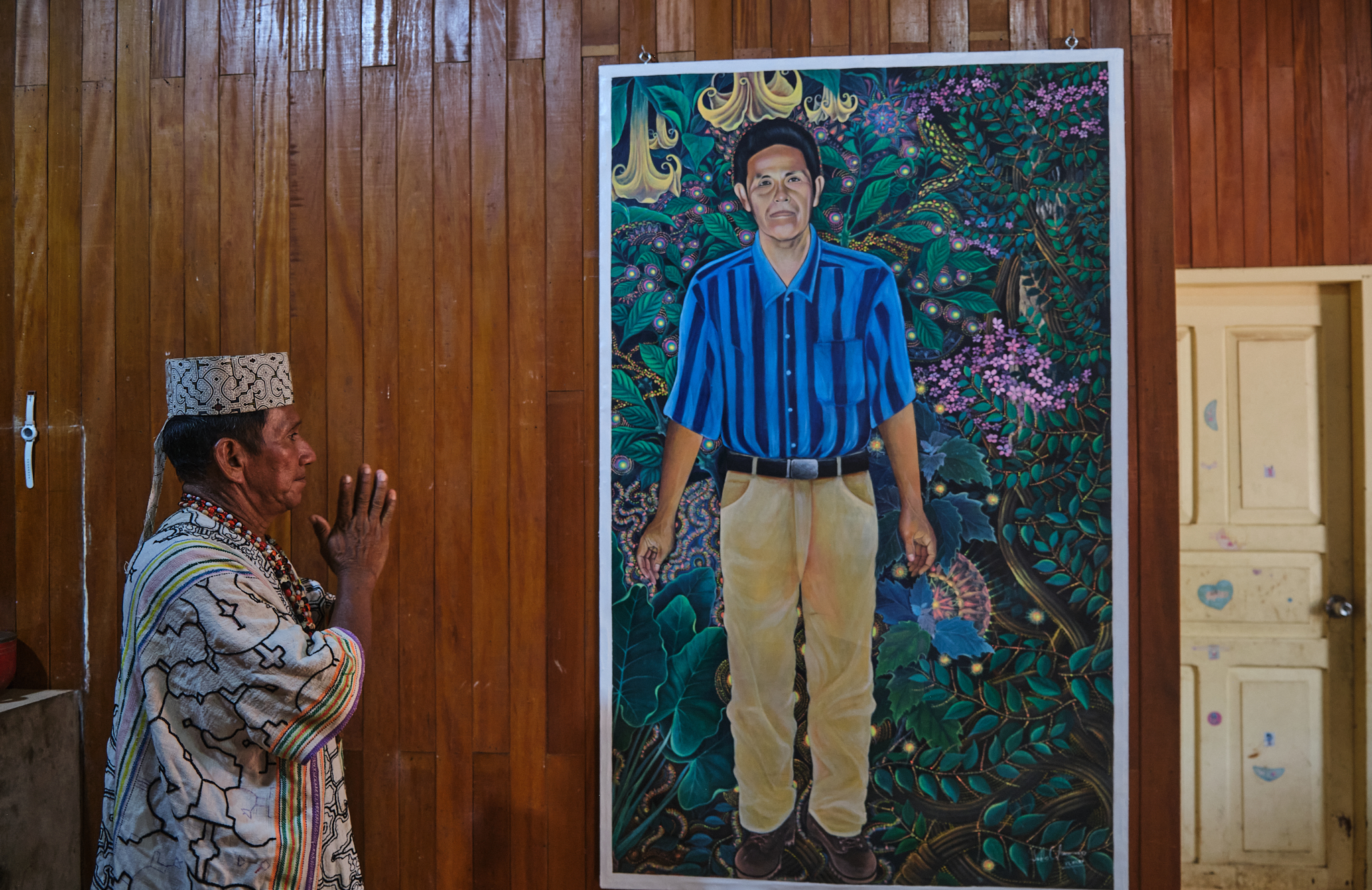
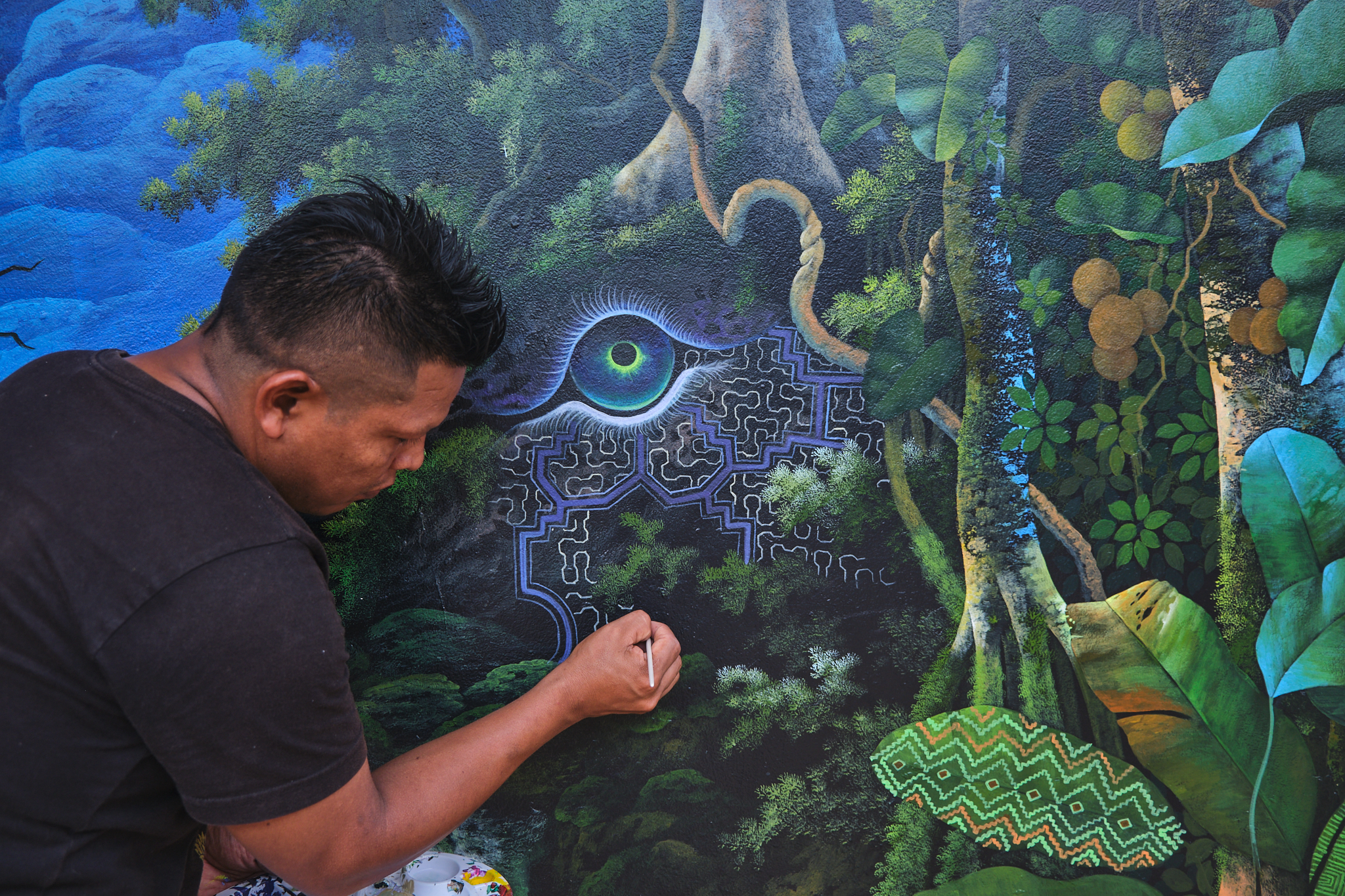
We later received a visit from the Shipibo maestro, Donaldo Campos, who was eager to see the mural project, having been acquainted with Don Pablo Amaringo in the 1990’s. He arrived from the community of San Francisco with his family member and artist, Juan, who was also excited to collaborate on the mural. Juan’s contribution took the form of a mesmerizing eye of a jaguar emerging perfectly from the bushes, and from which grew the fine lines of his ancestral Kené art, which he realized in one afternoon.
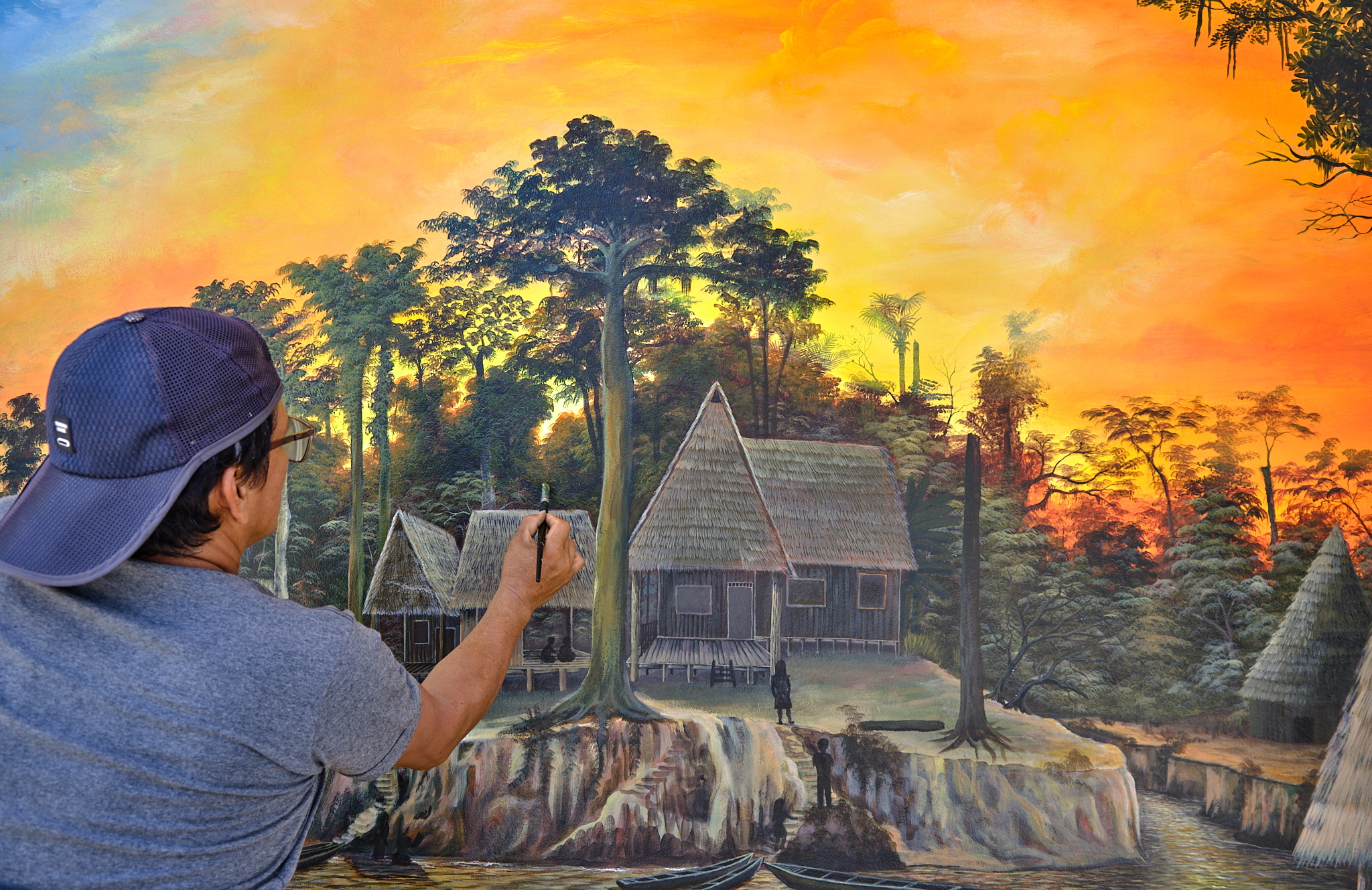
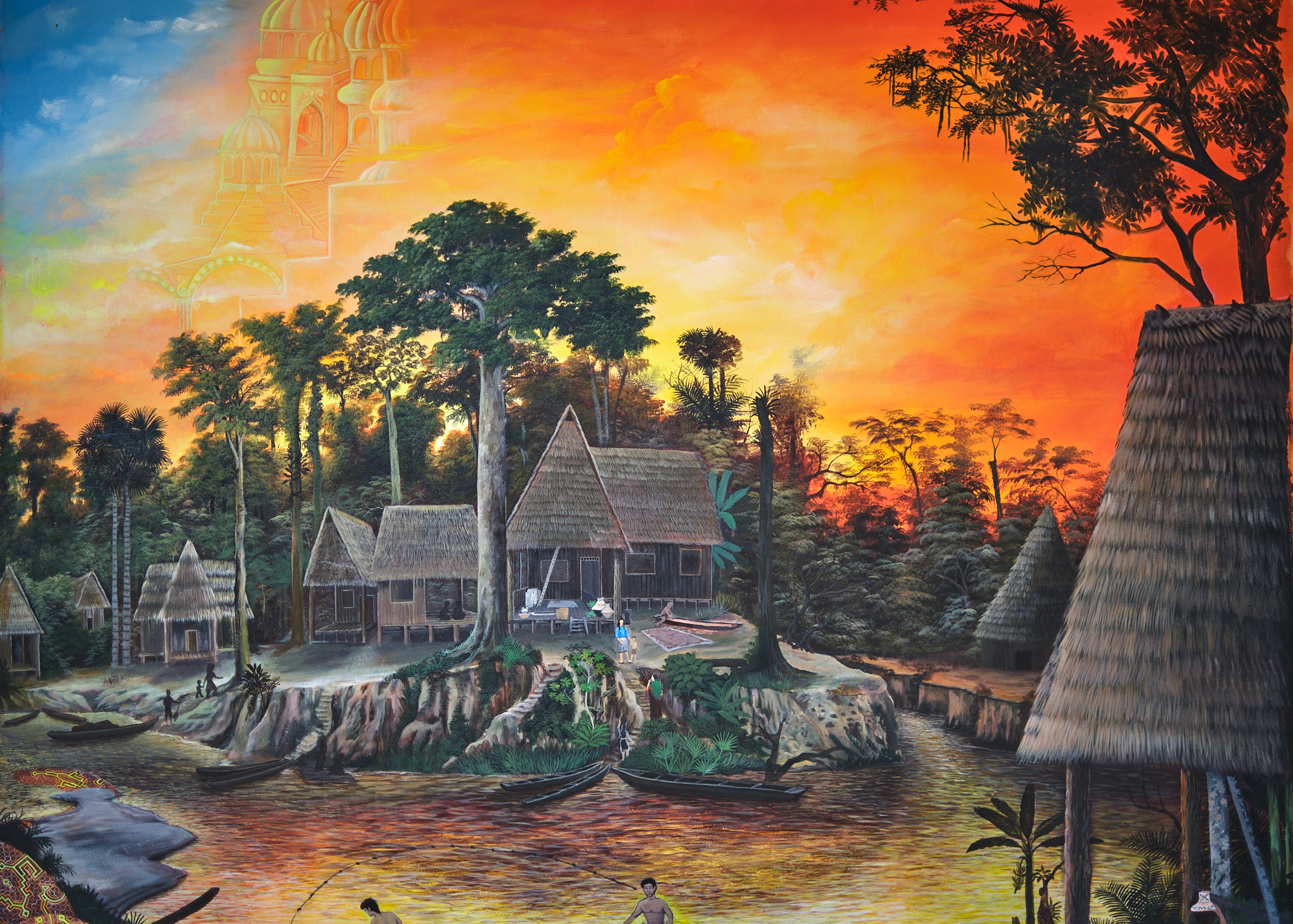
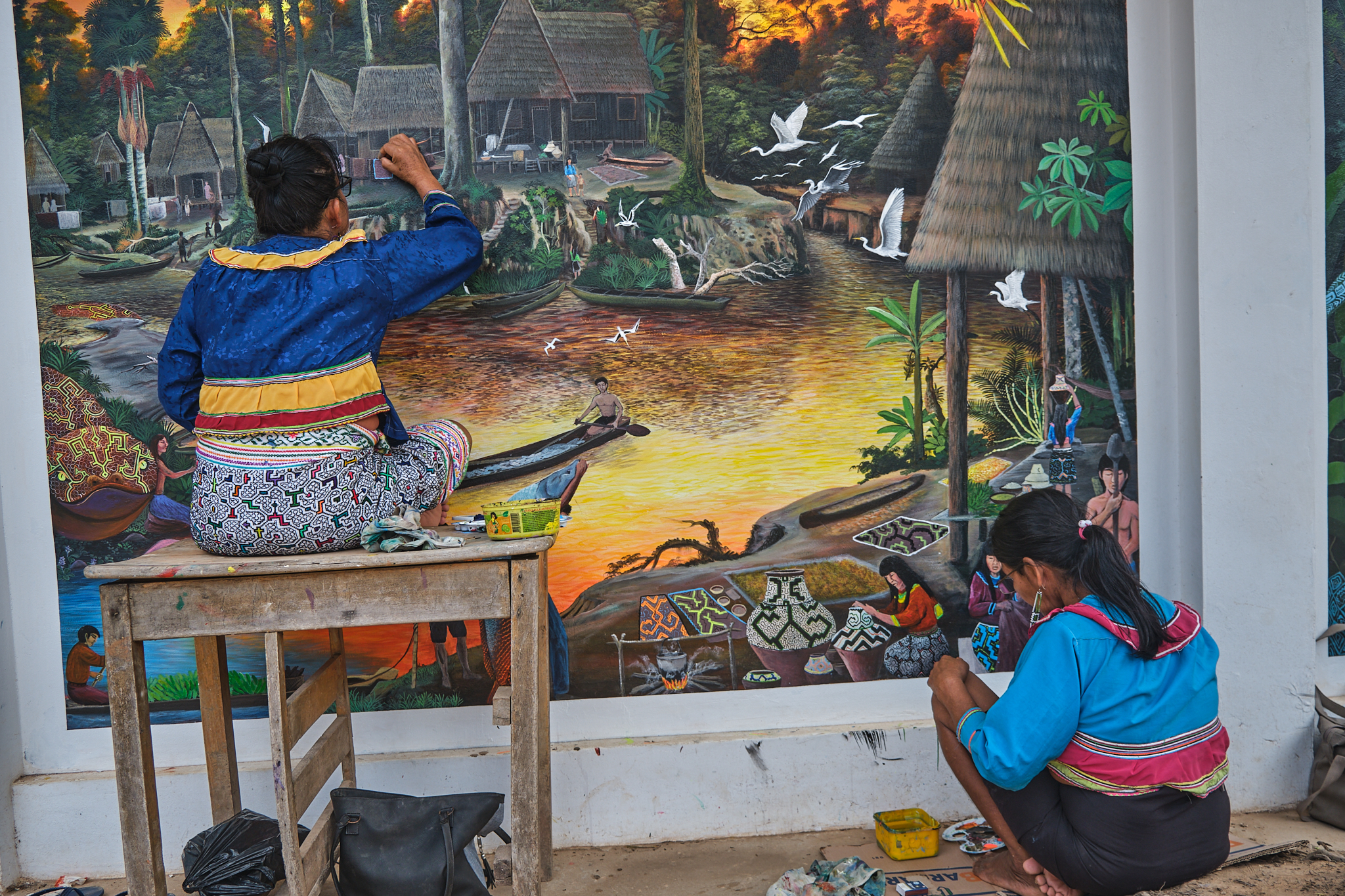
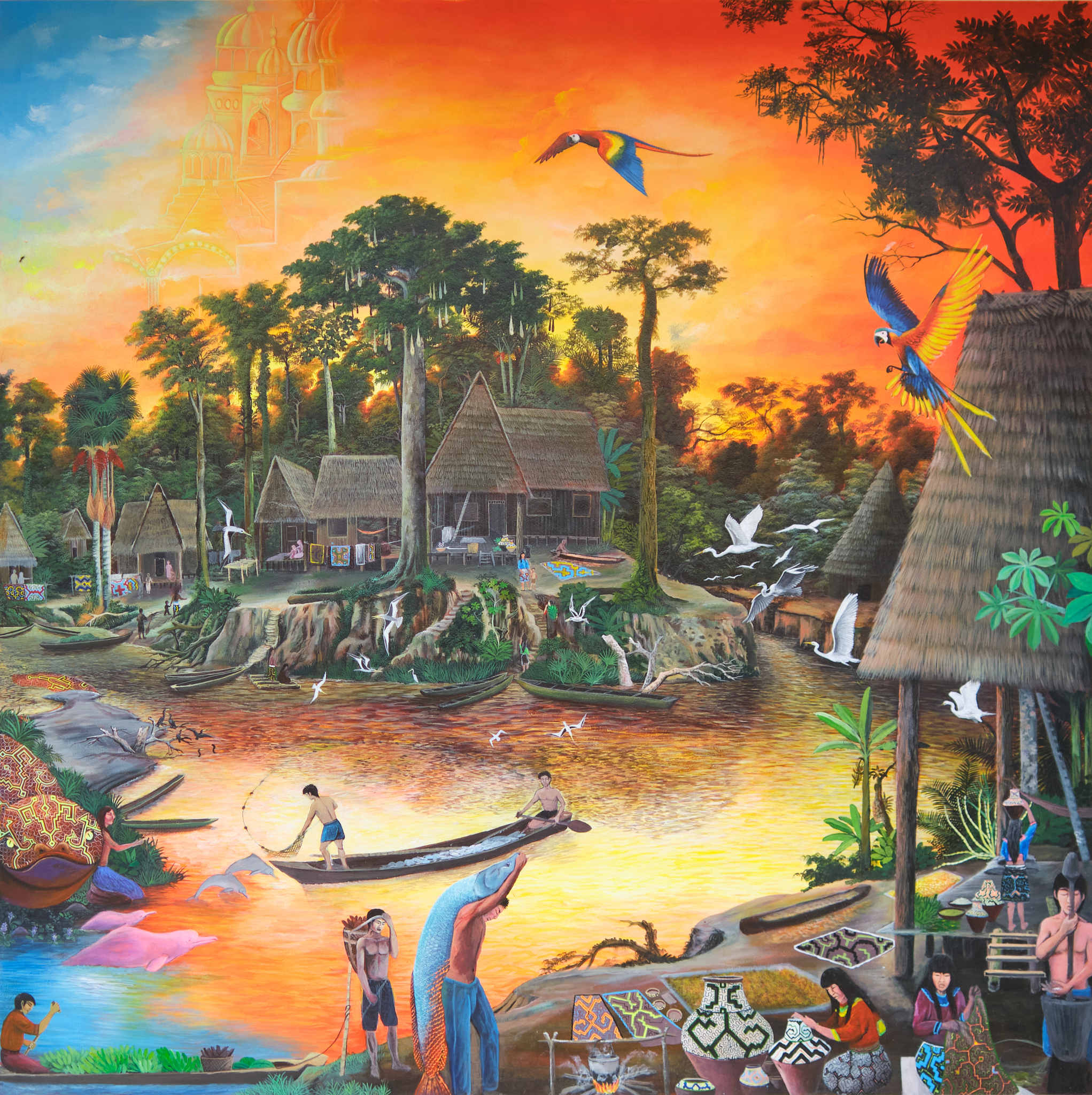
The second mural depicted a classic ‘Neo-Amazónico’ scene, showing a riverside Shipibo community in their daily routine, displaying the richness of their culture. One of the school’s professors David Amaringo directed the initial sketch with his nephew Daniel Marin on the details. The mural contains many activities such as fishing, artisanal processes, the traditional village, and its houses.
Throughout the first couple of weeks, various Shipibo friends would arrive to participate, adding their Kené designs and creative ideas to the mural. Those visiting artists included Adela Panduro Silvano, Ana Maria Fernandez, and Leidy Martinez Panduro.
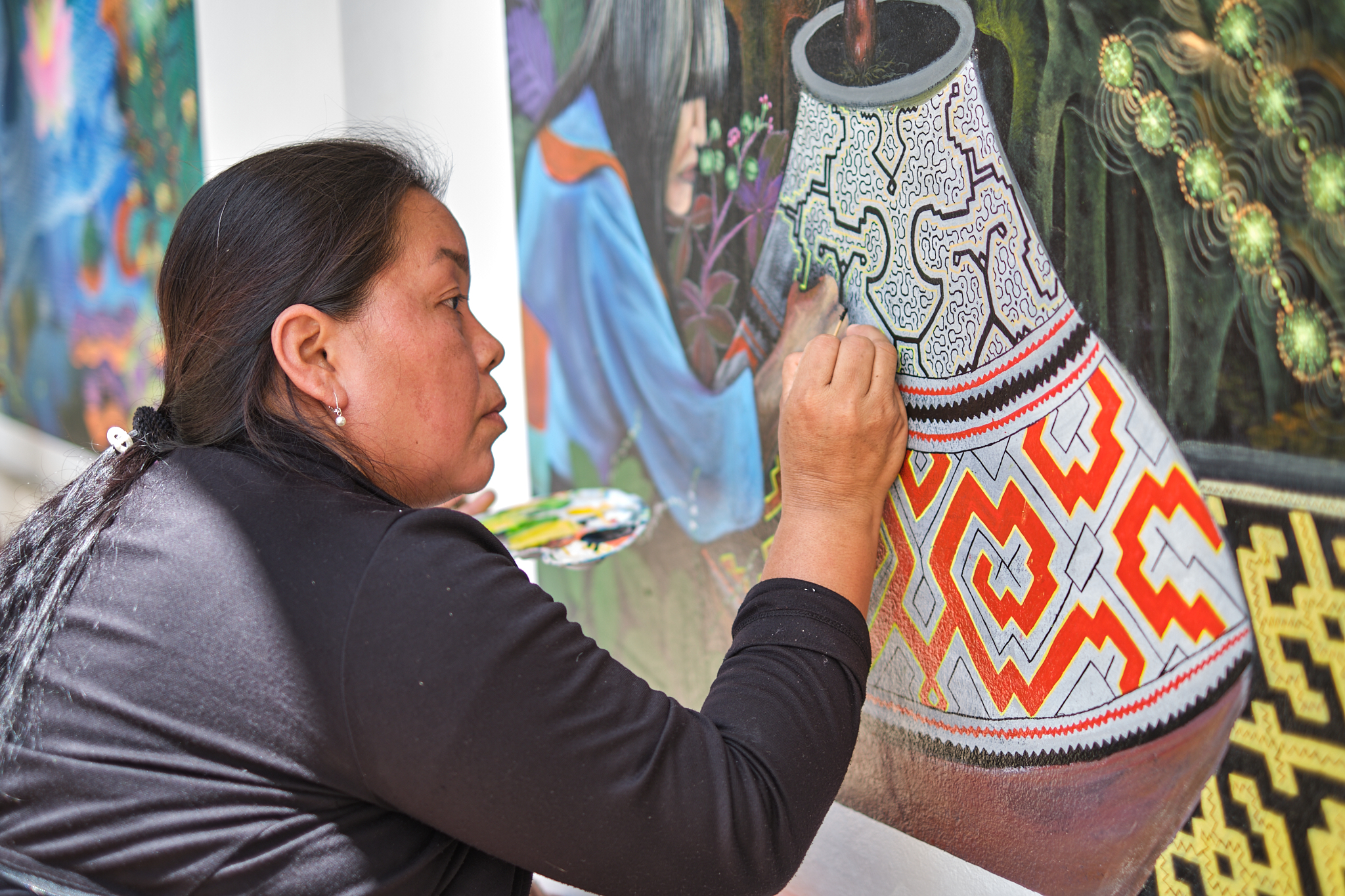
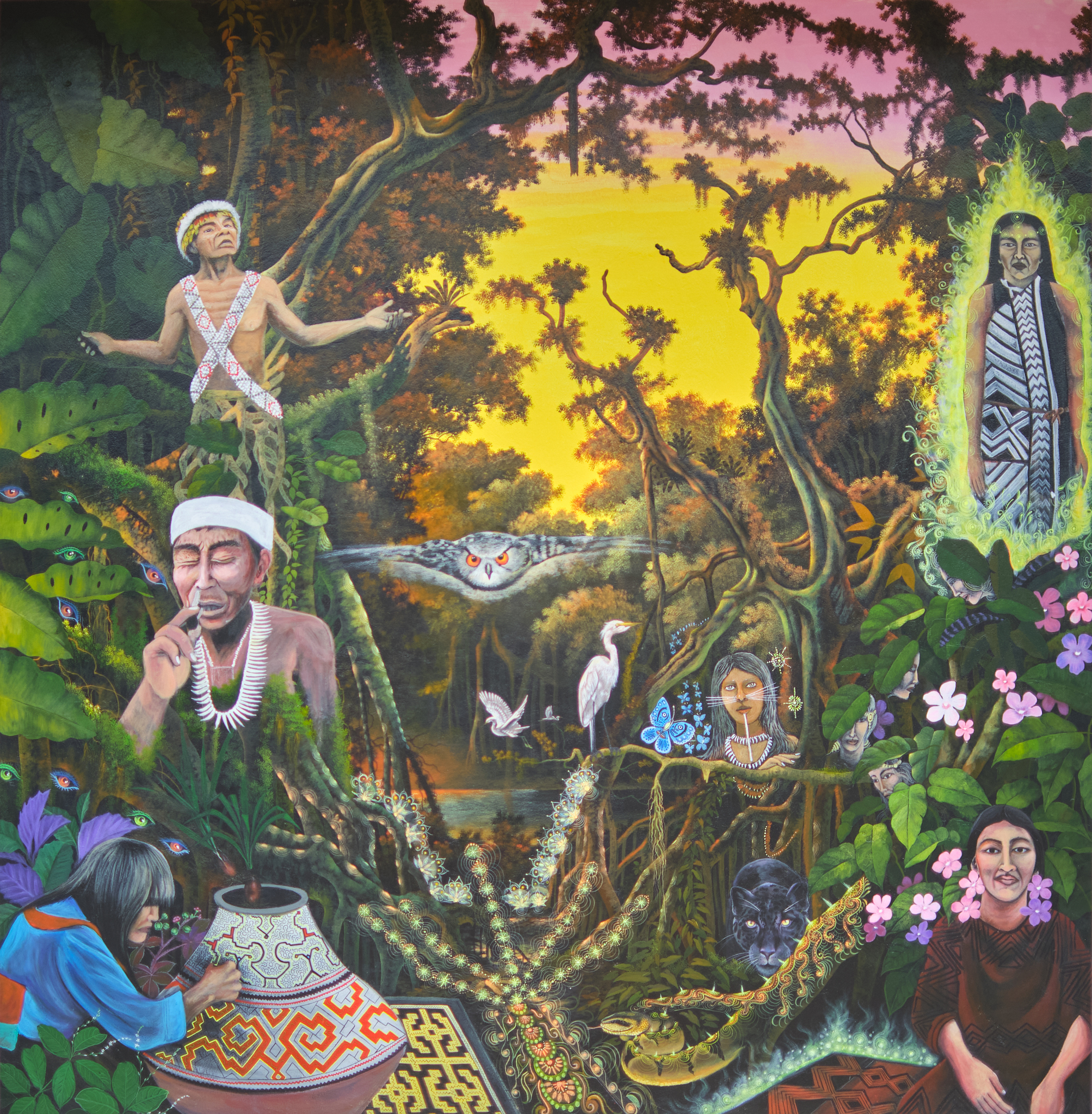
The fourth segment of the mural is an elaboration of the jungle where its flora and fauna grow, whilst showing its connection with forest peoples such as the Awajun, Matsés, Shipibo, and Asheninka. Leidy Panduro Martinez, a renowned Shipibo ceramist, expressed her Kené designs onto a large chomo ceramic, while Ashenika leader Maria Elena Paredes painted the designs of her people onto a traditional dress or kushma.
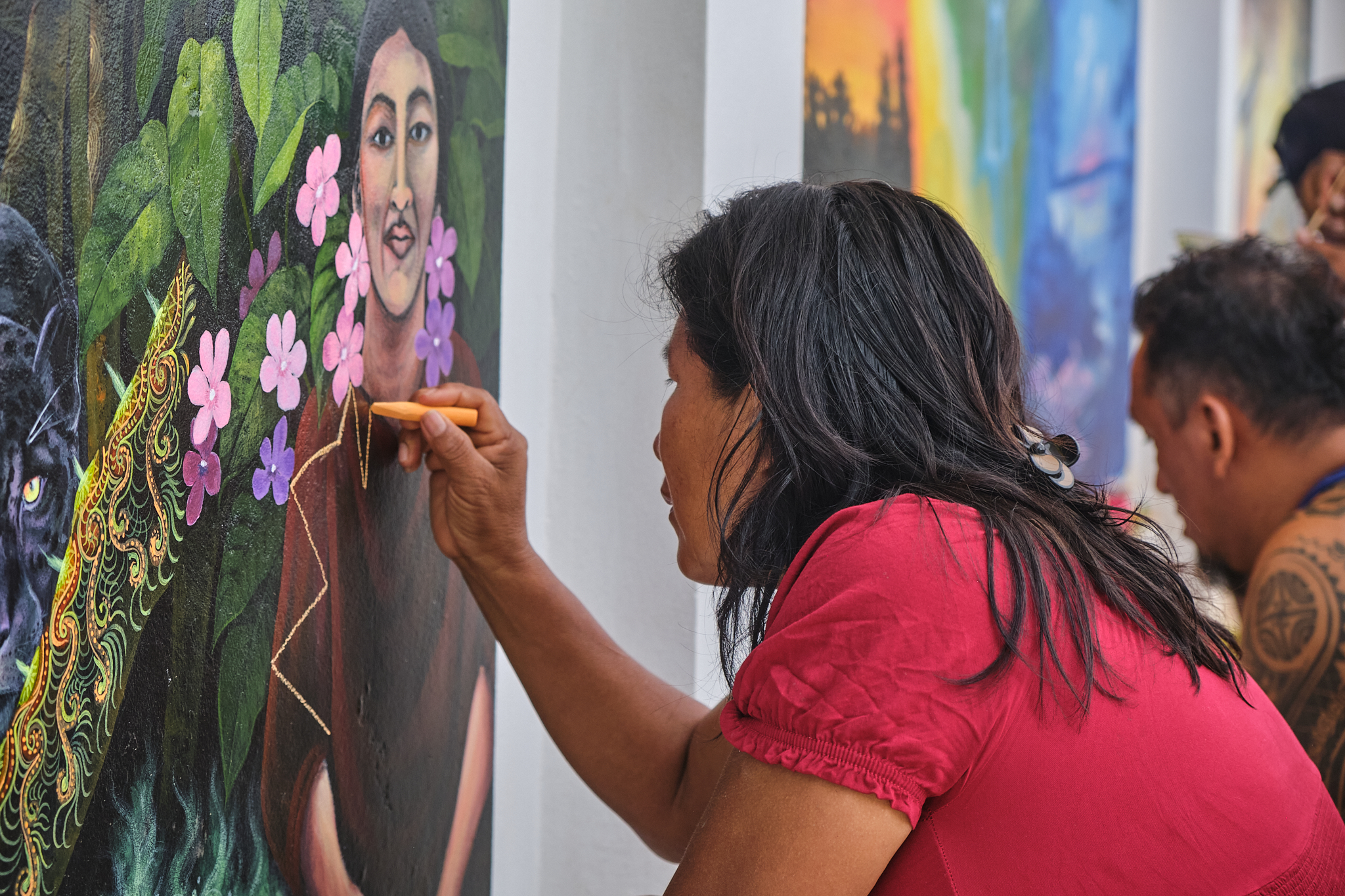
We also had the honor of receiving a legendary local artist Lucho Martinez, to share his magic by painting a Matsés woman camouflaged amidst the forest scene surrounded by butterflies.
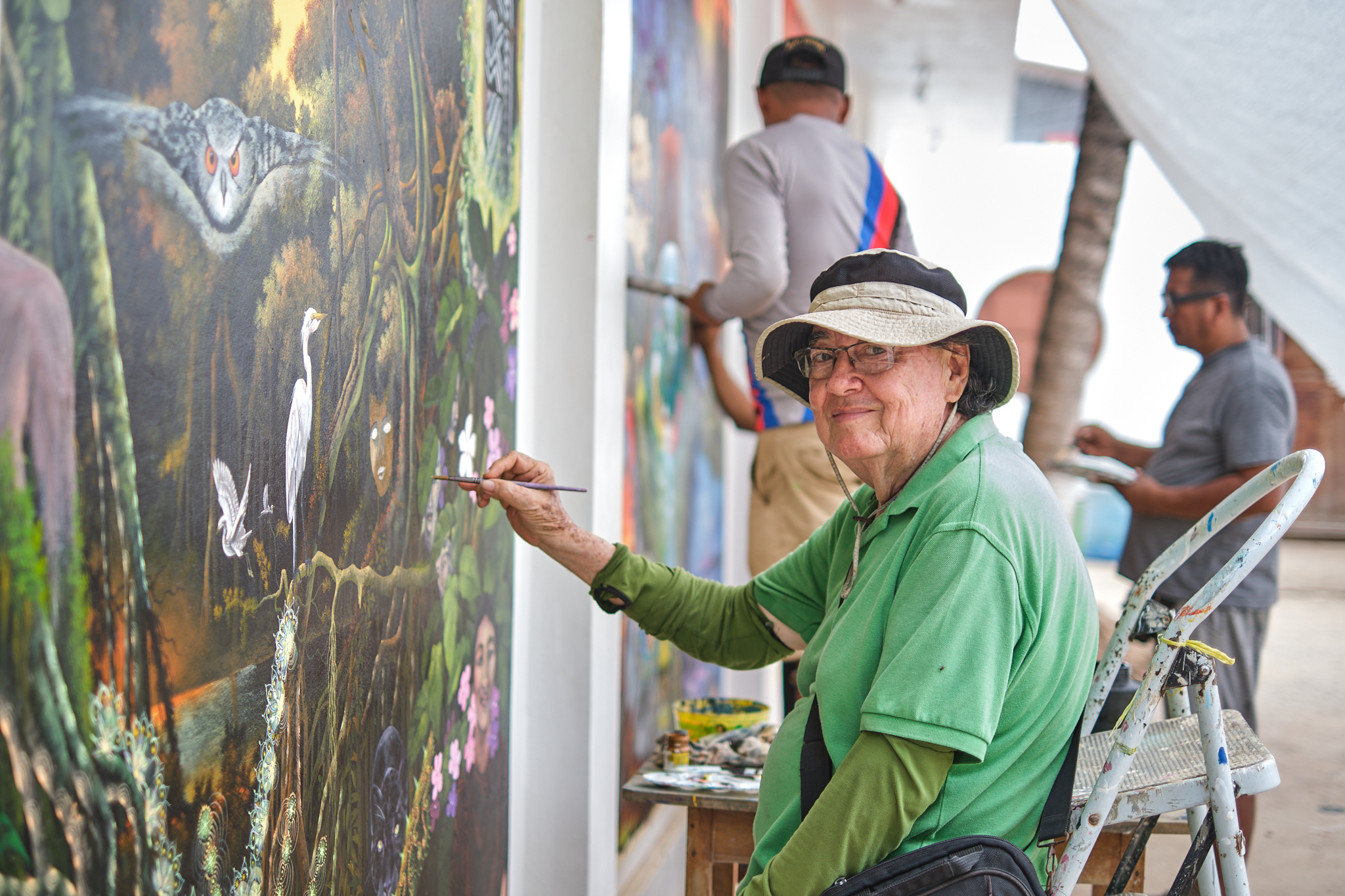
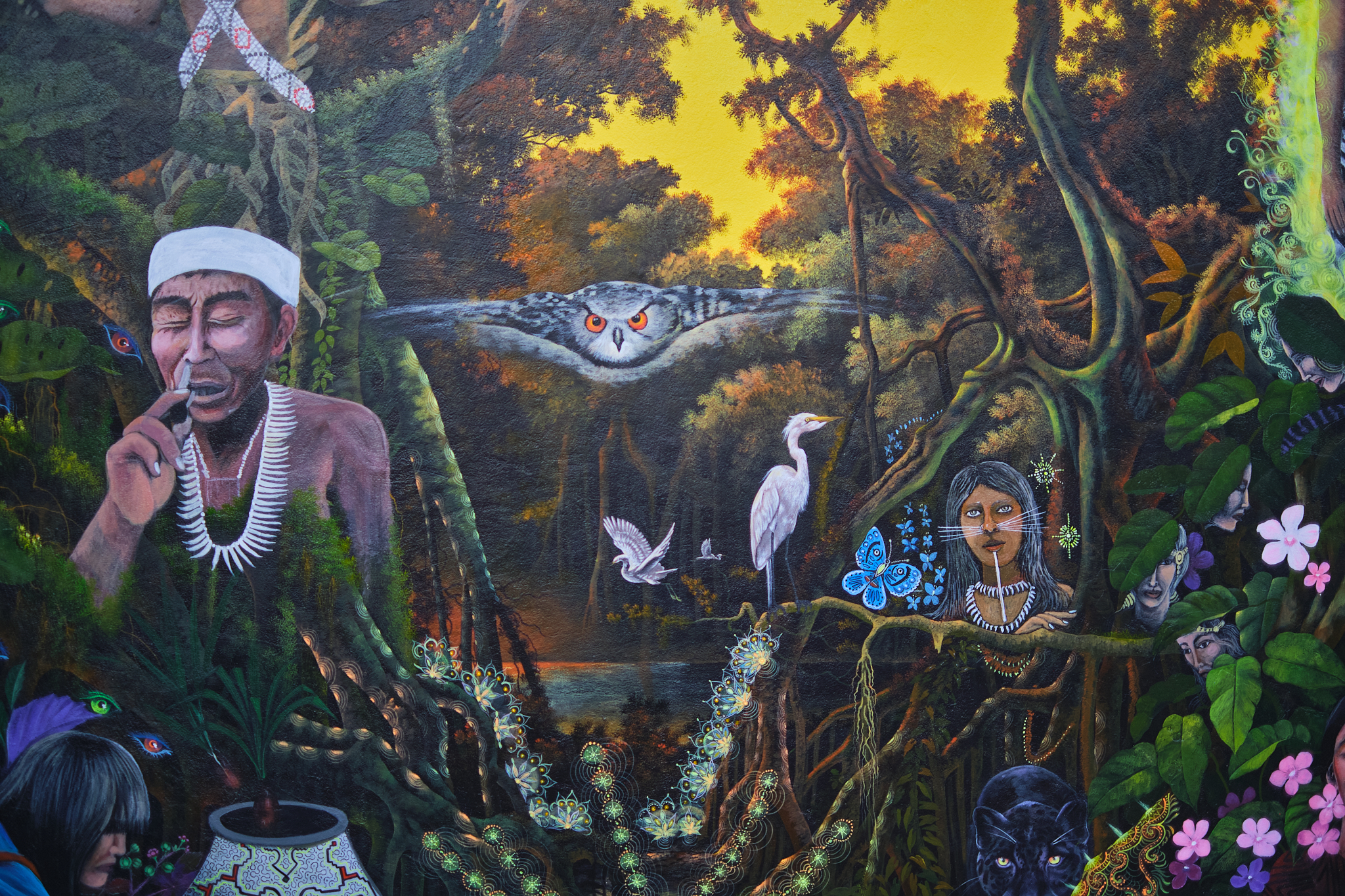
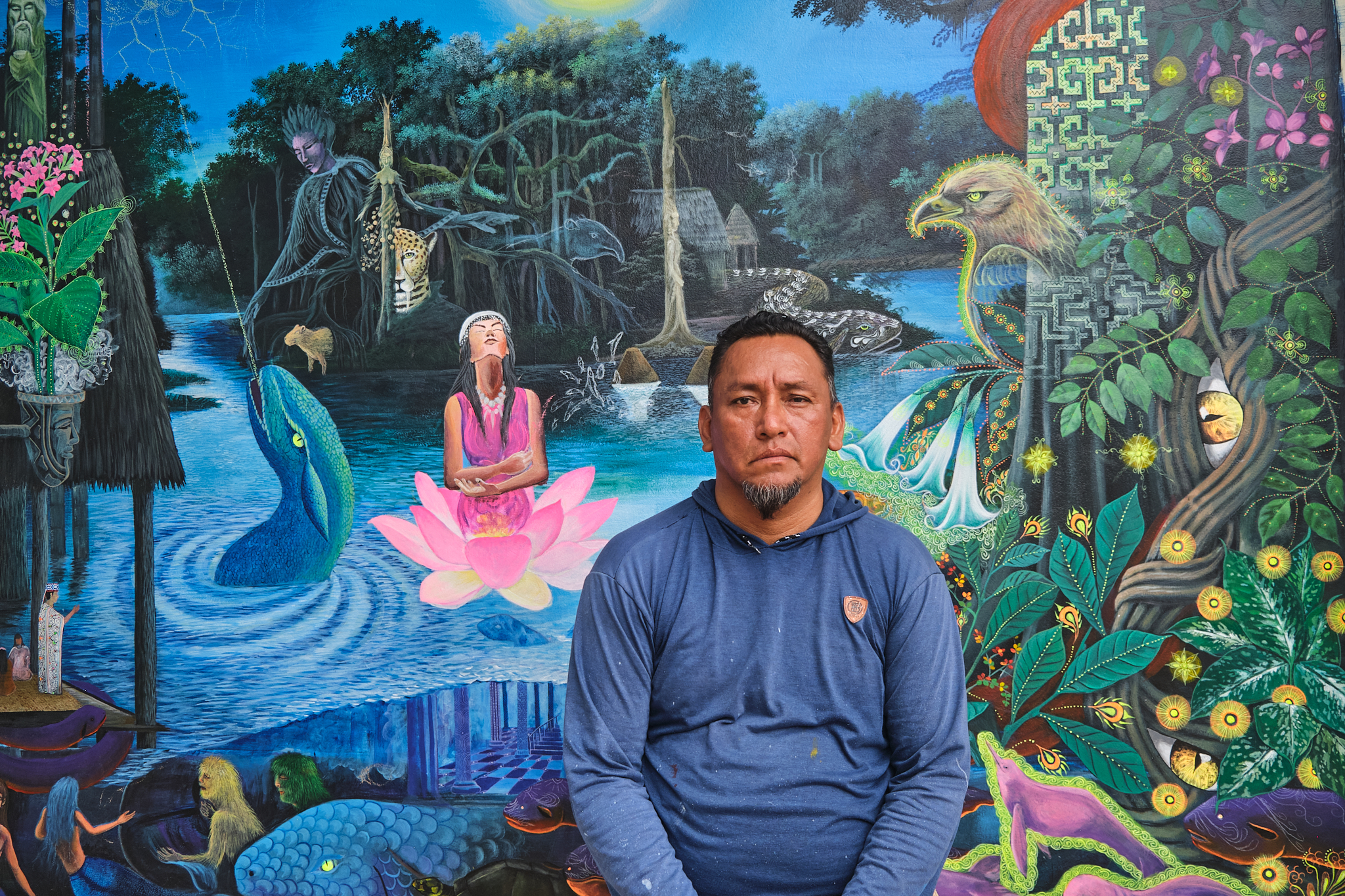
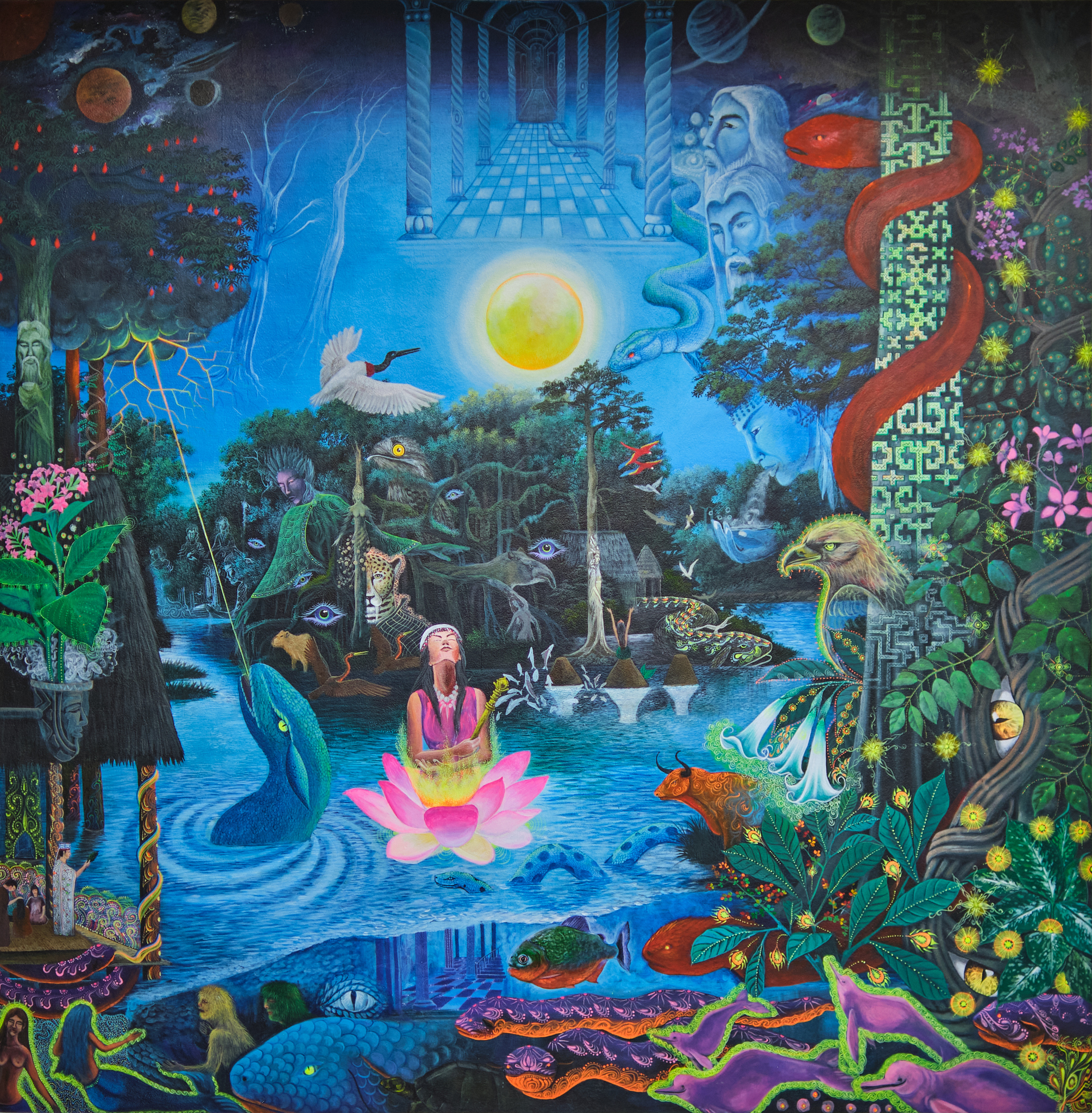
The fifth mural panel is where we see the most influence of the ‘visionary art’ style; a mixture of cosmic visions and magical scenes influenced by the master plants and curandero tradition. This mural panel was led by professor Noe Macedo, who implemented his vast personal knowledge and teachings from his master Pablo Amaringo onto an imagined landscape.
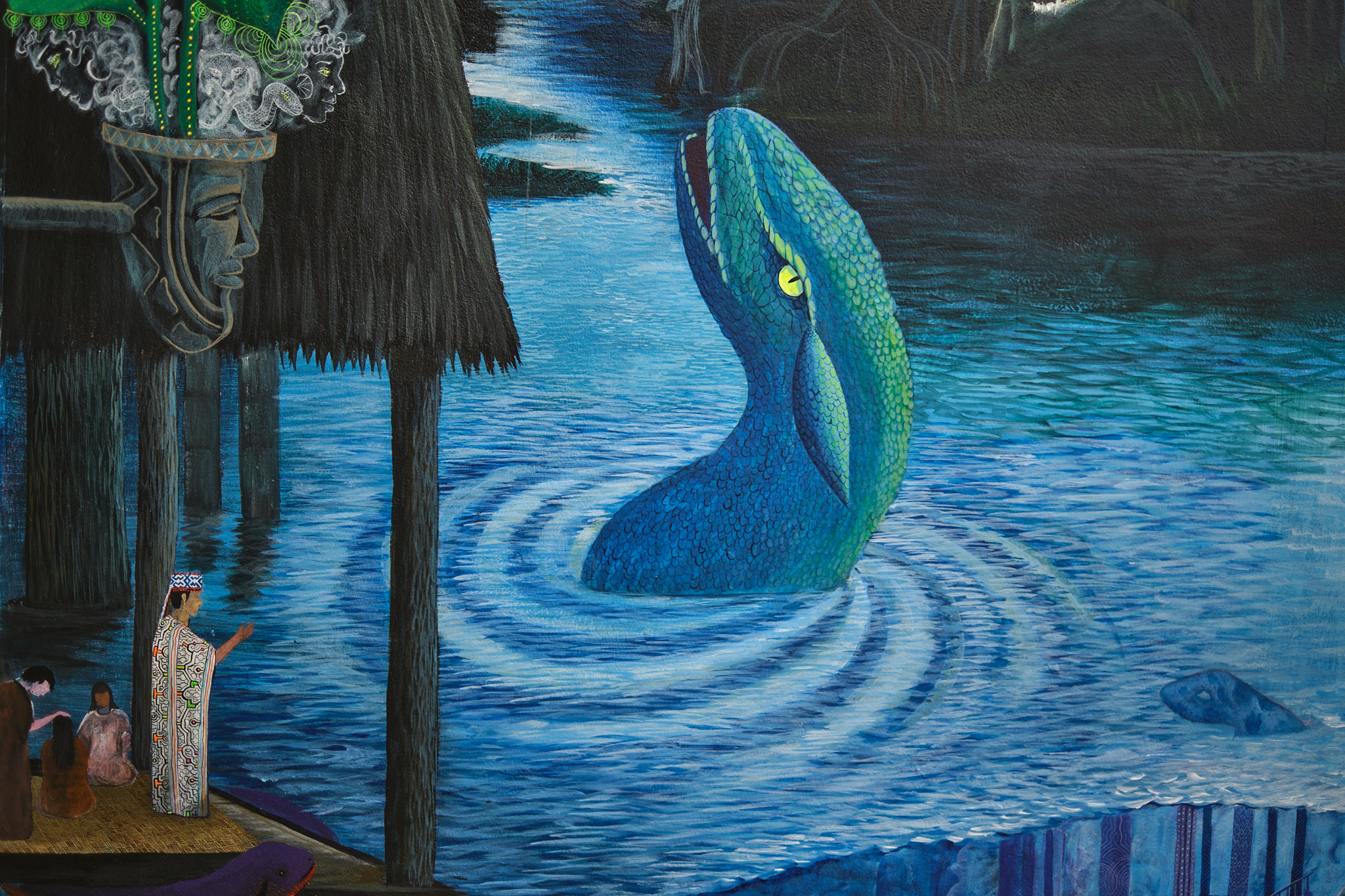
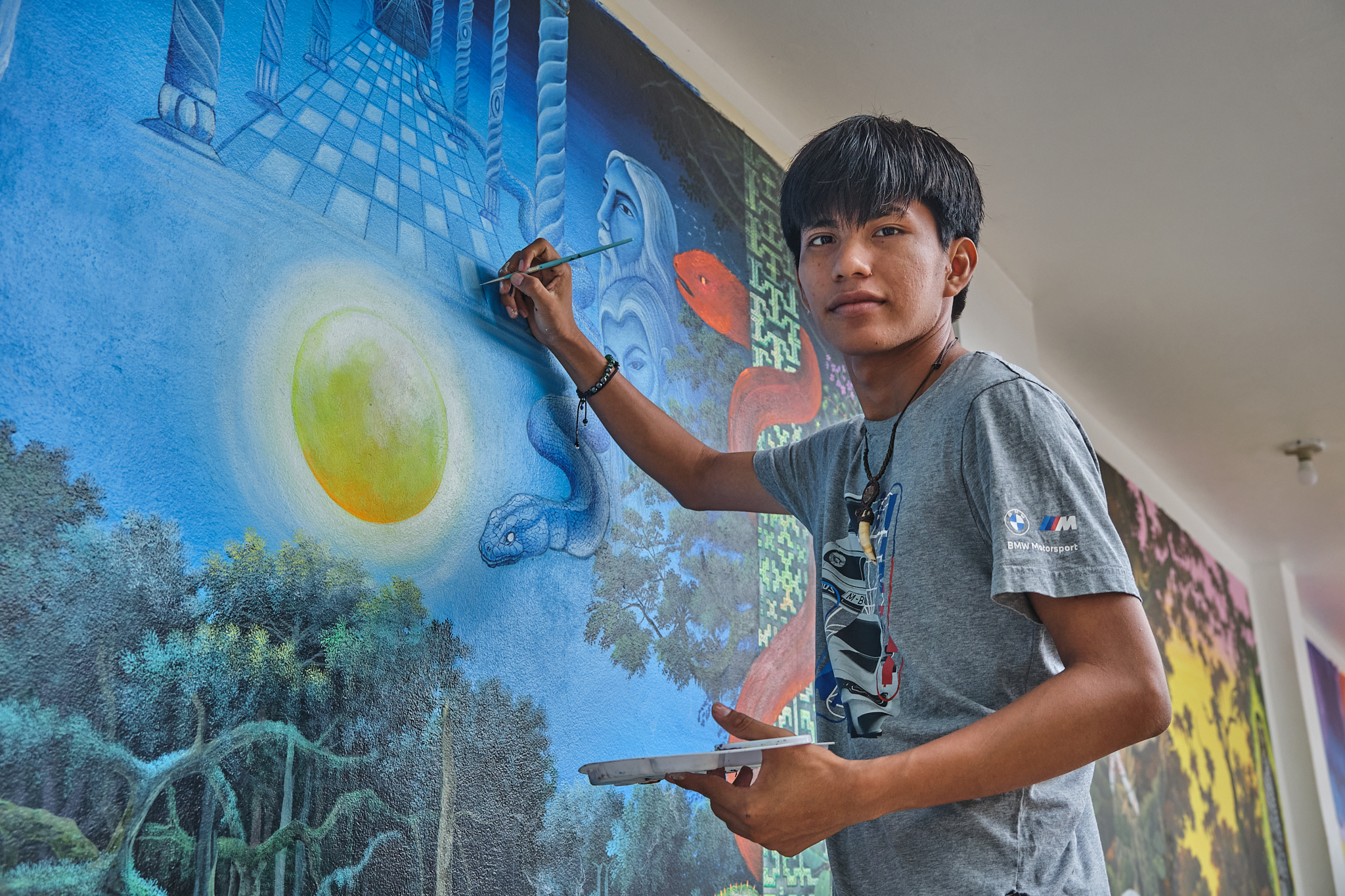
He and the other professors received further insights through conversations with Donaldo Campos, Pedro Reategui, and Merly Bernabe, a Shipiba artist who also aided in deepening the context of this visionary scene with the spiritual figure of the yacumama, who appears as the colossal serpent known as the mother of water.
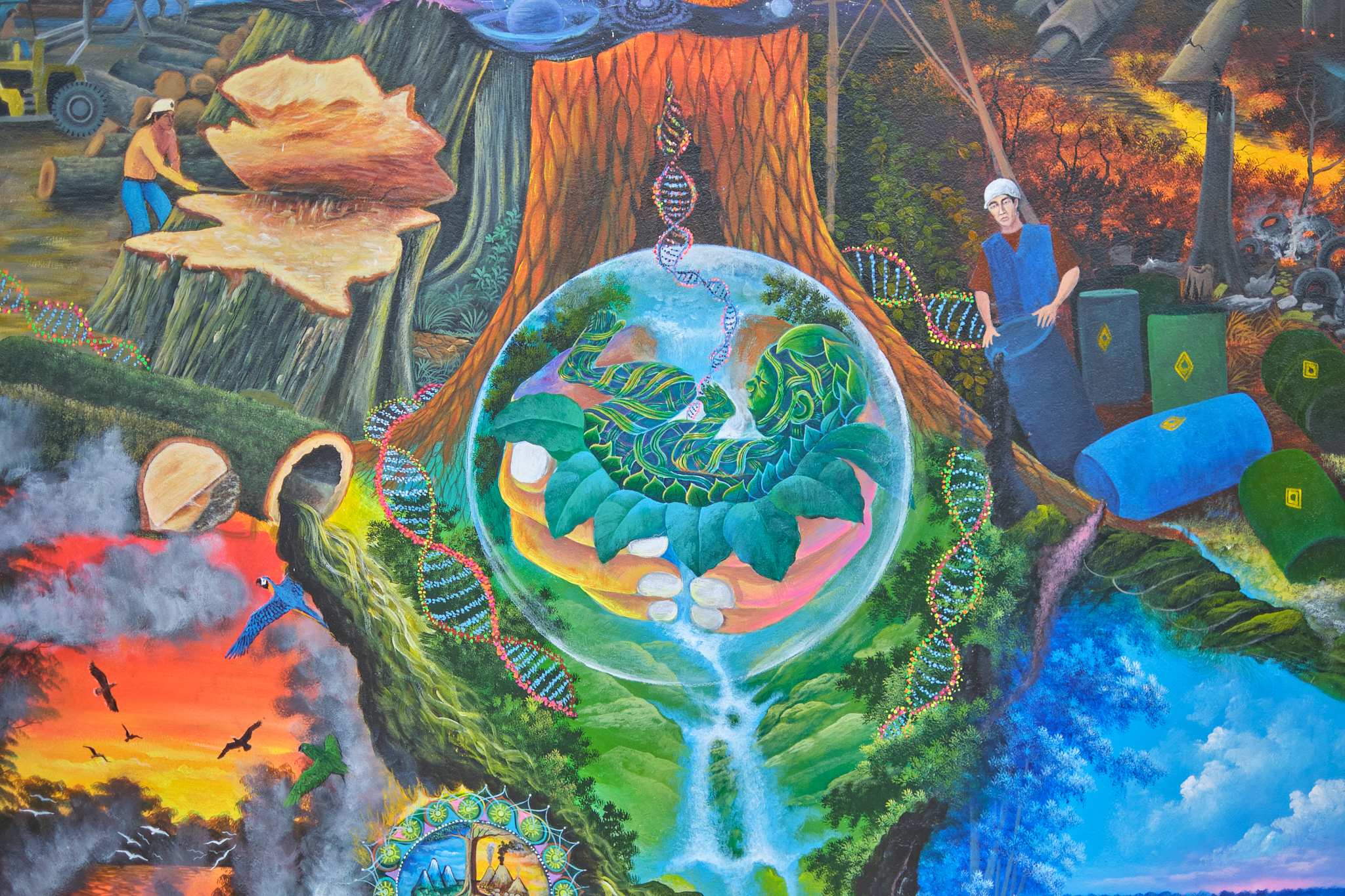
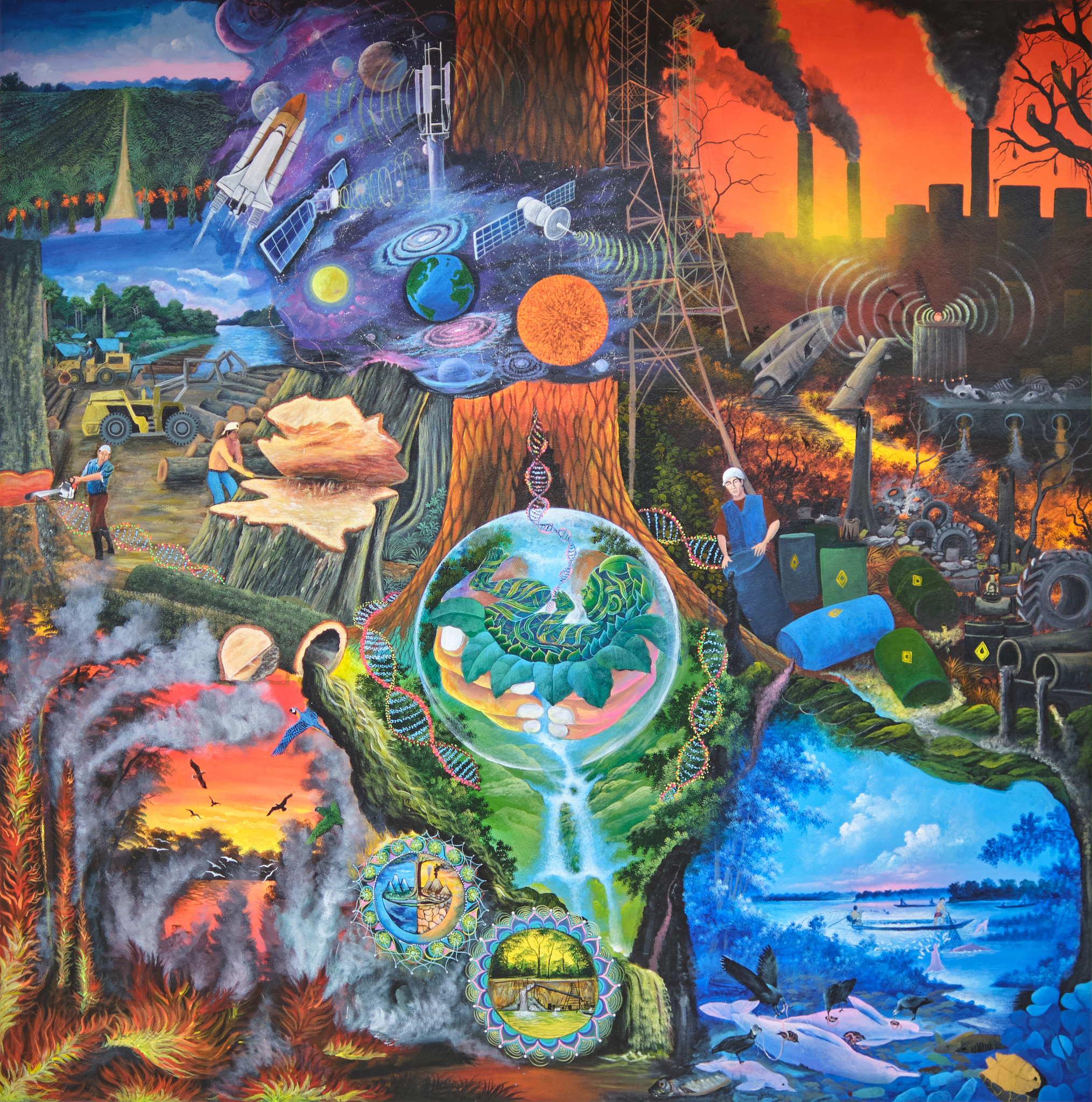
The last mural to be completed and featured at the center of all the others was contemplated at length over the course of those weeks. A roundtable discussion between the professors, Indigenous artists, and the Xapiri team disseminated themes and ideas on how to convey the present-day threats and challenges directly affecting and altering the Amazon we know today.
The images that were ultimately rendered were deforestation, technological and environmental pollution, mining, the degradative effects of the palm oil industry, polluted waters, and the eventual outcome for future generations should these threats continue to proliferate.
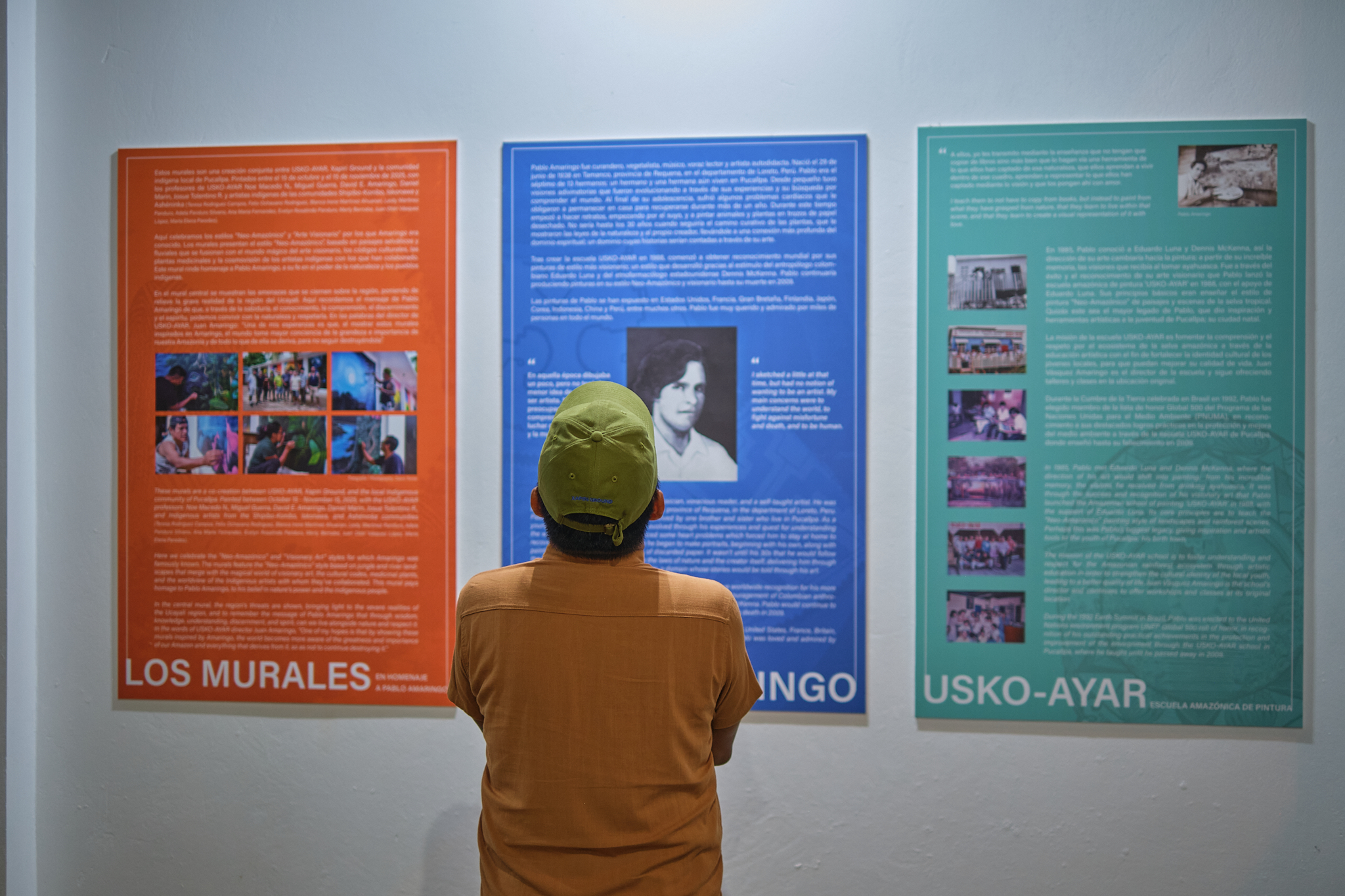
On the final days before the mural’s completion, the Xapiri Ground team prepared the last touches in anticipation of the inauguration night. We had printed and hung up the informational panels to accompany the murals outside, after which a small selection of Amaringo’s Neo-Amazónico works, previously exhibited at our Cusco gallery in 2025, were mounted inside the school’s main hall, marking the first time these works would see public exhibition in Amaringo’s hometown of Pucallpa. And last but not least, the final backdrop and stage were positioned for the legendary Pucallpa band, Jauneco y su Combo, who would play an extended set to honor the special night of unveiling.
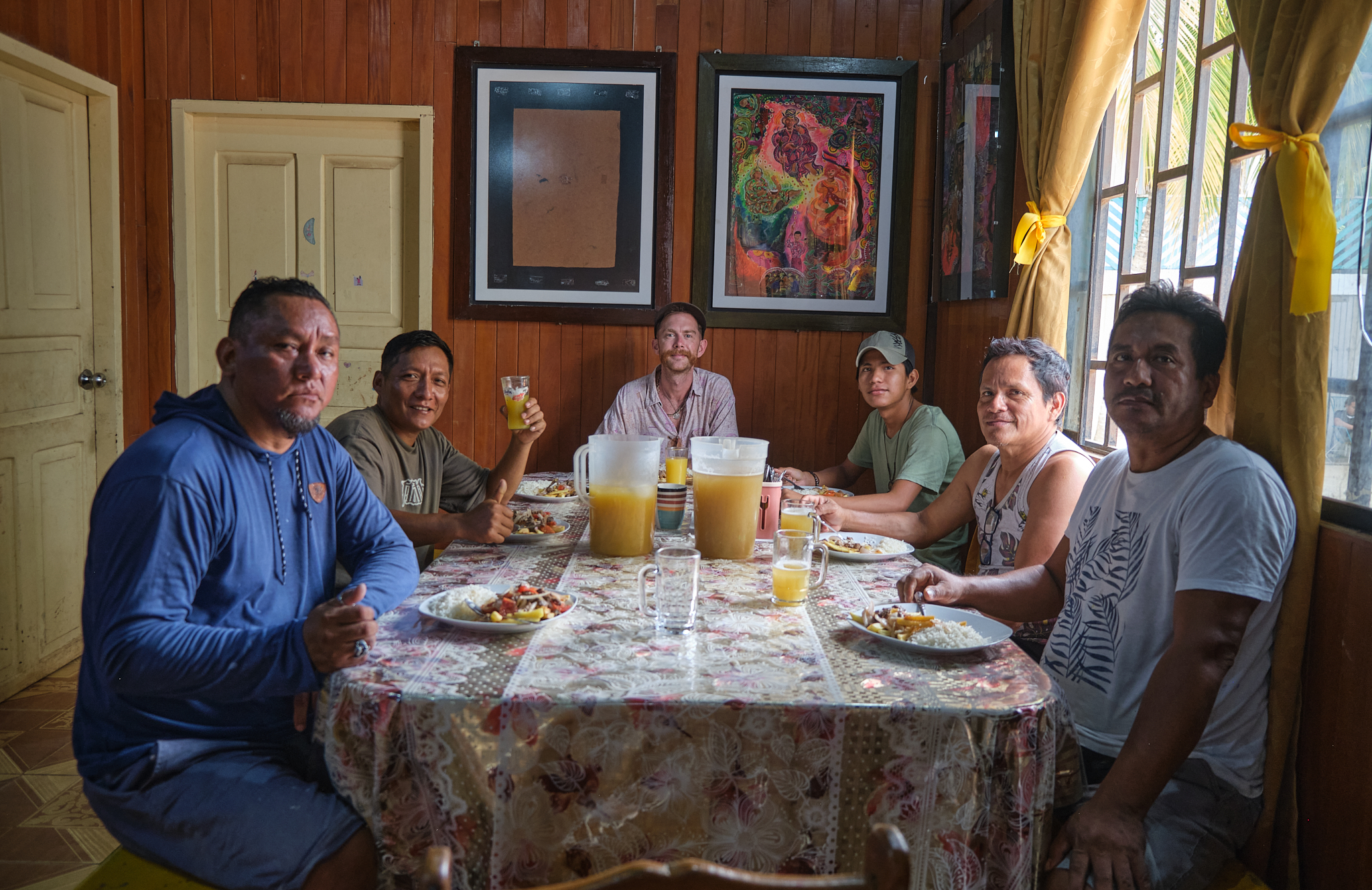
This month-long process was a bonding experience between USKO-AYAR, the professors, Xapiri Ground, and the invited Indigenous artists. The start of each day began over breakfast and reconvened over lunch, where stories connected everybody and ideas took form. Because the mural was under constant review and reflection, it was forever evolving.
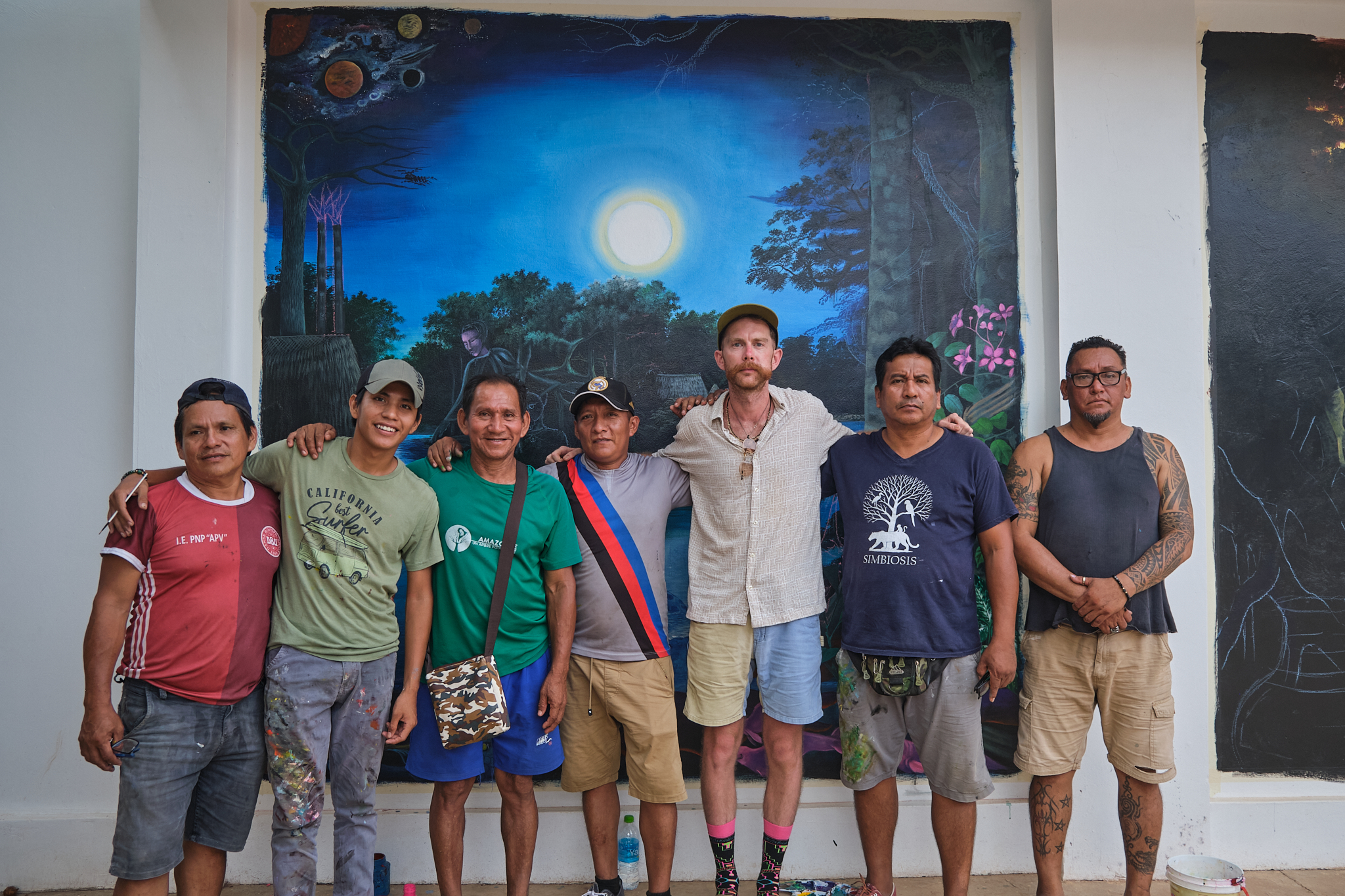
The mural, as a collective of five distinct landscapes, is a transmission of Amazonian cultures and cosmovisions from distinct Indigenous peoples. It also holds a wealth of information surrounding the local flora and fauna. With Noe Macedo, we identified an abundance of plants and trees, such as toé, tobacco, ojé, bobinsana, aguaje, and many more. It is our hope and wish that these murals evoke admiration, contemplation, and deep dialogue for all who come and experience them face to face.
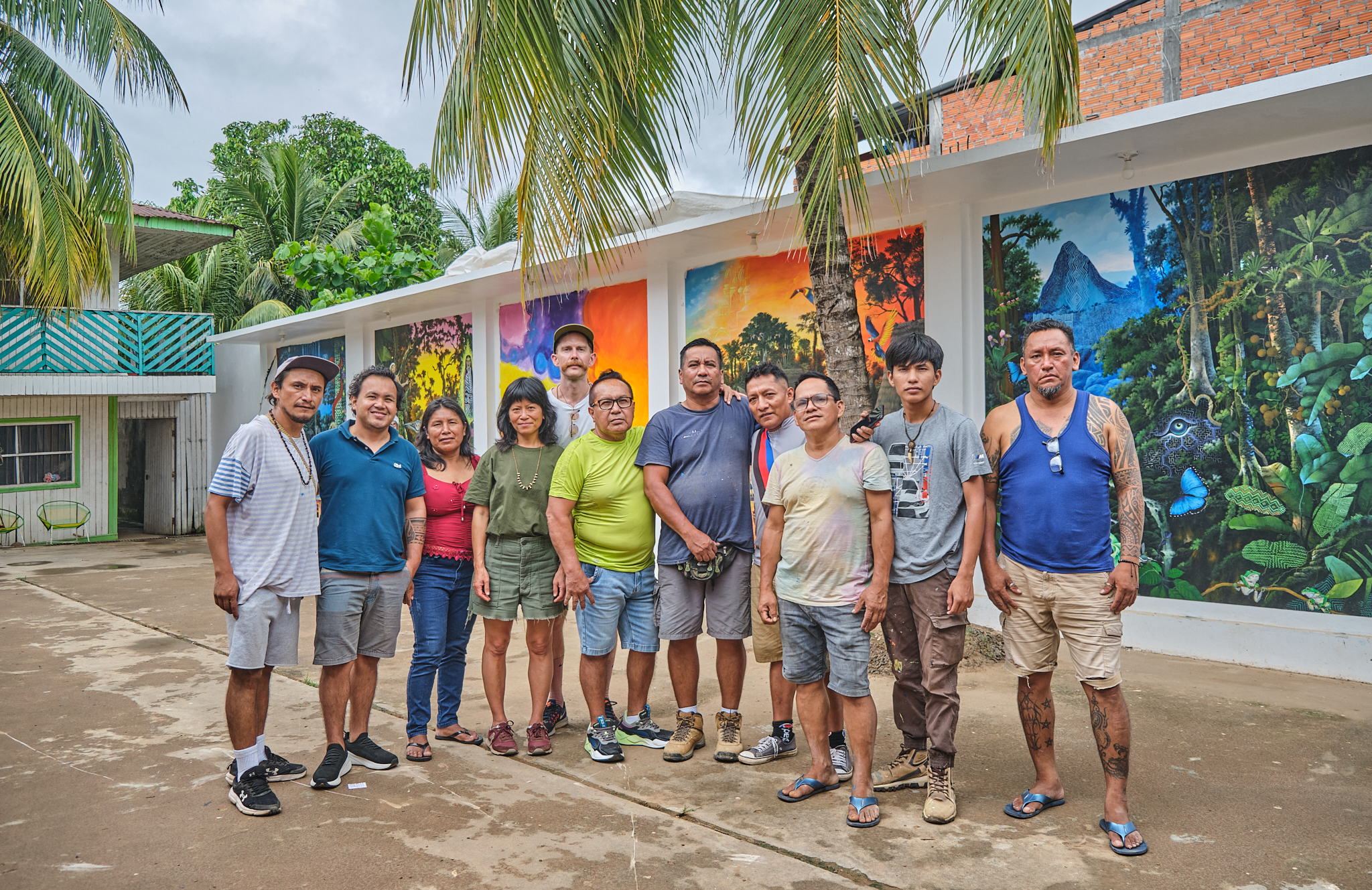
On Saturday, November 15th, 2025, the inauguration event took place. Filled with family, friends, and the locals of Pucallpa, all were invited to share an evening of reflection and celebration, in homage to Pablo Amaringo and the USKO-AYAR school of painting. The Xapiri Ground team gave a presentation on the history of how this work came about, while the professors shared their experiences and memories of Don Pablo, as well as personal reflections from the Indigenous collaborators.

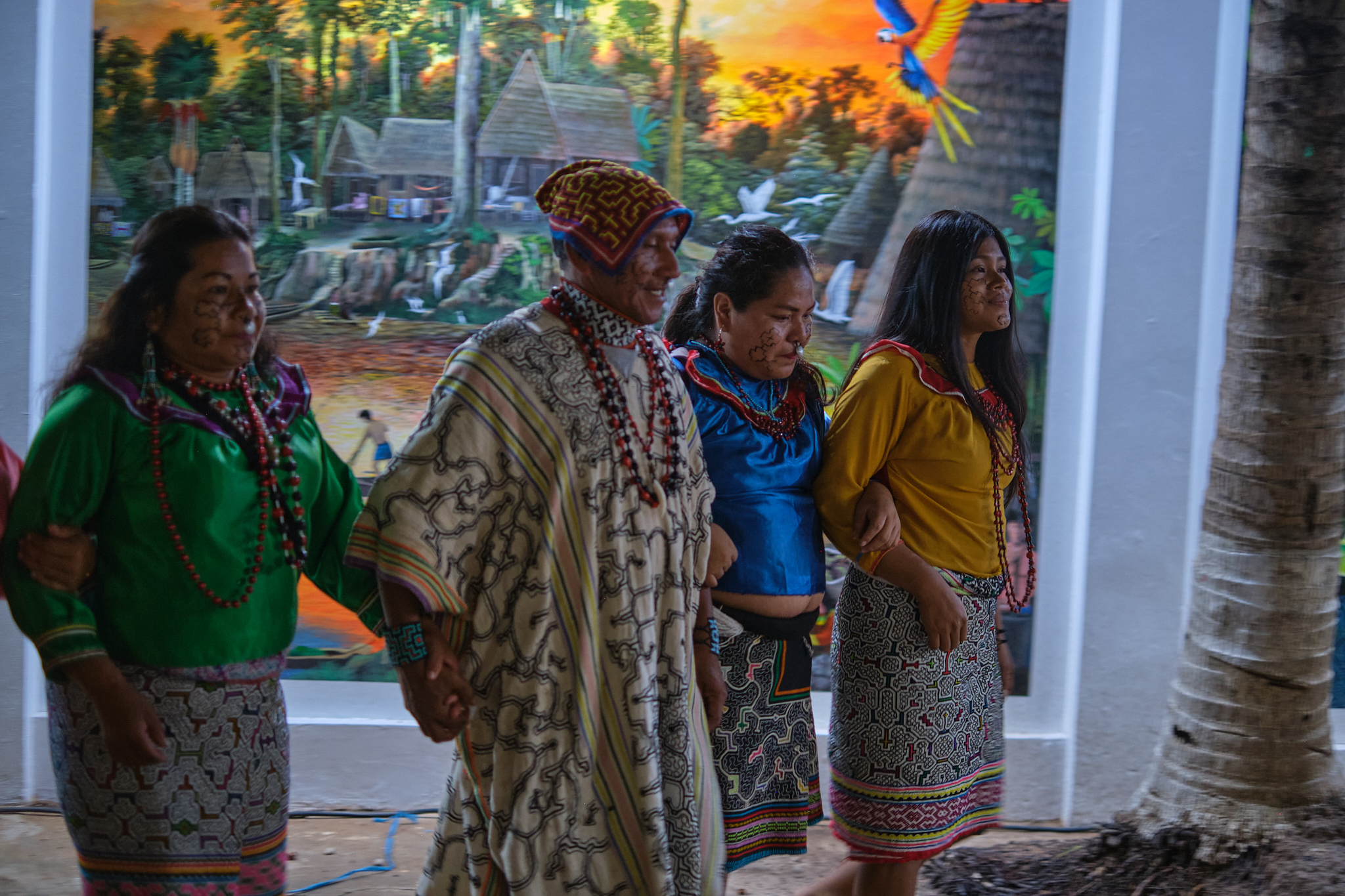
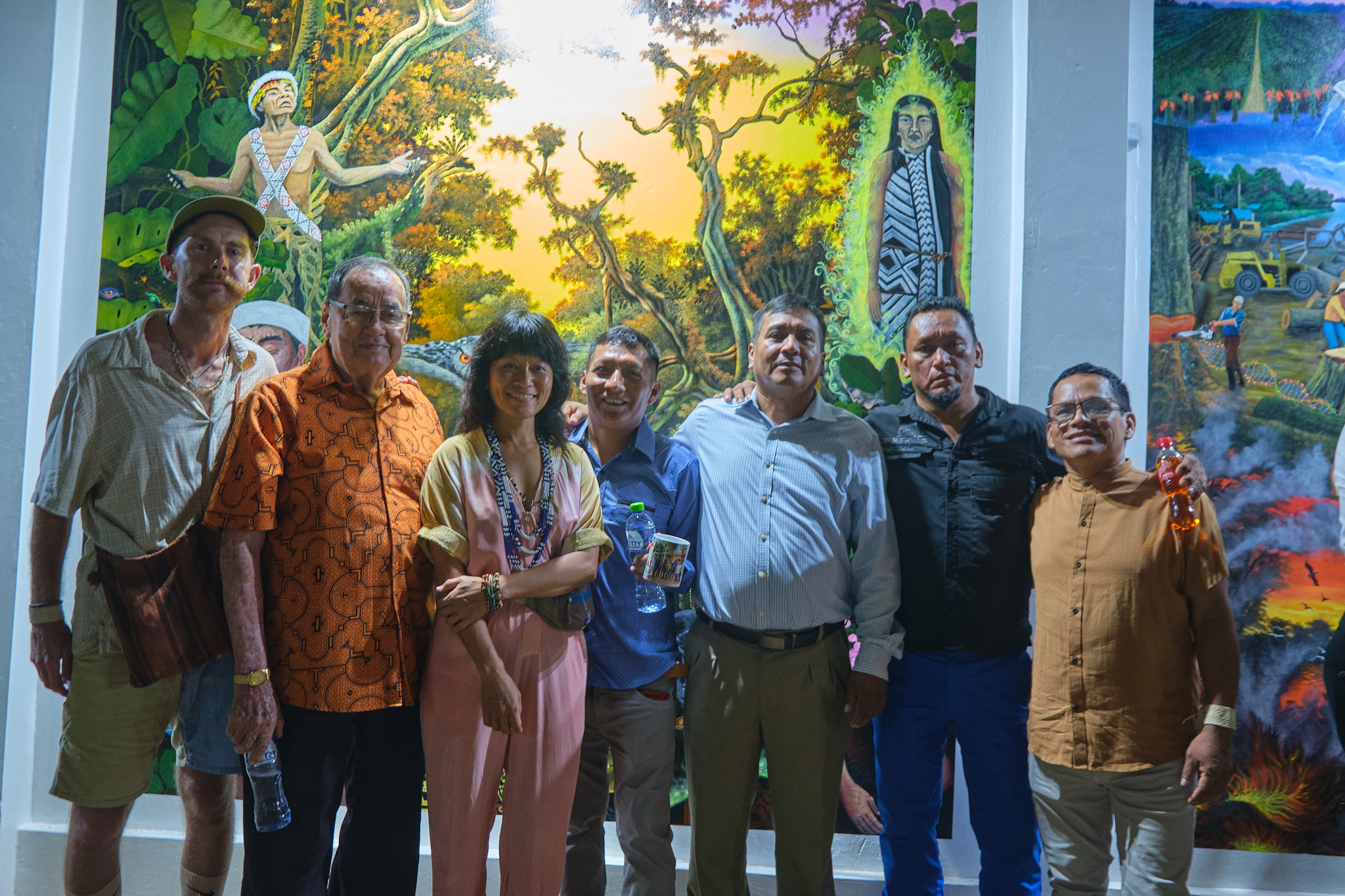
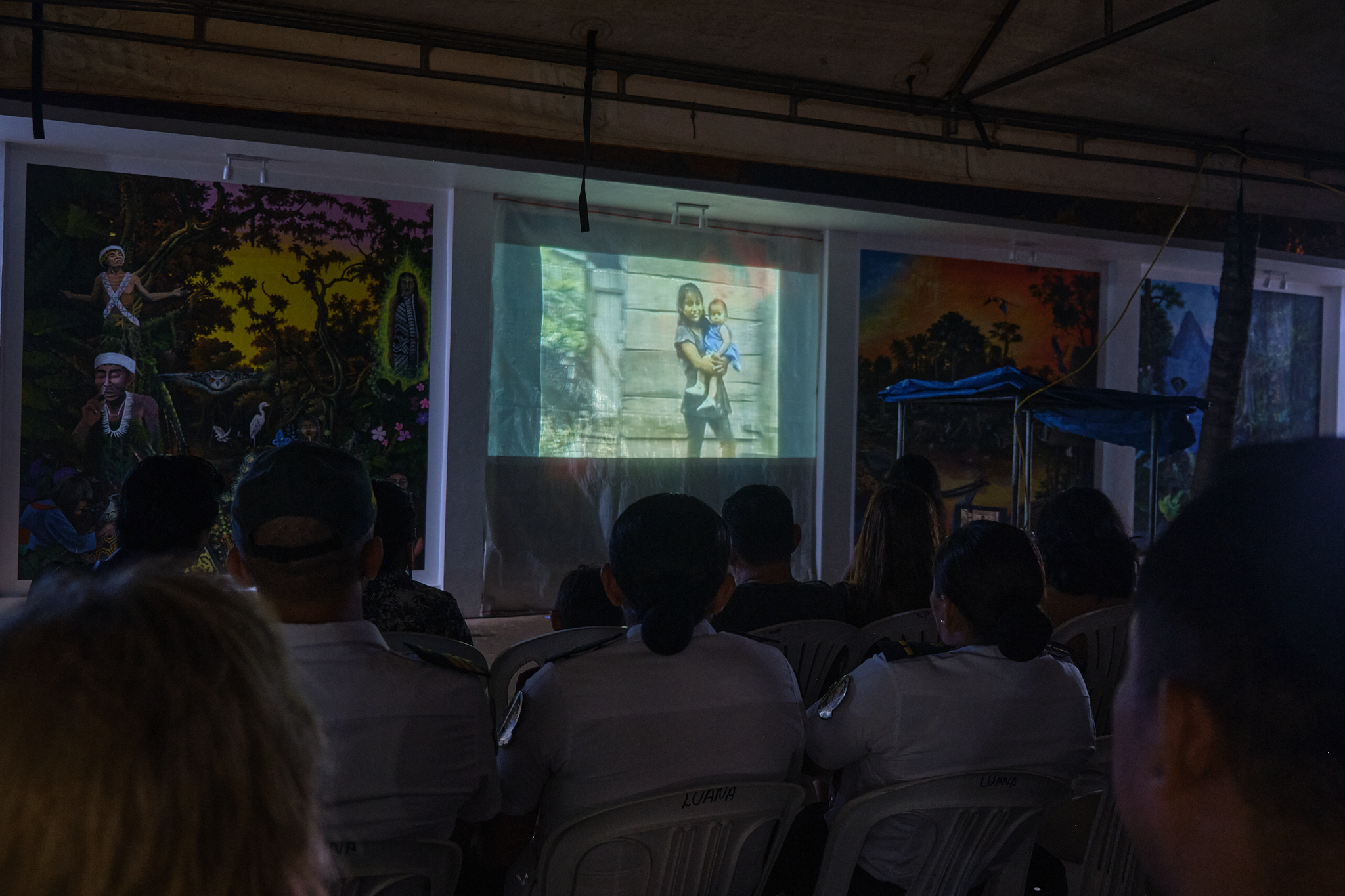
We also screened the documentary film “Por eso les digo que pinten” (Luis Eduardo Luna, 1989), reminding us all of the beginning seeds of USKO-AYAR, the teachings of Don Pablo, and how different Pucallpa was just 35 years ago.
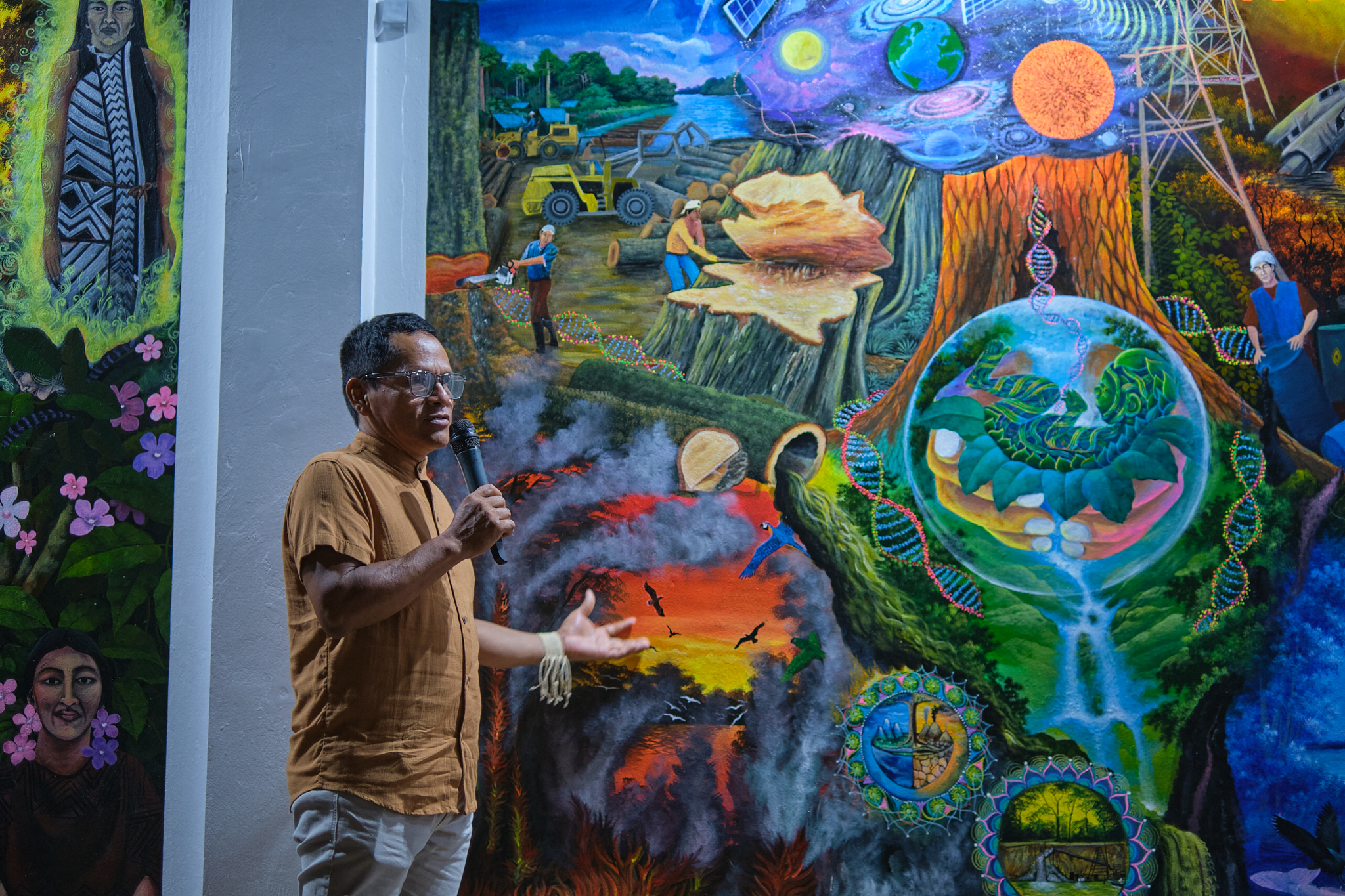
After the presentations and film screening, David Amaringo unveiled the central mural showing the present-day threats to the Amazon, leaving a strong impression on the attendees while shining a light on the hard reality facing the Ucayali region. And it is here that we remembered the message of Pablo Amaringo, that through wisdom, knowledge, understanding, discernment, and spirit, may we live alongside nature and respect it.
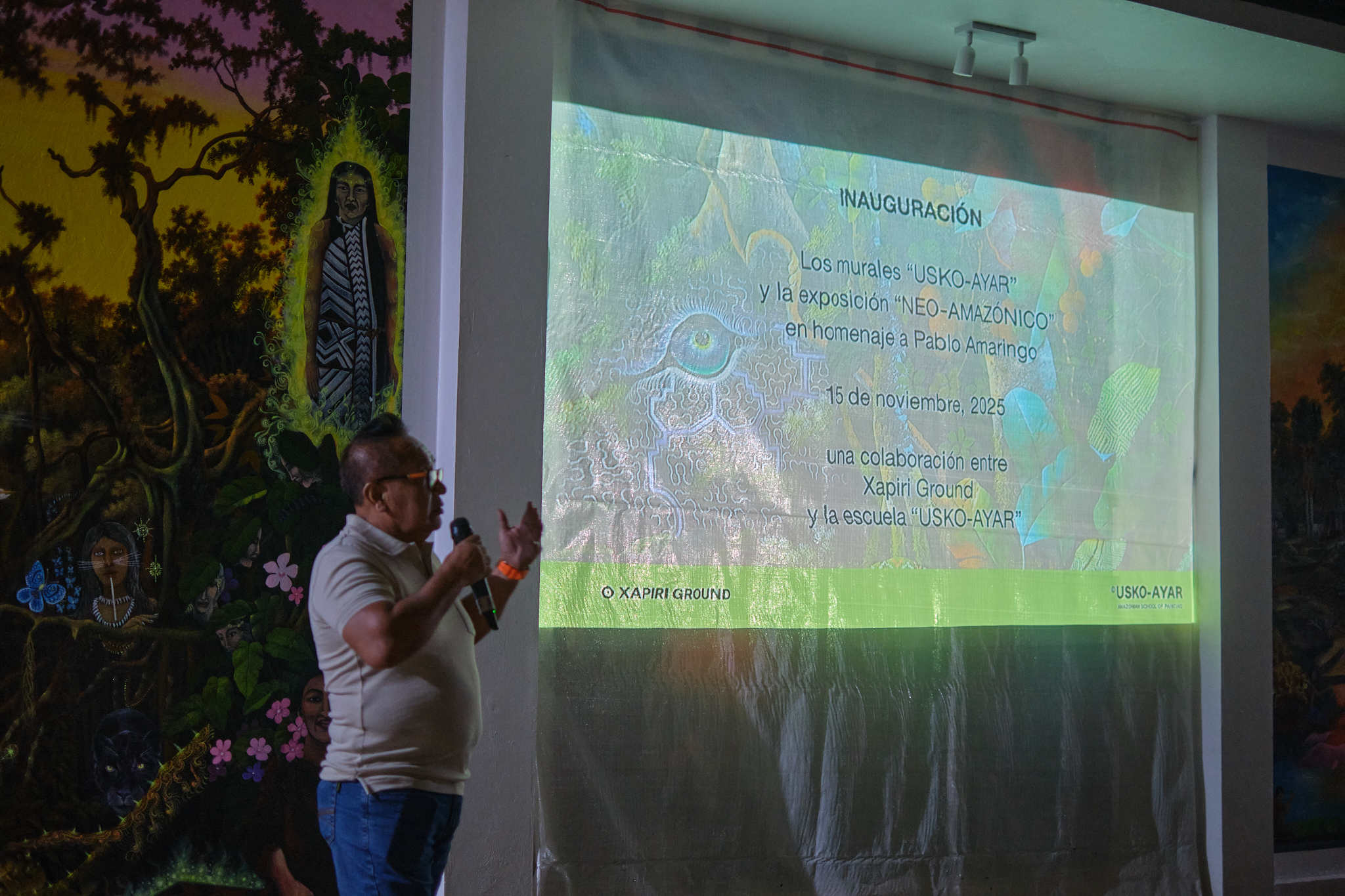
In the words of USKO-AYAR director, Juan Amaringo, “One of my hopes is that by showing these murals inspired by Amaringo, the world becomes more aware of the greatness and importance of our Amazon and everything that derives from it, so as not to continue destroying it.”
Below are the finished murals in their entirety.
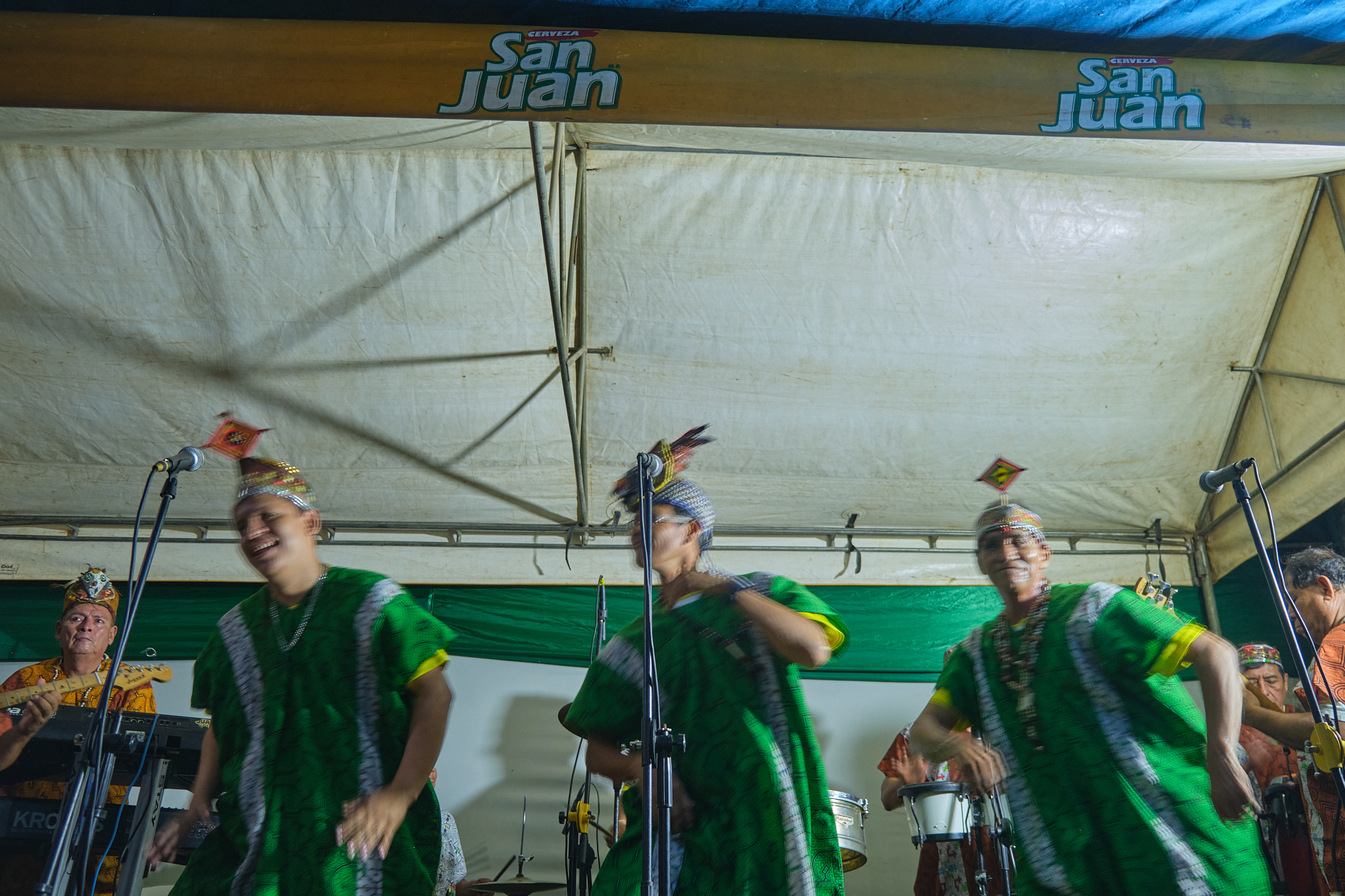
We would like to thank everyone who made this collective mural project possible: Fredy Kugler, Rudolf Städelin, Juan Vasquez Amaringo, the USKO-AYAR professors, Indigenous artists, Xapiri Ground team Davis Torres, Jack Wheeler, and Melanie Dizon, Juaneco y su Combo, and the Pucallpa public.
These murals are a co-creation between USKO-AYAR, Xapiri Ground, and the local Indigenous community of Pucallpa. Painted between October 15 to November 15, 2025, with the USKO-AYAR professors: Noe Macedo N., Miguel Guerra, David E. Amaringo, Daniel Marin, Josue Tolentino R., and Indigenous artists from the Shipibo-Konibo, Iskonawa, and Ashéninka communities (Teresa Rodriguez Campos, Felix Ochavano Rodriguez, Blanca Irene Martinez Ahuanari, Leidy Martinez Panduro, Adela Panduro Silvano, Ana Maria Fernandes, Juan Oldri Vásquez López, Merly Bernabe, and María Elena Paredes).
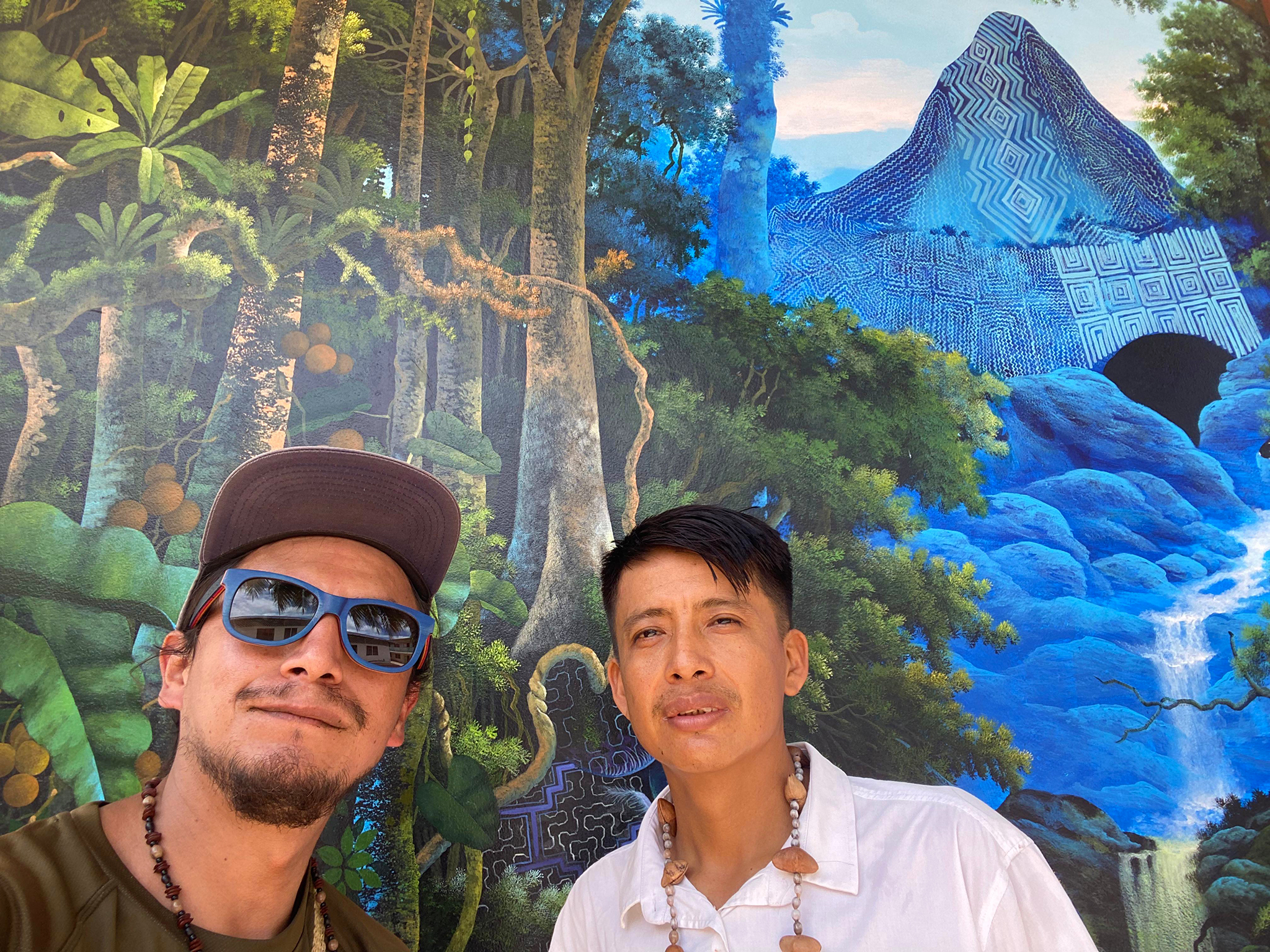
Some parting words from Davis Torres, who documented this entire process from start to finish.
“It was a real honor to be part of this mural project at USKO-AYAR. It was there that I learned that “art” is a way, a tool that creates bonds that can last a lifetime, even with the passing of the years. Documenting the artists' creative process was something that deeply surprised me: the way they could understand each other, to dialogue, and how they could openly generate ideas together. Humility flowed naturally, and the passion they exuded for painting and for Pablo Amaringo's legacy was truly inspiring."
These murals are on permanent display at the USKO-AYAR school of painting at Jr. L. M. Sánchez Cerro 465, Distrito de Callería in the city of Pucallpa. To arrange a visit, please communicate with the school via Juan Vásquez Amaringo +51 932 962 102 or Paul Amaringo +51 939 134 131.


