


In dialogue with Matsés anthropologist Roldán Tumi
On the 20th of March 2026, we had the honor of hosting the Matsés anthropologist Roldán Tumi for his lecture "Kambó and the training of Matsés hunters in the Peruvian Amazon," which examines kambó as a central practice in the physical and sensory training of Matsés hunters. The word Kambó is used amongst the Pano groups along the Amazonian borders of Peru and Brazil, and is the term most commonly used to describe this medicine. Amongst the Matsés, Kambó is referred to as "Acaté;" which is the same resin derived from the skin of the giant leaf frog Phyllomedusa bicolor.
Rather than a medicine, Kambó is a practice of bodily discipline that prepares a man for hunting as it pertains to Matsés culture. It is known to sharpen one's perception, to build one's physical and mental endurance, and to sensitize one's relationships to the animals of the forest. Through controlled pain and purging, the body learns to listen, smell, and move appropriately within the territory.

From the Matsés perspective, Kambó affects not only the physical body, but also the will, self-control, and the ability to endure the rigours of life in the forest. This practice is passed down through the generations and forms part of the construction of Matsés masculinity and the ecological knowledge necessary for hunting. Tumi's presentation was based on his own native experience and collective memory that proposed an understanding of Kambó as an Indigenous technology that links the body as territory and as a place of learning.
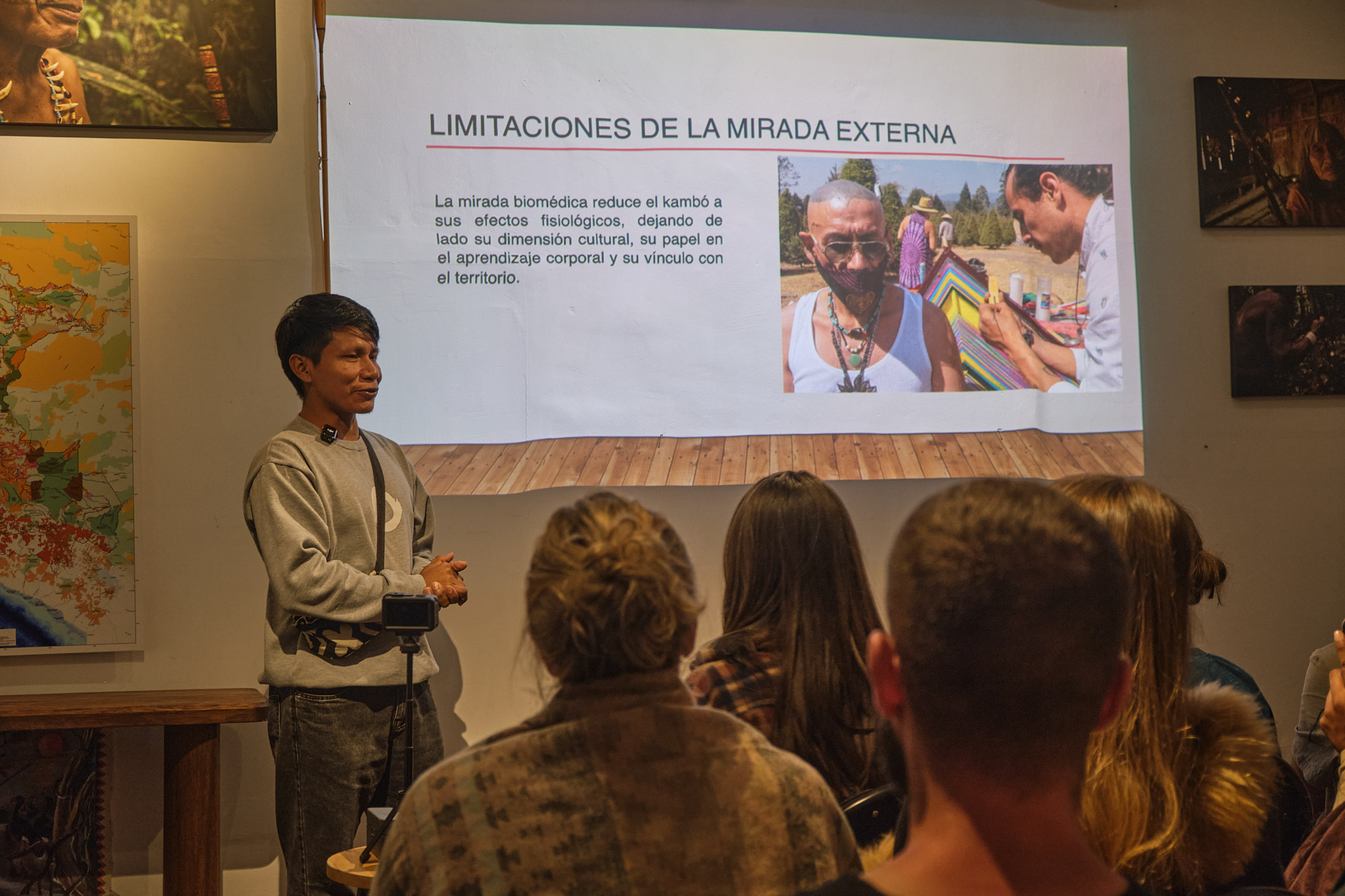
Tumi conveyed to us the concept behind "Sian" which is the Matsés word used to describe the energy that the hunter possesses, which both attracts and defends him from the animals of the forest. Matsés life is deeply intertwined with hunting, a practice that demands a strong body, keen senses and a precise knowledge of the territory. He asks how Kambó can enable us to question Western ways of understanding knowledge and bodily training.

“It is very important to realise that we [the Matsés] learn by listening, doing and practising, and that is what we must always do… and must be recognised for. Very often, people – or Western scientists – view what we know as something that is not scientific knowledge, however for us it is knowledge – that is to say, it is our scientific knowledge – but we develop that knowledge using our own methodology to discover anything. Any knowledge we possess takes a long time to acquire, just as it takes time for researchers or scientists. It’s not as though they start recognising medicinal plants in a single day, but rather it takes time for them to experiment and find out whether a particular plant can actually cure a specific illness – in other words, it takes a long time.”
~Roldán Tumi

As a young child, Roldán received the cultural training common to all Matsés boys. But then he observed that some of his friends began to travel to the city, and quickly his interests diverged from hunting to a curiosity about the social landscape of cities and eventually academia. With a desire to keep learning, he elected to study anthropology without choosing it as a career path per se, but because he was attracted to the word itself. Not having spoken much castellano, he faced many social challenges. But eventually, he developed his confidence and continued to pursue his studies.

The work of Roldán Tumi, being the first Matsés anthropologist, centers on being a bridge between his community and the world outside of his community, where he weighs in on the realities that continue to affect his people, observing with a critical eye and a willingness to present ideas that can restore balance to the pressures of social adaptation and environmental impact related to external market demands.
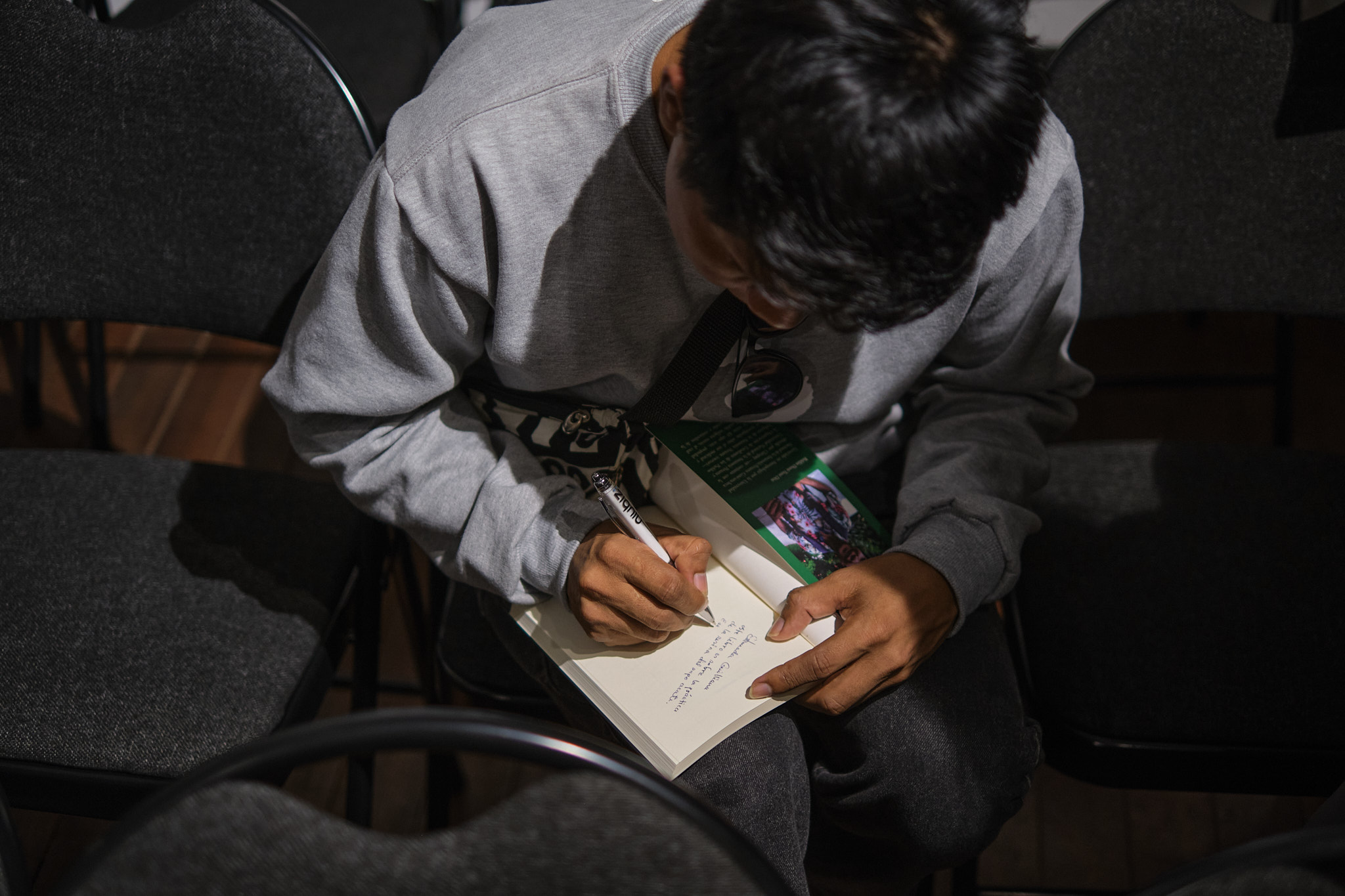
Thank you, Roldán Tumi, for sharing your history, wisdom, and ideas with us around a subject with many moving parts.
To learn more about Matsés culture, art, and traditions, please visit the Indigenous Heritage section on our website.


