

The memories of the waters of Iquitos
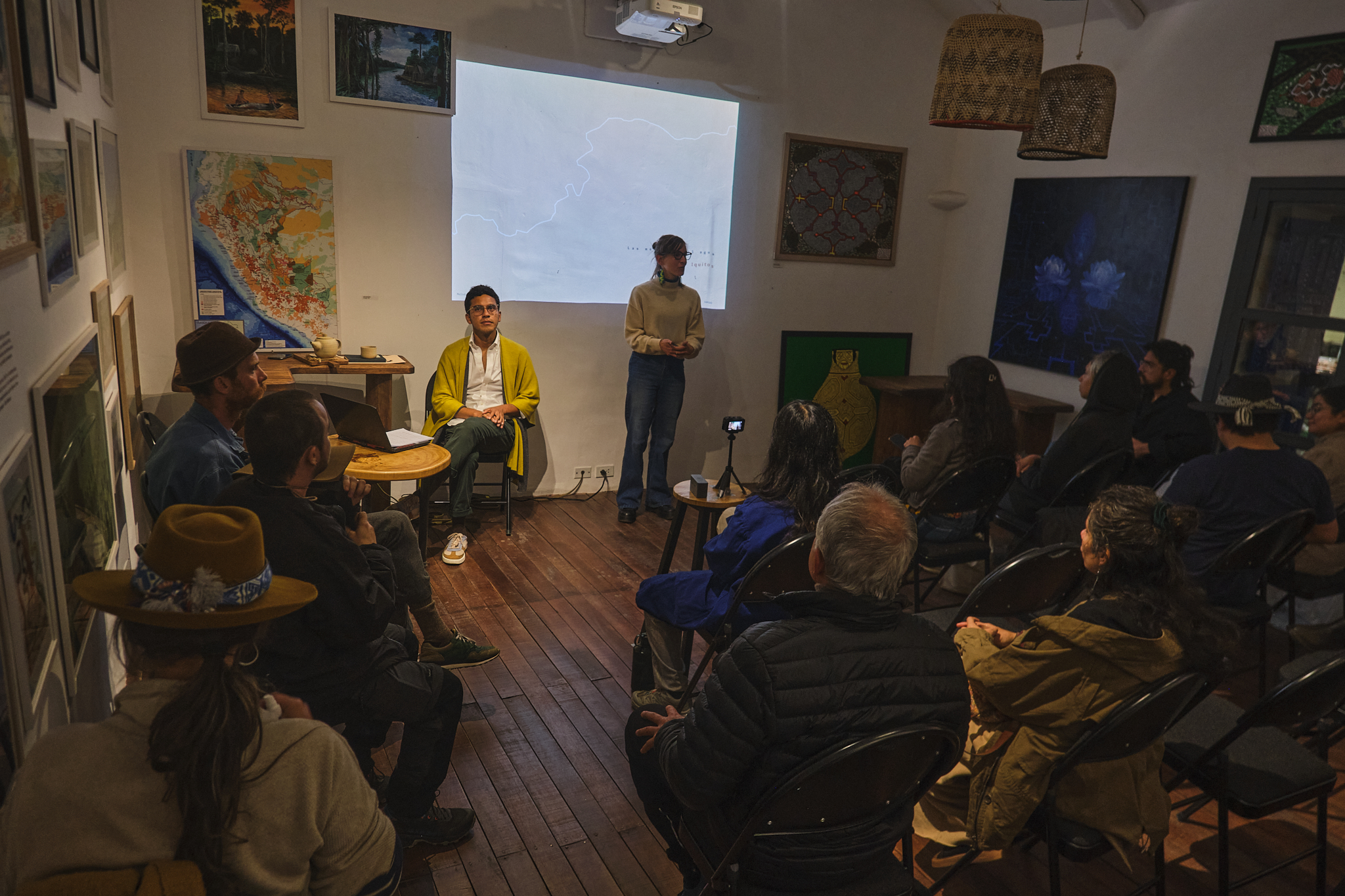
On the 22nd and 23rd of August 2025, we hosted a two-day event with Moisés Porras, an architect from Loreto, and guest anthropologist Wendy Mozombite, who shared with us their work around the theme of water, its bodies, and its memories as it pertains to the region of Iquitos. Directly below is a video of the full talk, which took place on the 22nd.
Here Moisés shared his research on the Moronacocha case and the importance of recovering memories in order to acknowledge both the successes and the wounds of the past, to work towards healing, and to return to the spiritual origins of a place that functions through the interplay of the visible and invisible worlds.
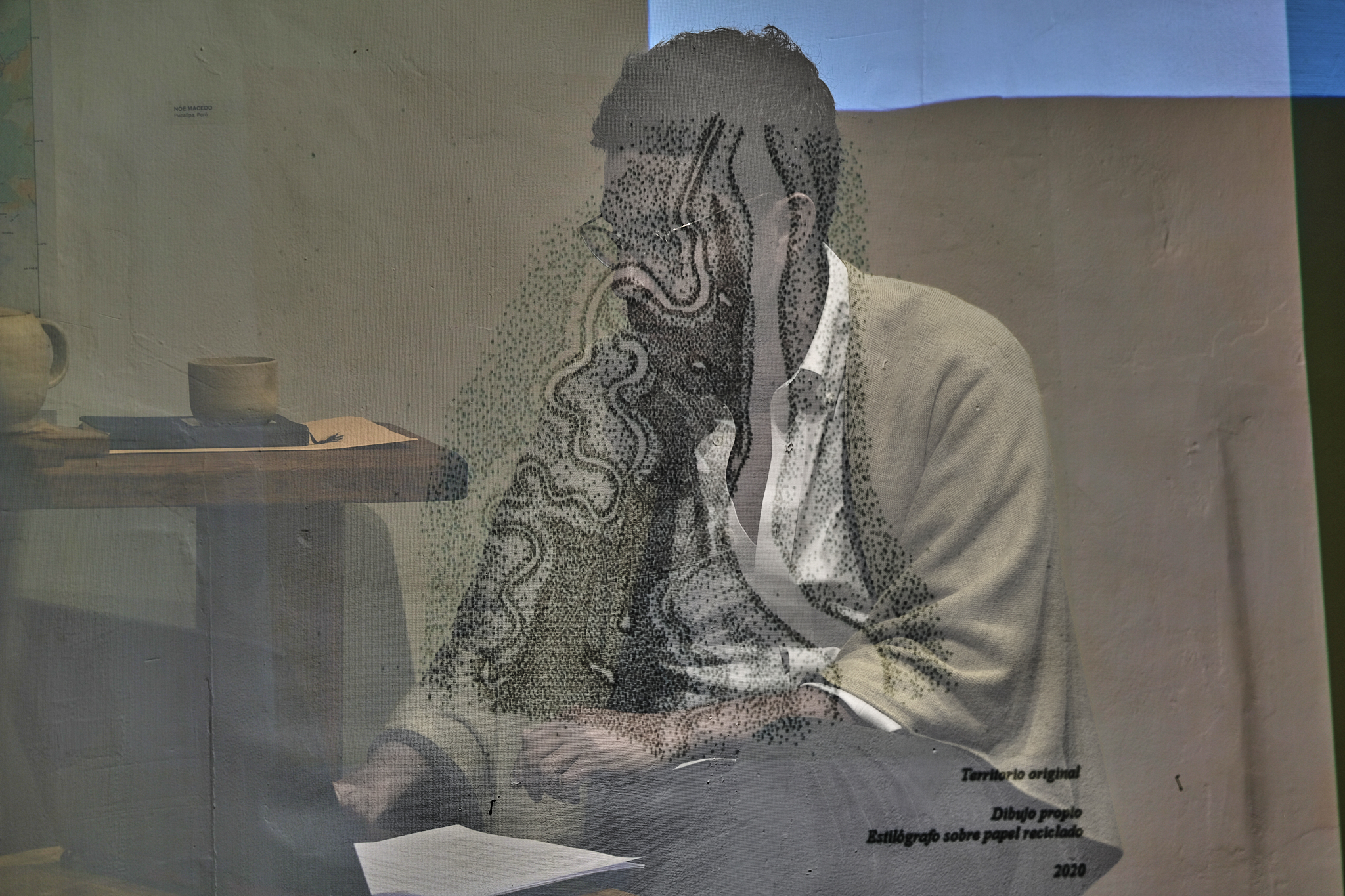
During his presentation, Moisés narrated through a series of images and illustrations that were made visible to us on the screen. He invited us to delve into a true story. In 1983, Lake Moronocha was turned into Iquitos’s sewer. “The city that buries bodies of water”. The violence inflicted upon the lake caused its mother, the great black boa, to abandon it in search of other depths.
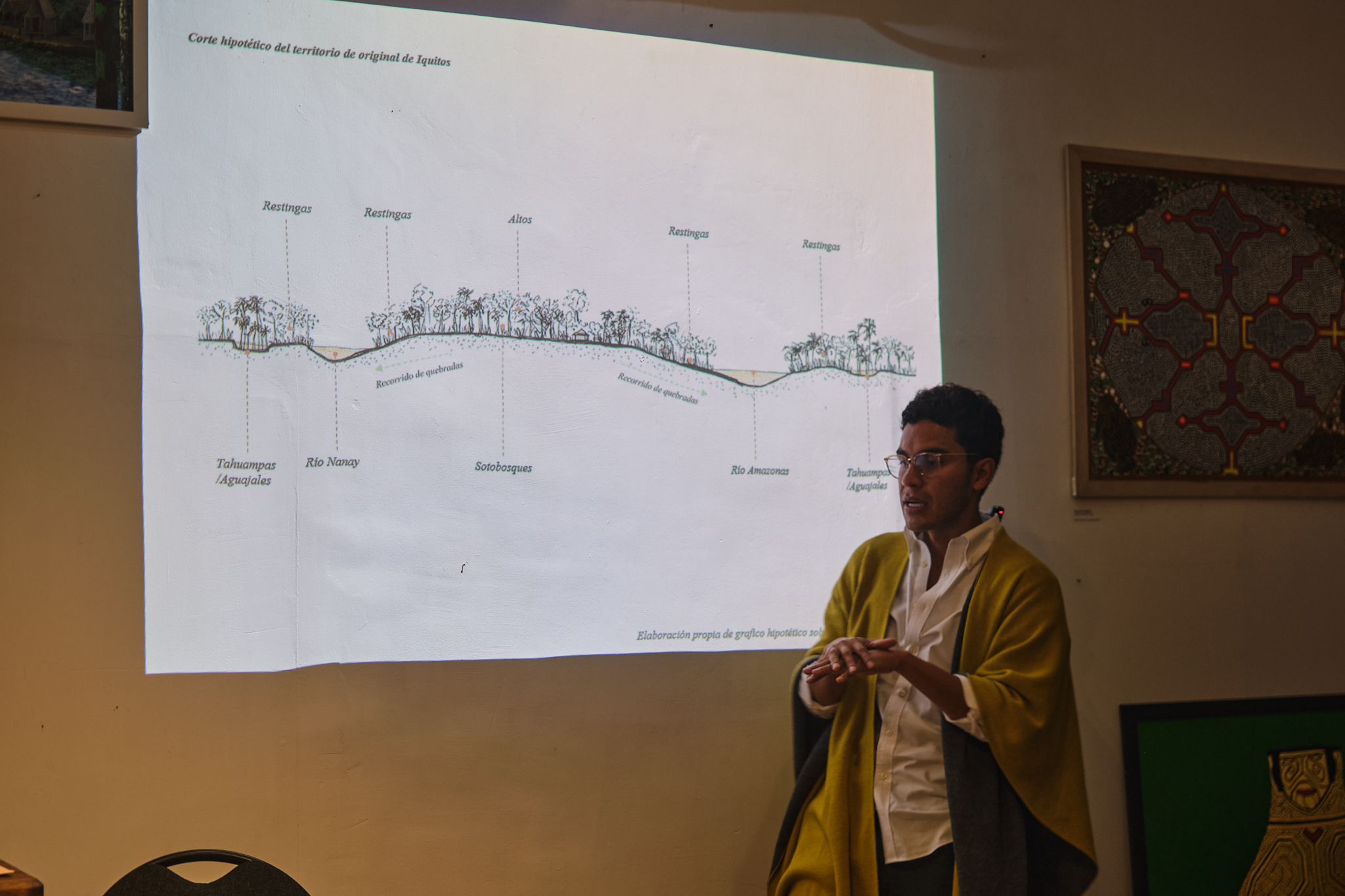
Using cartographic sources and images, Moisés reconstructs the ancient network of ravines that wove together the region’s landscape. The architect’s ongoing work has brought to light the memories and tales of mythological beings gathered from the elderly. If the lake dries up, this affects its fertility and the local economy. If a lake dries up, it ceases to be a place of gathering and magic.
The discussion led us to ask, “What is the solution?” Environmental education projects offer hope, but don’t prove to be a solution to such barbarity. Moisés suggested that the only effective measure would be the installation of wastewater treatment plants. So, our hope lies in whether the state will finally take this decision, one which would cost millions, rather than waiting for private financiers or NGOs. Conscious, long-term solutions. Is that even possible?
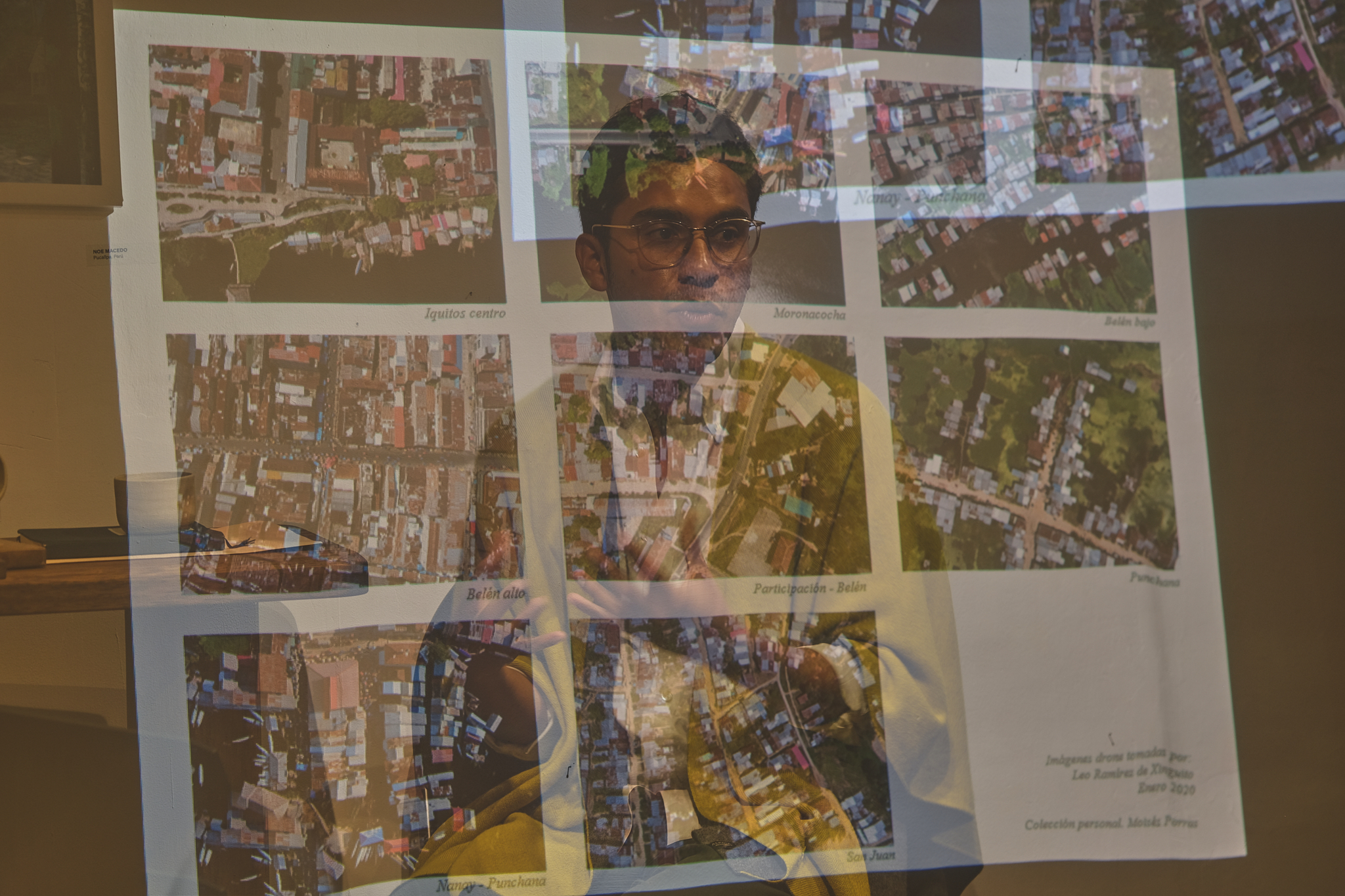
Thank you to everyone who attended this talk, for listening, for your thoughtfulness, and for taking part. Thank you to Wendy Mozombite for acting as a bridge to connect us with Moisés.
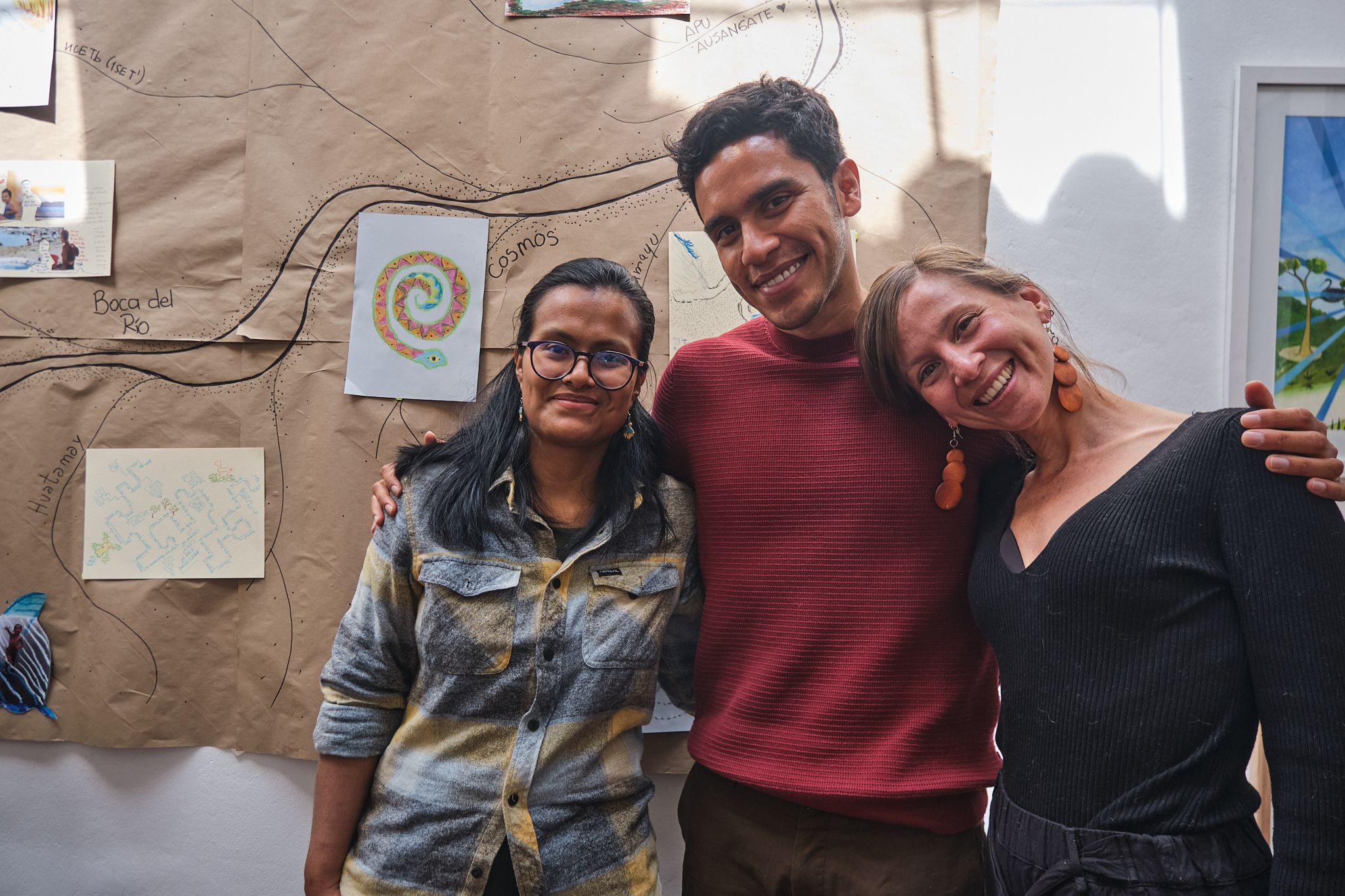
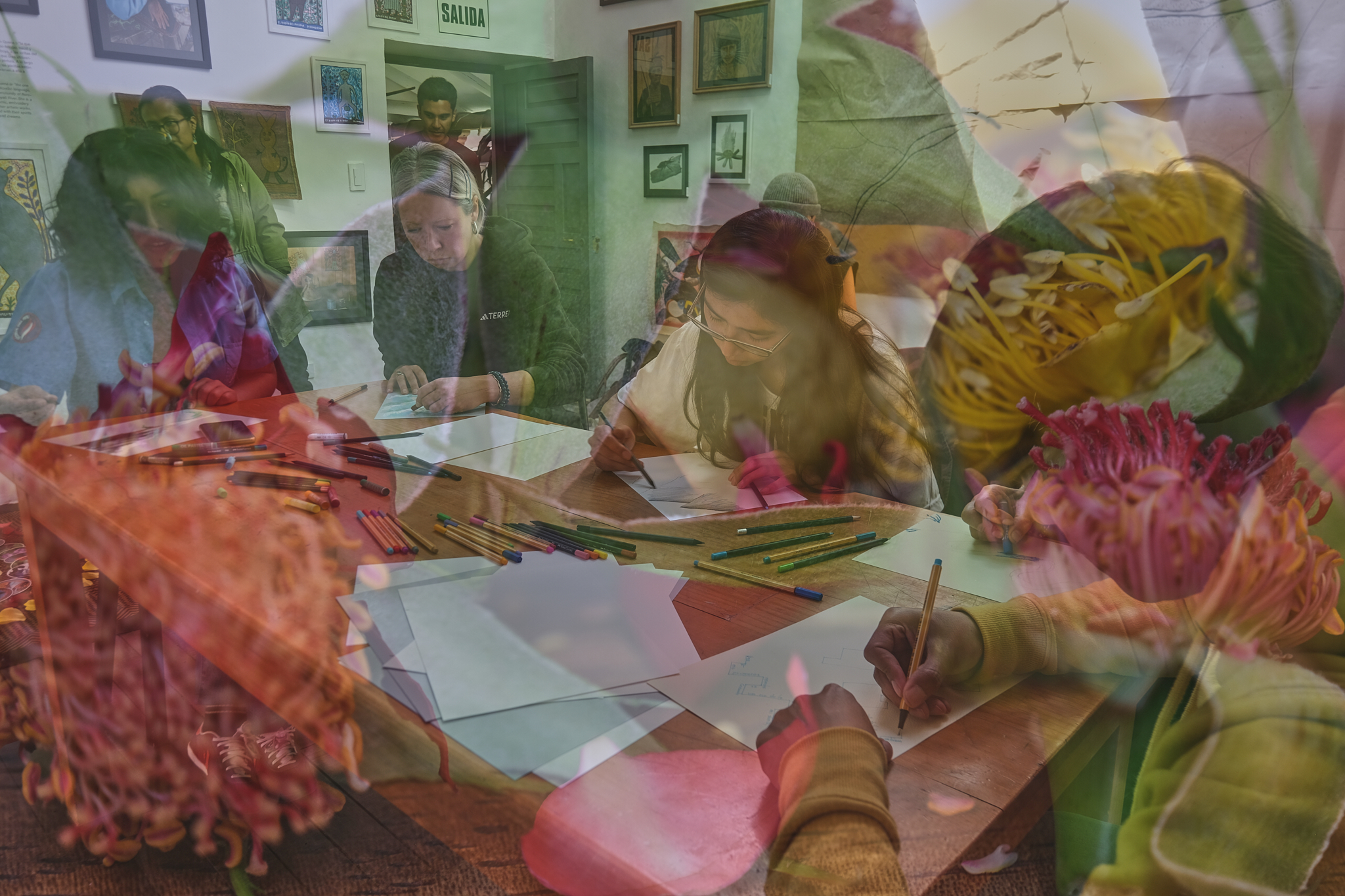
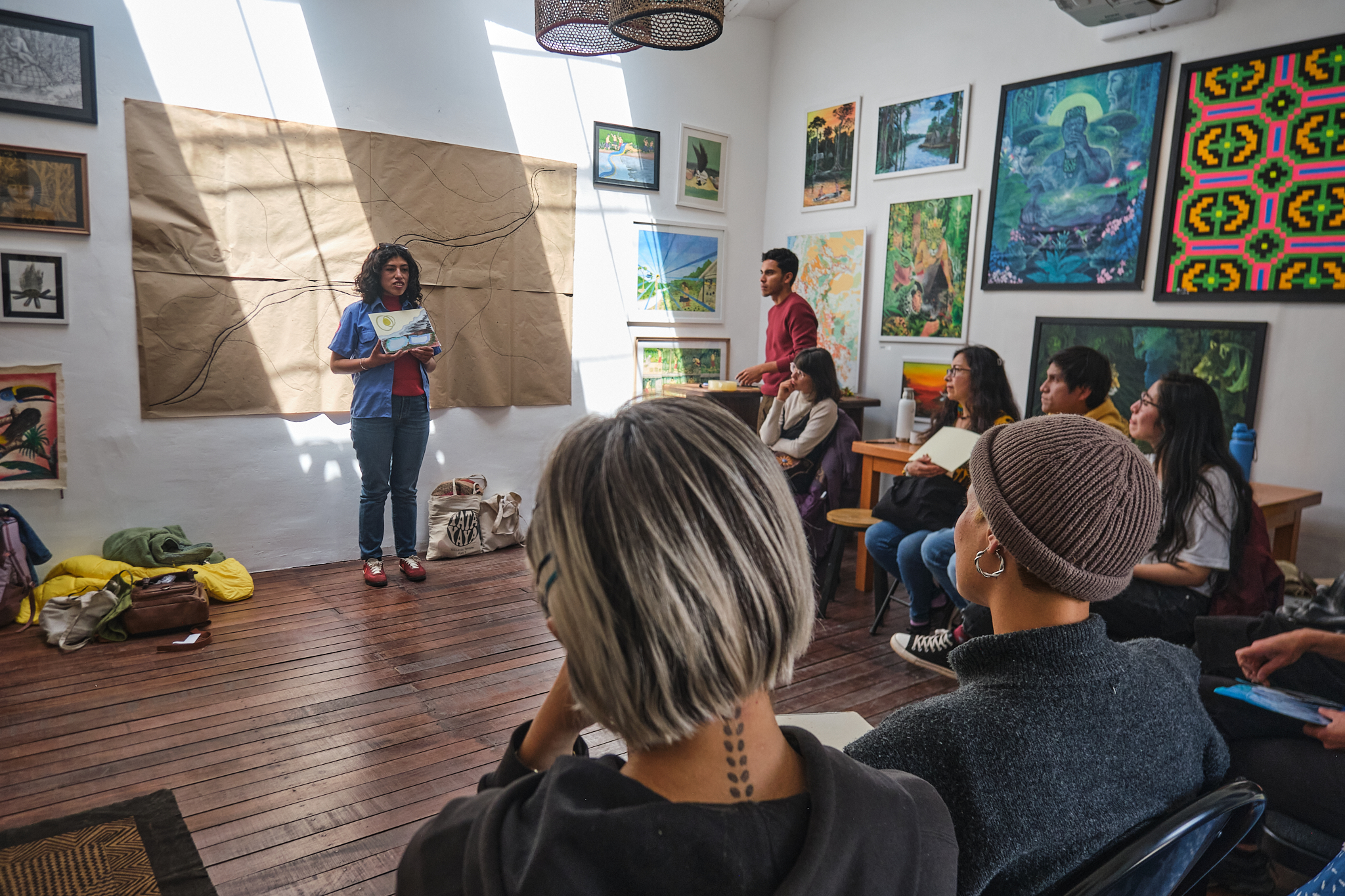
On the 23rd, Moisés Porras and anthropologist Wendy Mozombite gave a drawing and collage workshop to explore and reflect on the tangible and intangible values of bodies of water (rivers, lakes, streams, rain, the sea, and others) that form part of our memories, acknowledging their importance in our lives, where we come from, and the landscapes surrounding us.
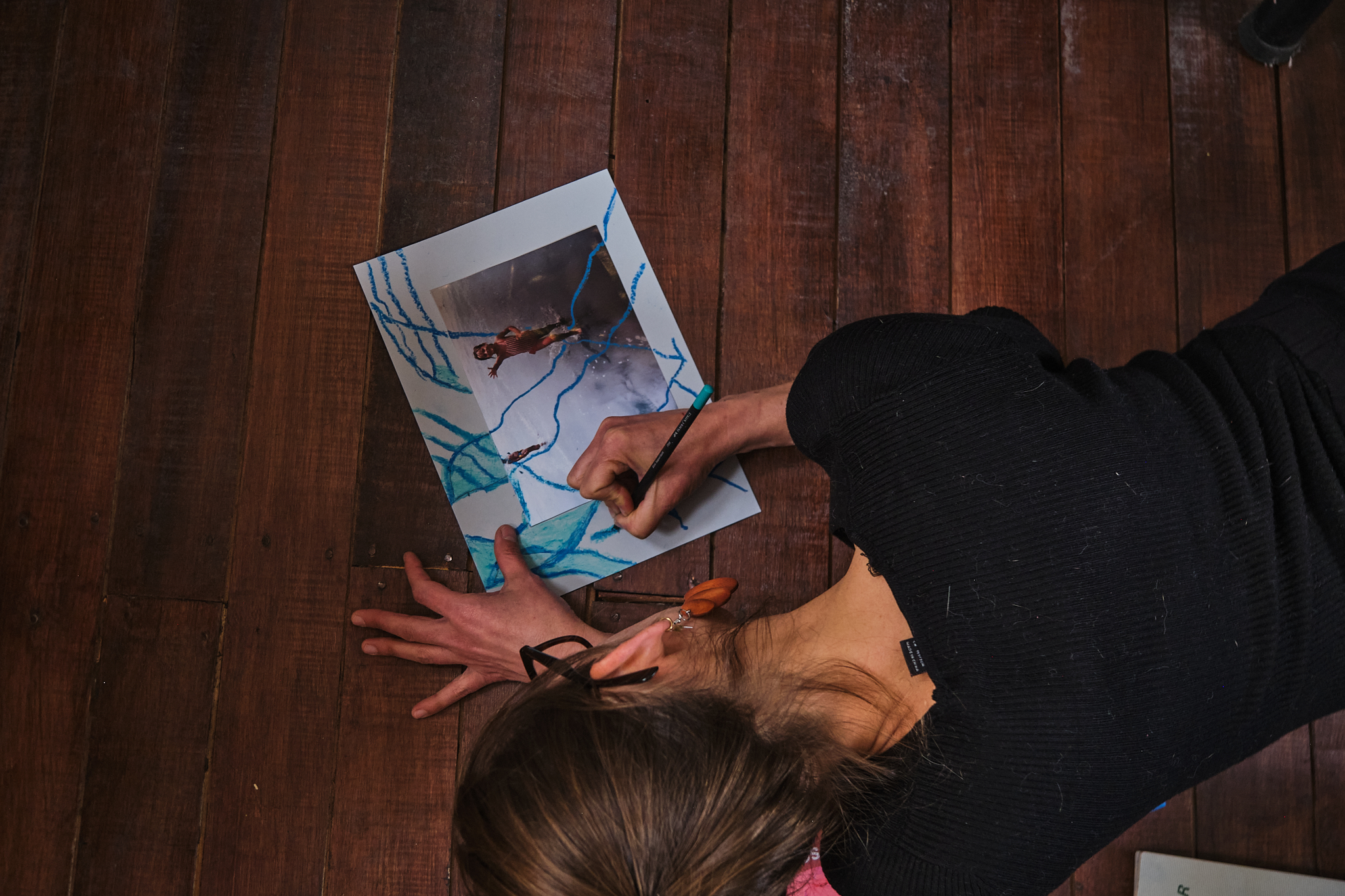
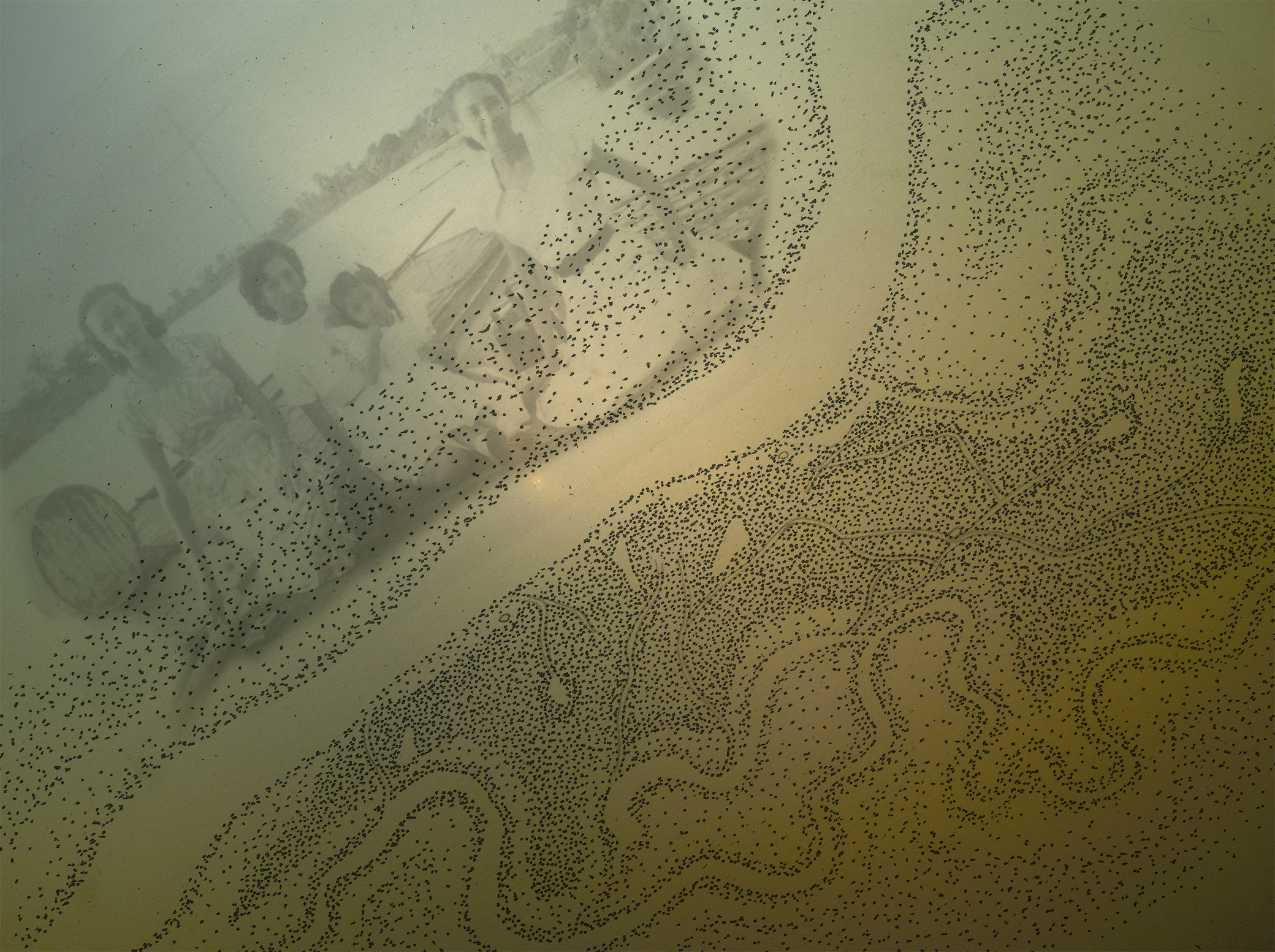
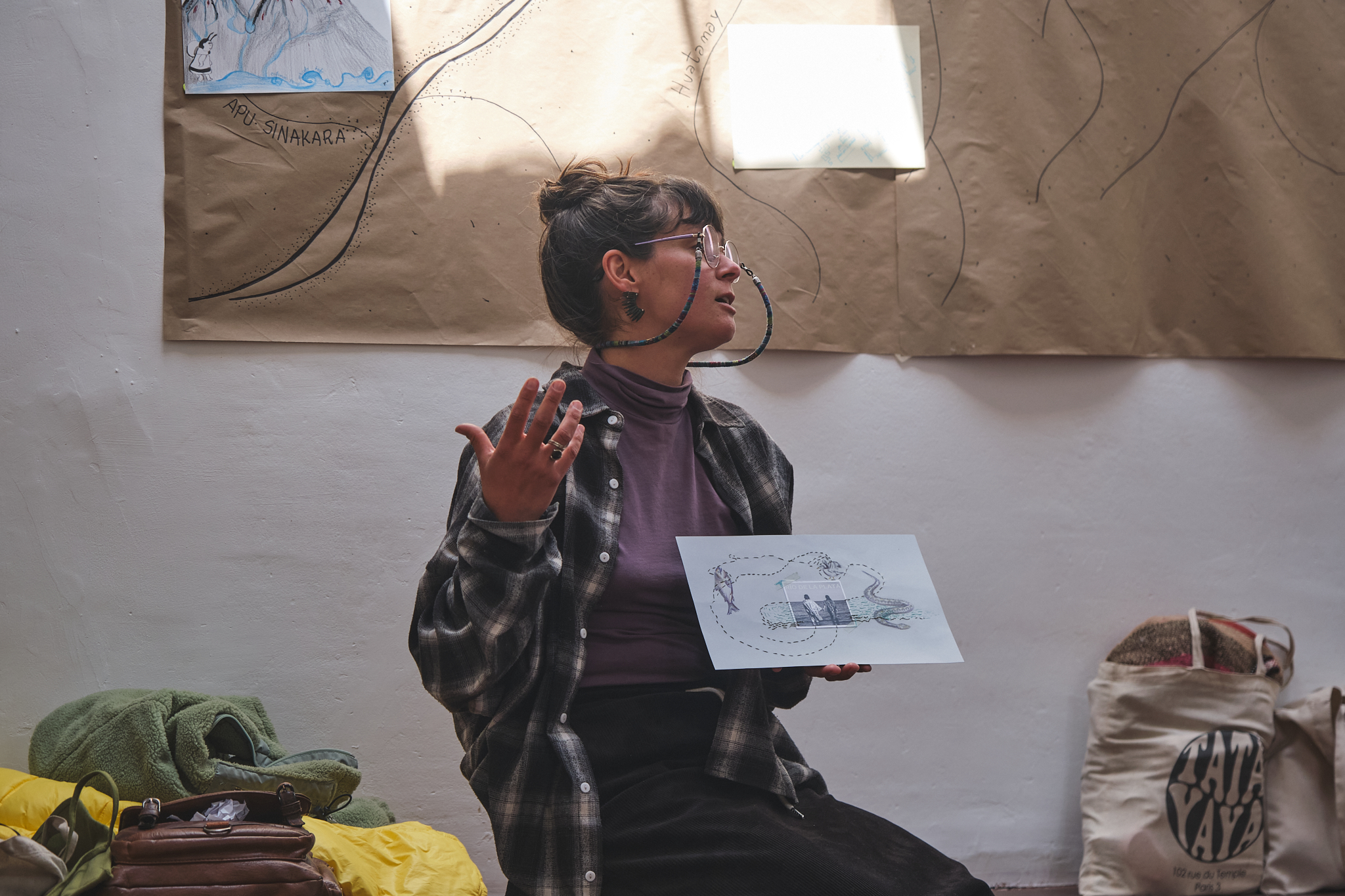
Using a photograph as a reference to guide the attendees through the process, many were asked to revisit memories, to re-evaluate the stories and significance of these places, and to identify the symbols that emerged through the act of drawing and painting.
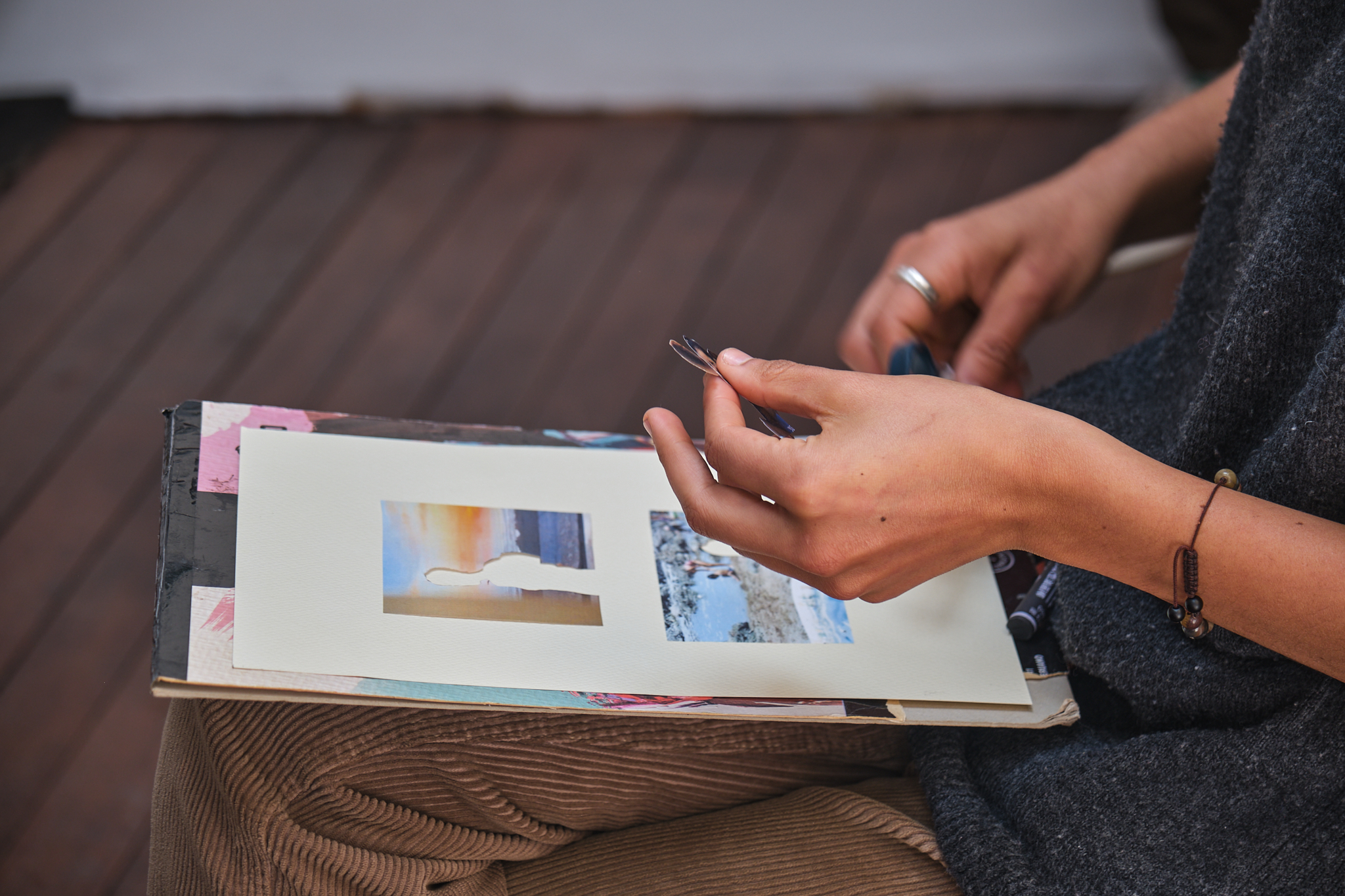
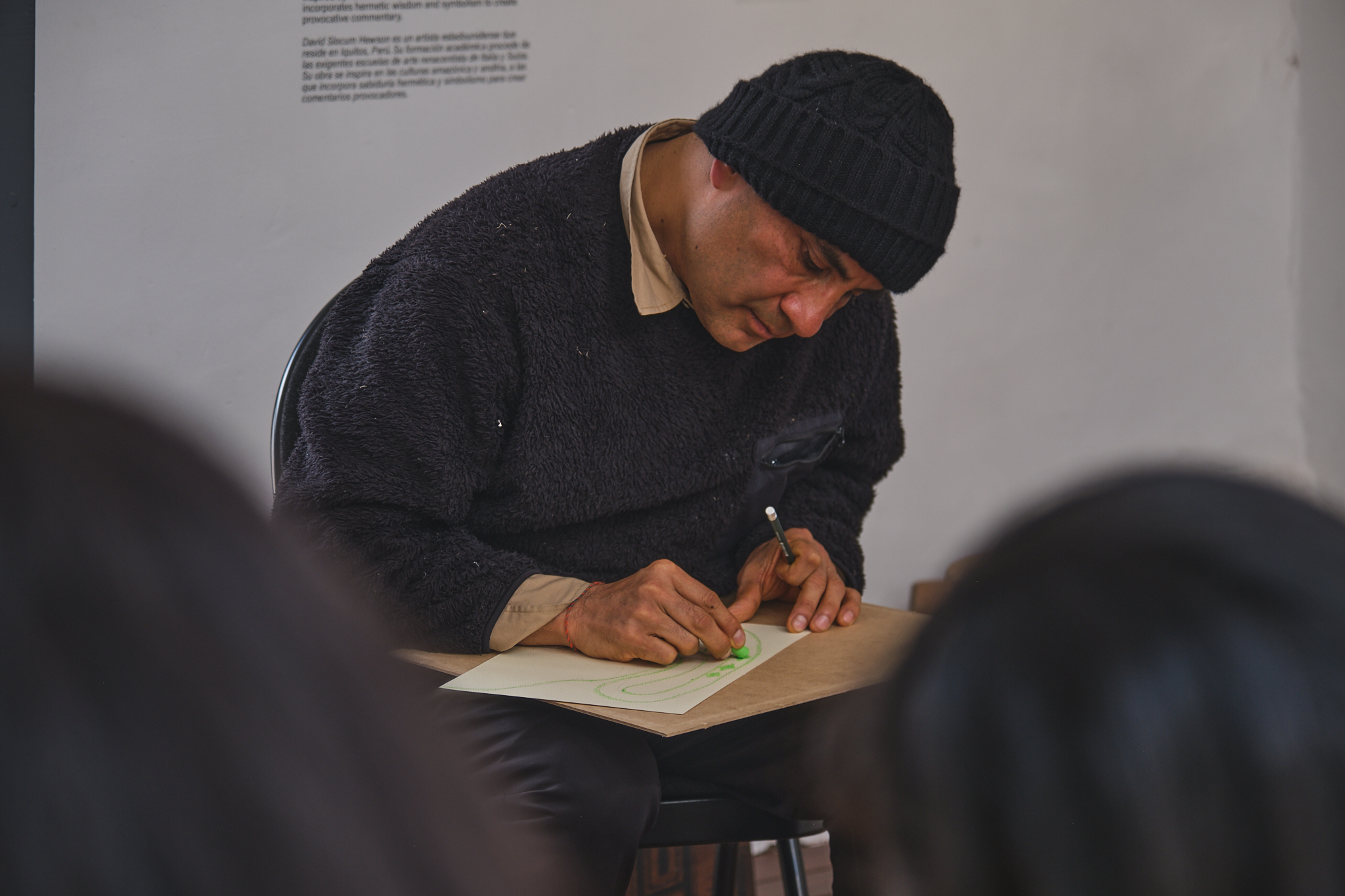
Moisés and Wendy led the workshop with a ritualistic touch; through their sensitive and respectful guidance, they helped us create a map connecting different parts of the world—including Peru, Uruguay, Spain, and Russia—and bodies of water, such as rivers, seas, and lakes.
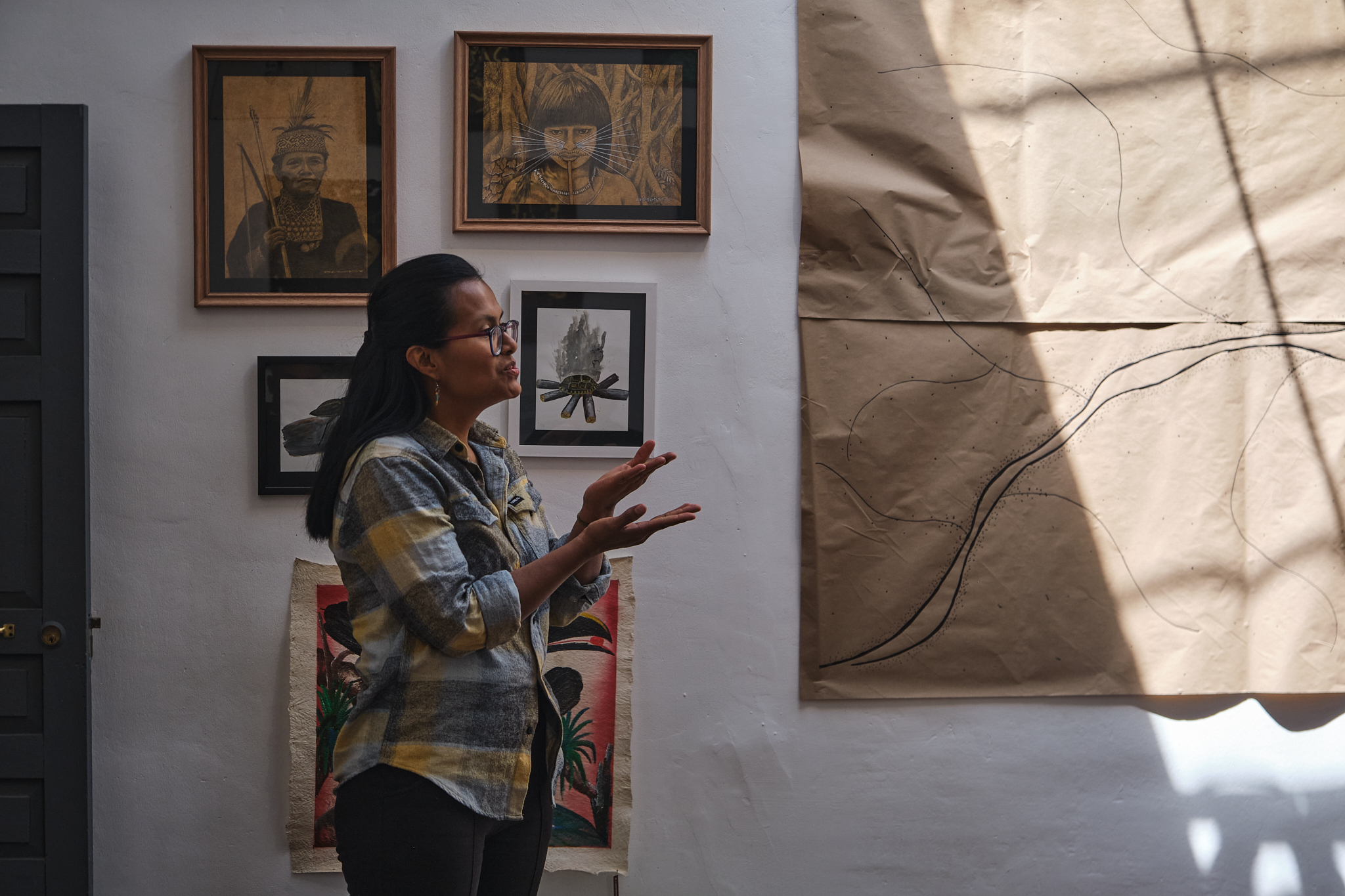
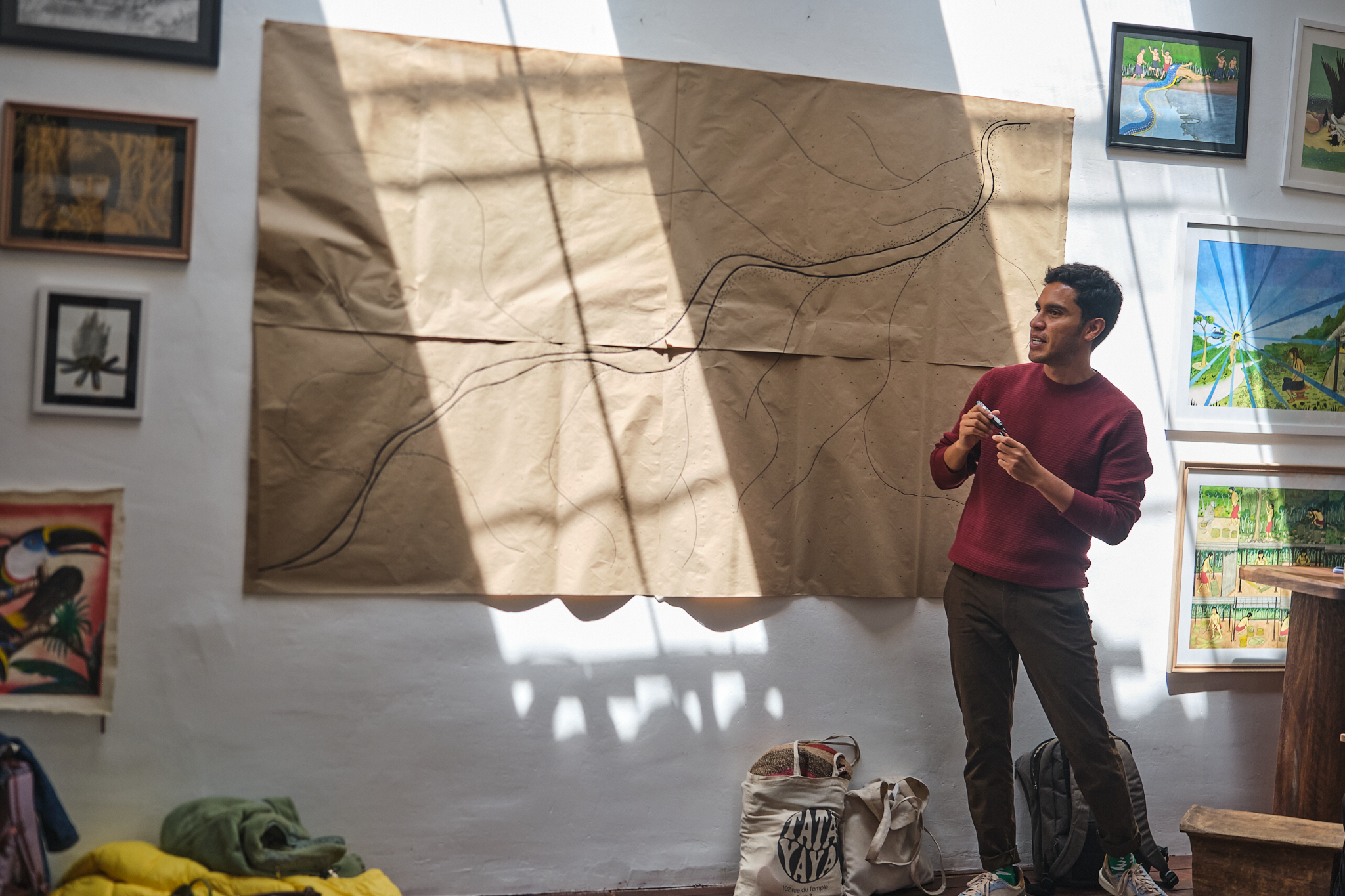
In this way, we shared, in front of everyone, the stories that were springing from our memories and, collectively, were taking on a more tangible form that inhabited our physical bodies and the value of water.
We cannot heal the present without returning to the past.
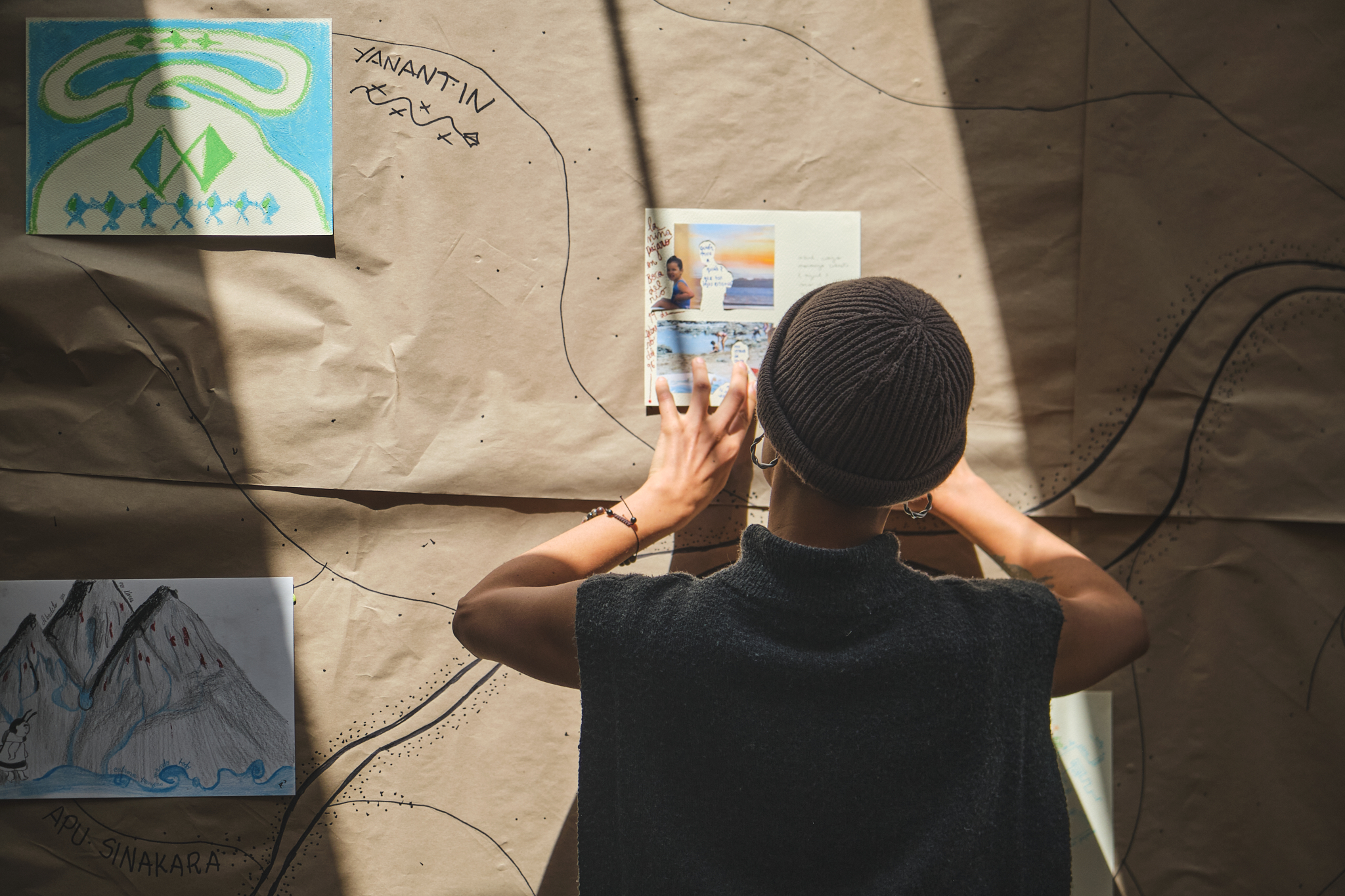
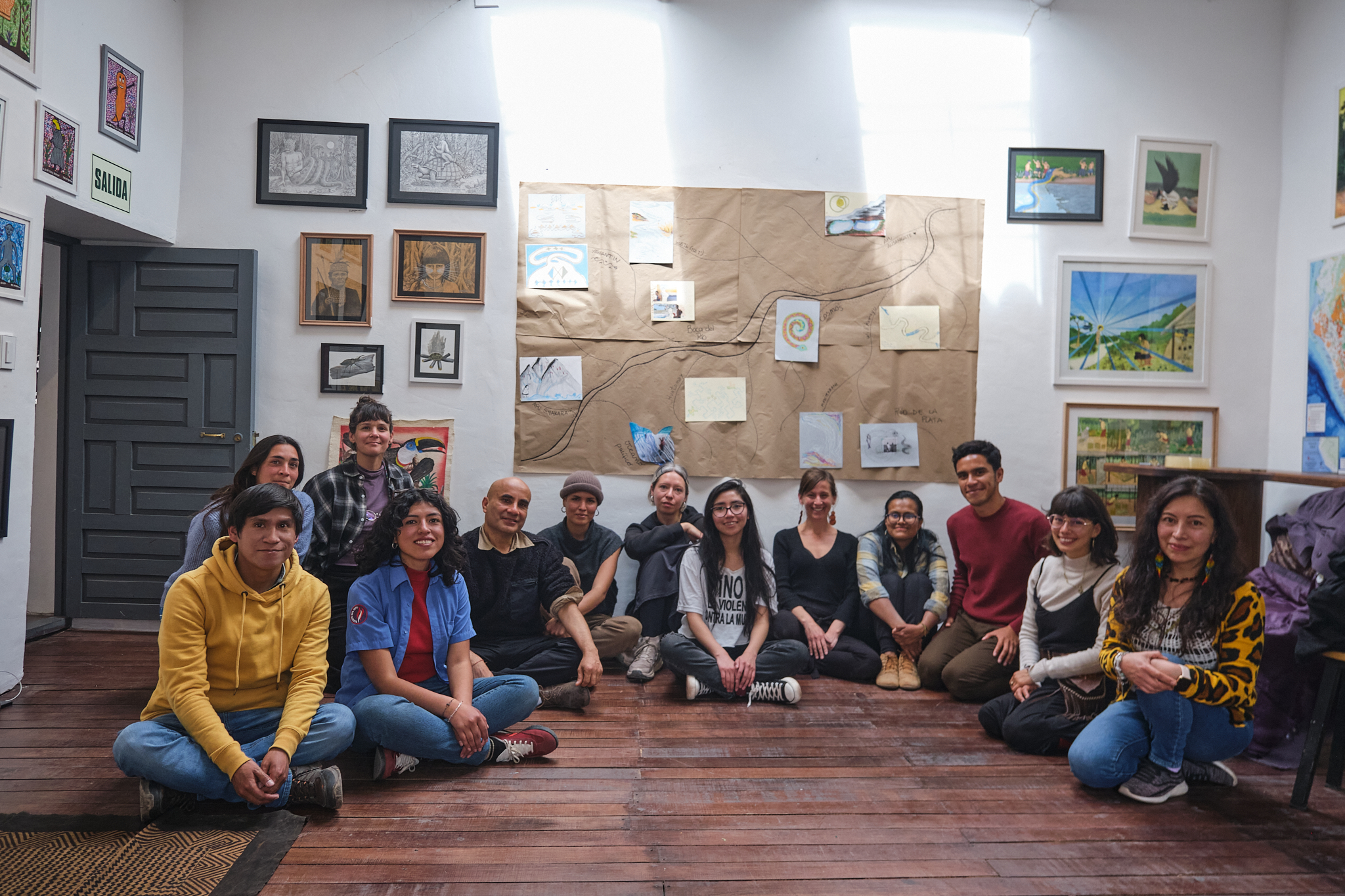
Thank you, Moisés and Wendy, for guiding us through this workshop, and to all the brave souls who immersed themselves in their bodies to create, together, a map that was on display for three days at Casa Xapiri.
Biography | Moisés Porras
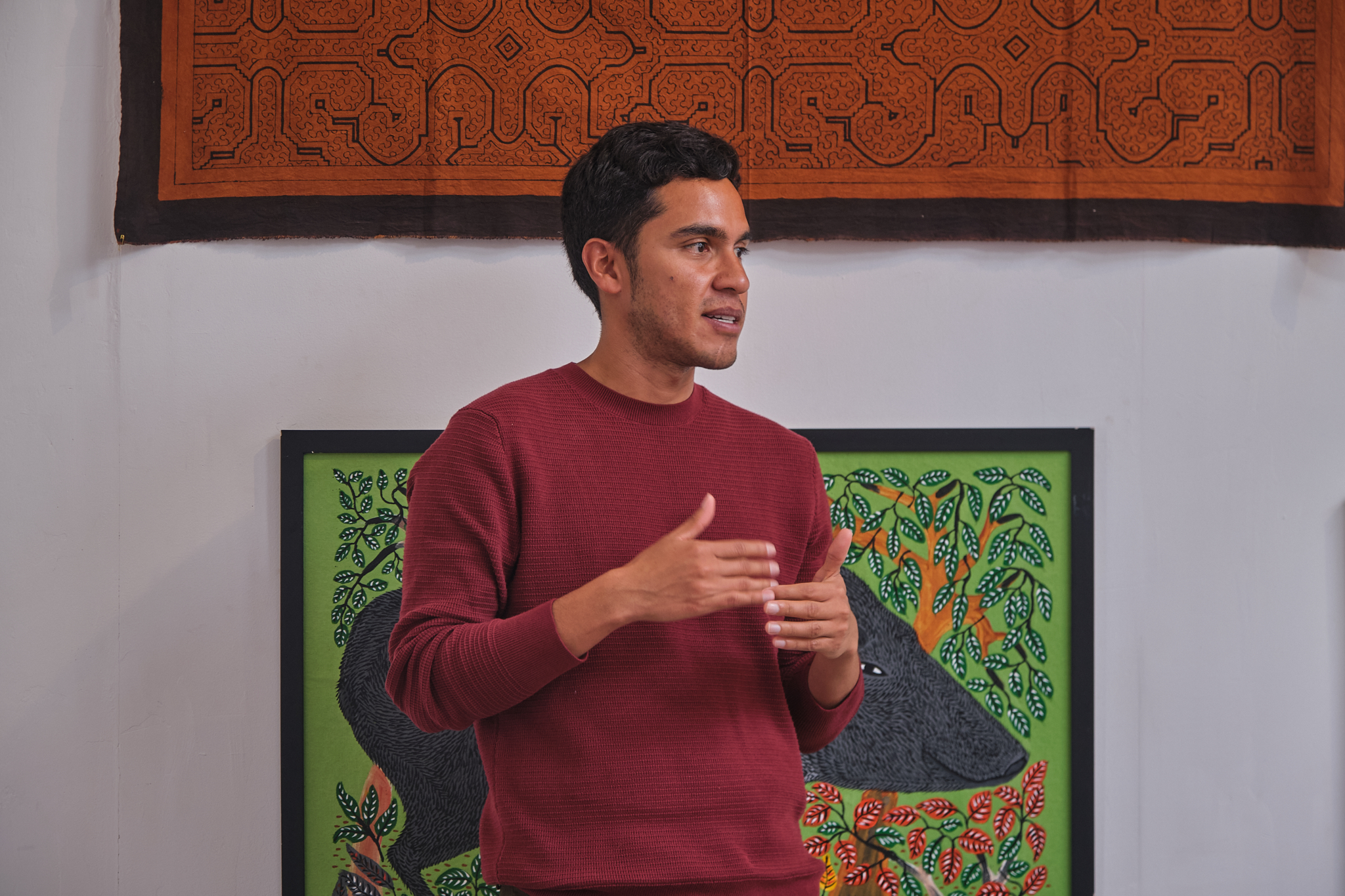
An architectx and researcherx from Loreto, holding a Master’s degree in Architecture, Urban Planning ,and Sustainable Territorial Development from the PUCP. He runs his own independent practice through Wakan; his research focuses on urban planning and land-use planning in Amazonian riverside cities such as Iquitos. He is a lecturer at the faculties of architecture at the PUCP and UPC.
Biography | Wendy Mozombite
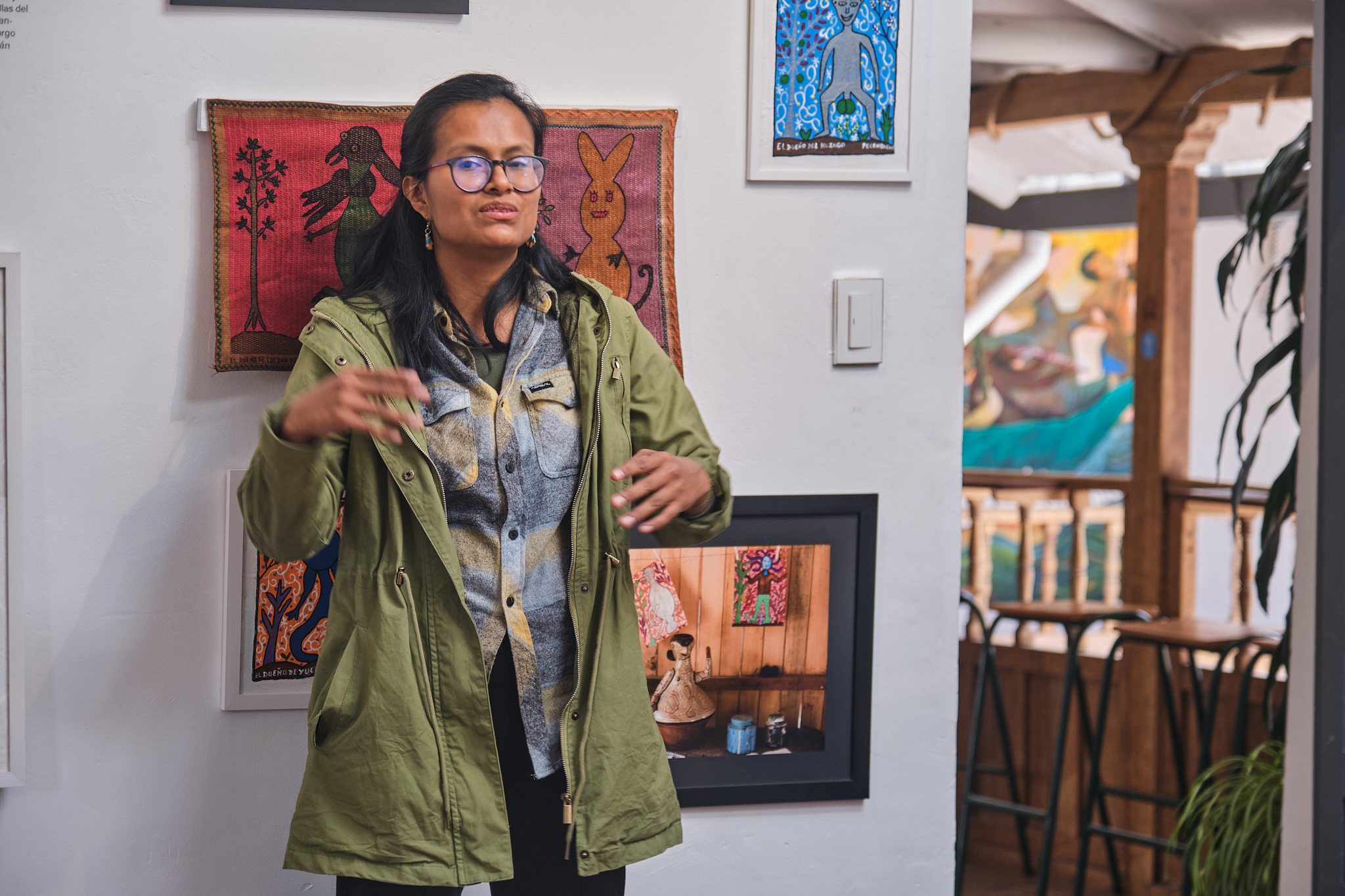
Amazonian anthropologist and researcher from Loreto, whose work addresses traditional knowledge, community education, and biodiversity, with an intercultural, territorial, and gender-based approach.


