

CHONON KATE
We are honored to debut the first solo exhibition of artist Merly Bernabe, "CHONON KATE," which inaugurated on June 12, 2026, at Xapiri Ground. Our first encounter with Merly was in February of 2022, during a photographic workshop that we held in Pucallpa at the Bena Jema community. Over the years, we have maintained a connection with her, witnessing her development as an artist and entrepreneur from her base in Yarinacocha, Pucallpa, Peru. This exhibition marks a special moment for Merly and us, a synchronicity of relationships and experiences that now culminate in the healing tapestries of Merly Bernabe.
“Nothing in life happens by chance.” Merly Bernabe was born from a dream, through a vision her mother received while two months pregnant, resting in a little hut near Lake Cumancay, the center of the universe and the site of the enchanted tree known as the mythical origin place of the fourth generation of Shipibo-Konibo people. And as she dreamt, a godmother spirit came to bestow the news that she would bear a girl.
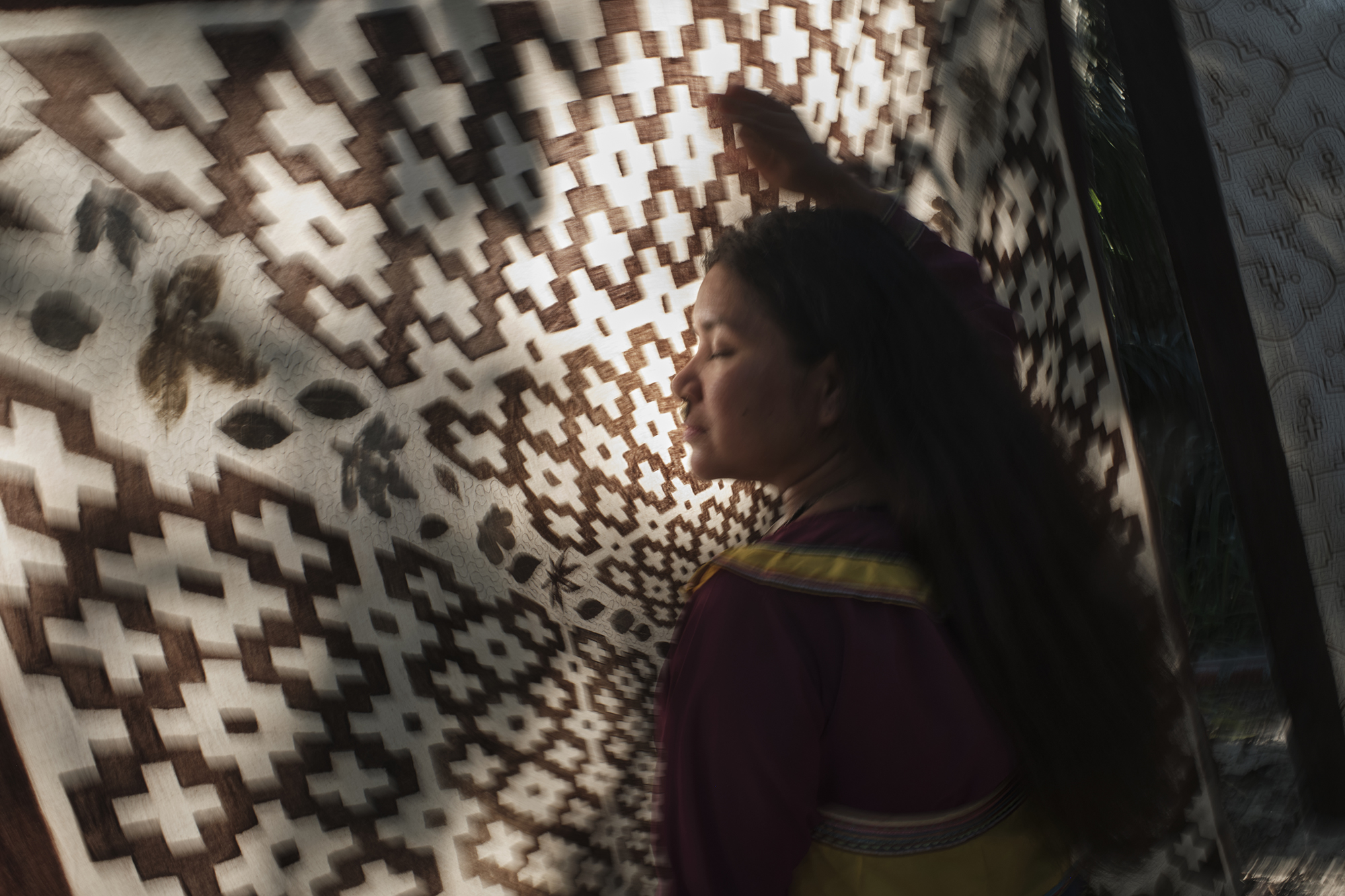
Merly remarks, “...and when my mother woke up, she could only hear the wind in the trees, the leaves rustling, and when my father and grandfather arrived back from fishing in the lake, she told my father what she’d dreamt, and my grandfather remarked that it was the spirit of the Inoa Xatan tree (Ayahuma) who came to her, which stood above the hut where she rested, and that she too might have dreamt of this because Cumancay was an enchanted place,” the mythical village that flew.
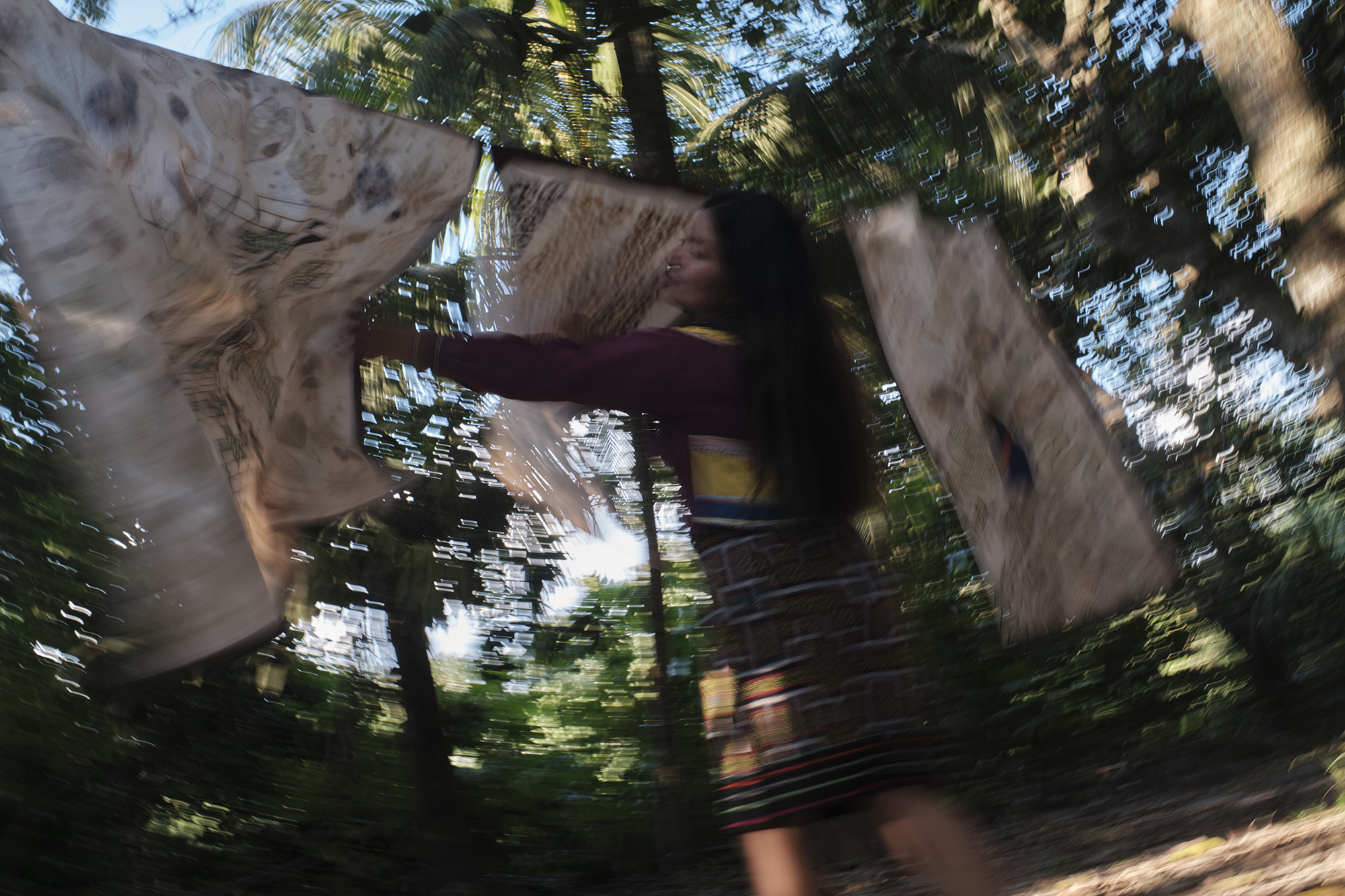
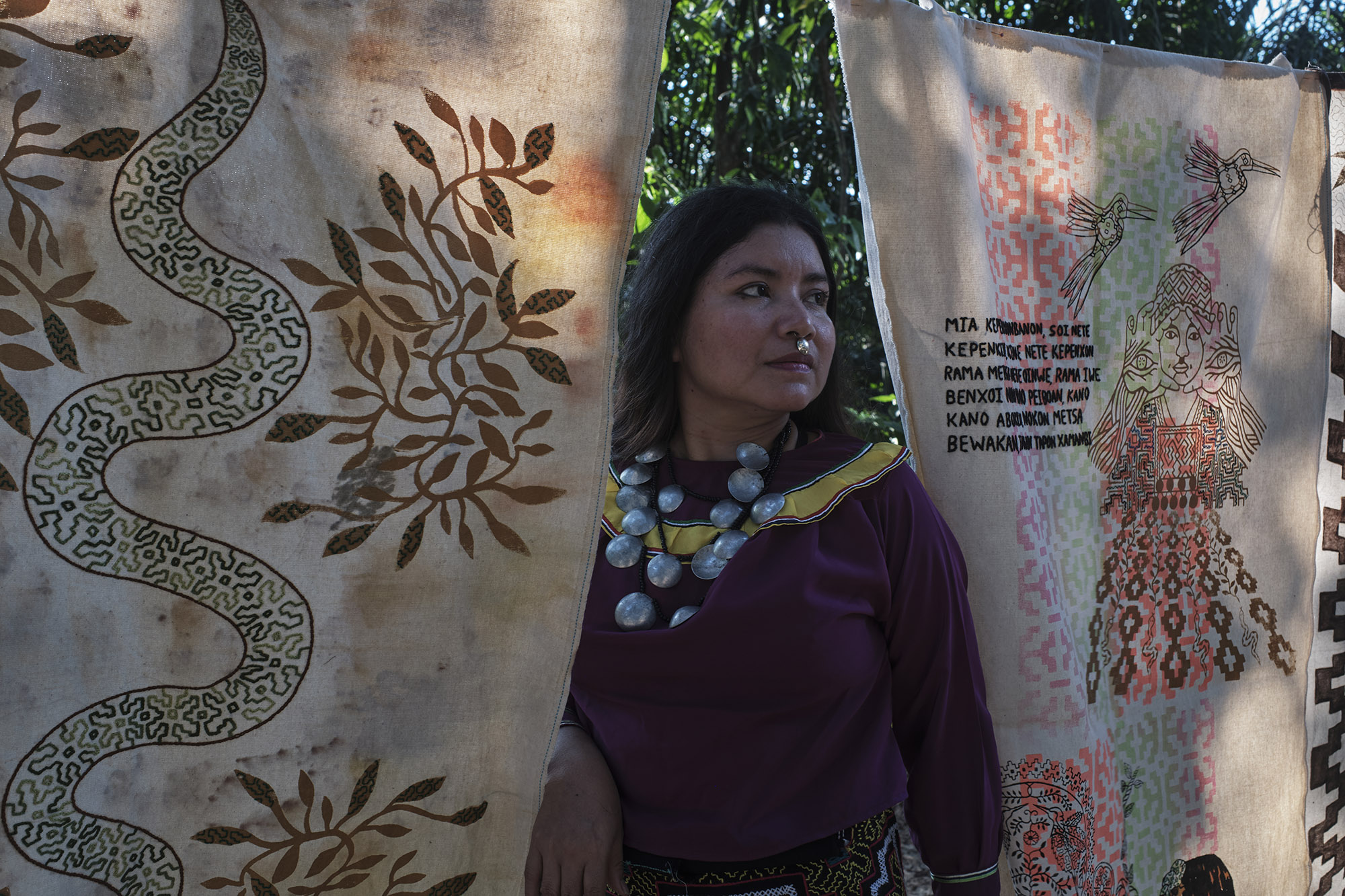
As a child, she was surrounded by a family of creators and wise women. Art was always celebrated. Her mother Martha taught her the textile arts and embroidery, while her grandmother and master Amelia Panduro, who raised her throughout her adolescence, transmitted to her the knowledge of master plants, the Kené, and the natural colors from which she would paint. Merly’s visions are informed by her ancestral pathways, her memories as a child, and experiences as a Shipibo-Konibo woman today. When she was born, her grandmother Amelia designated her the name of Chonon Kate, in homage to the Shipibo-Konibo origin story of Cumancay that speaks of a woman who was transformed by the enchanted tree into a swallow- to be the guardian, protector, and messenger of her community.
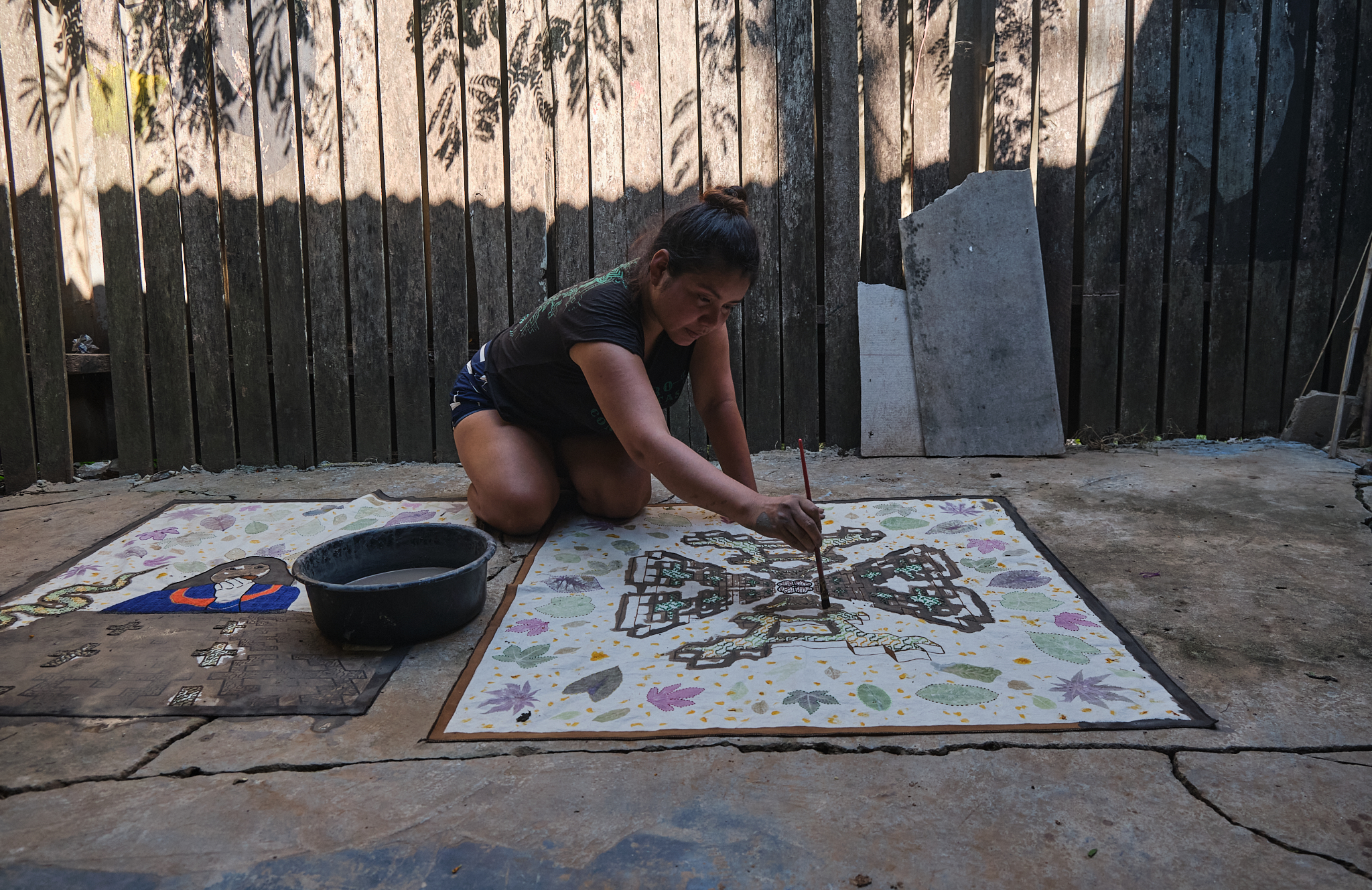
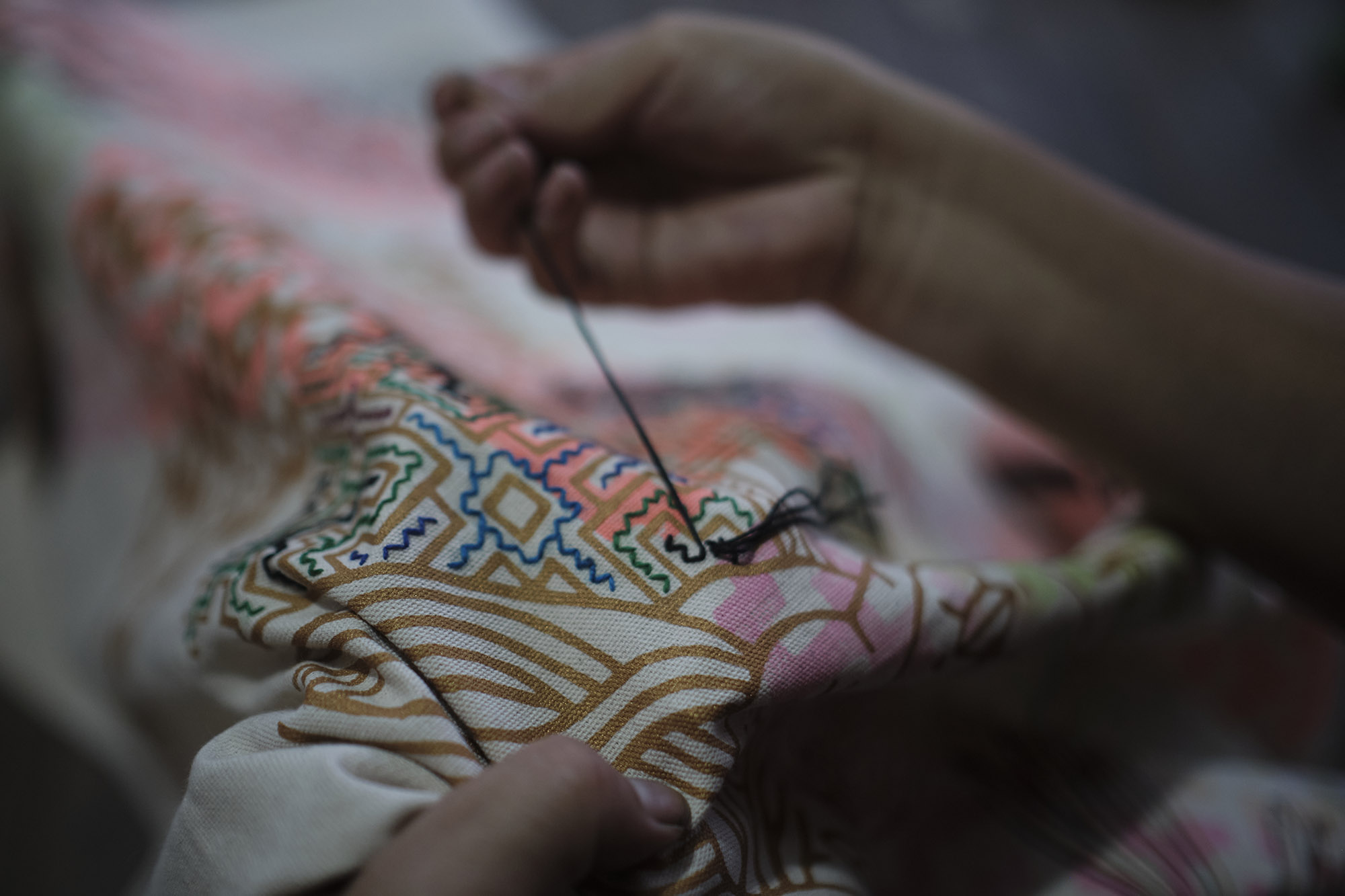
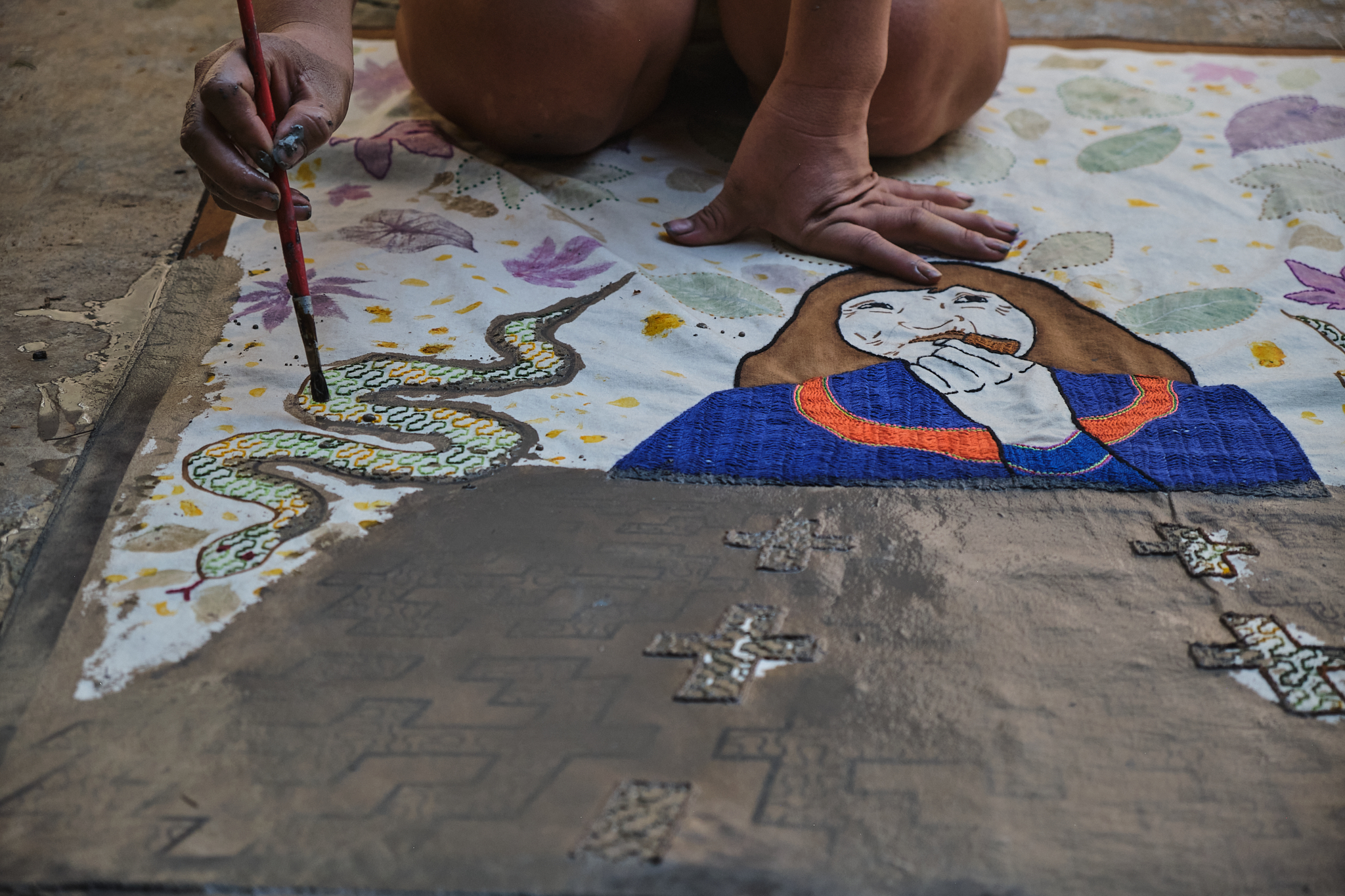
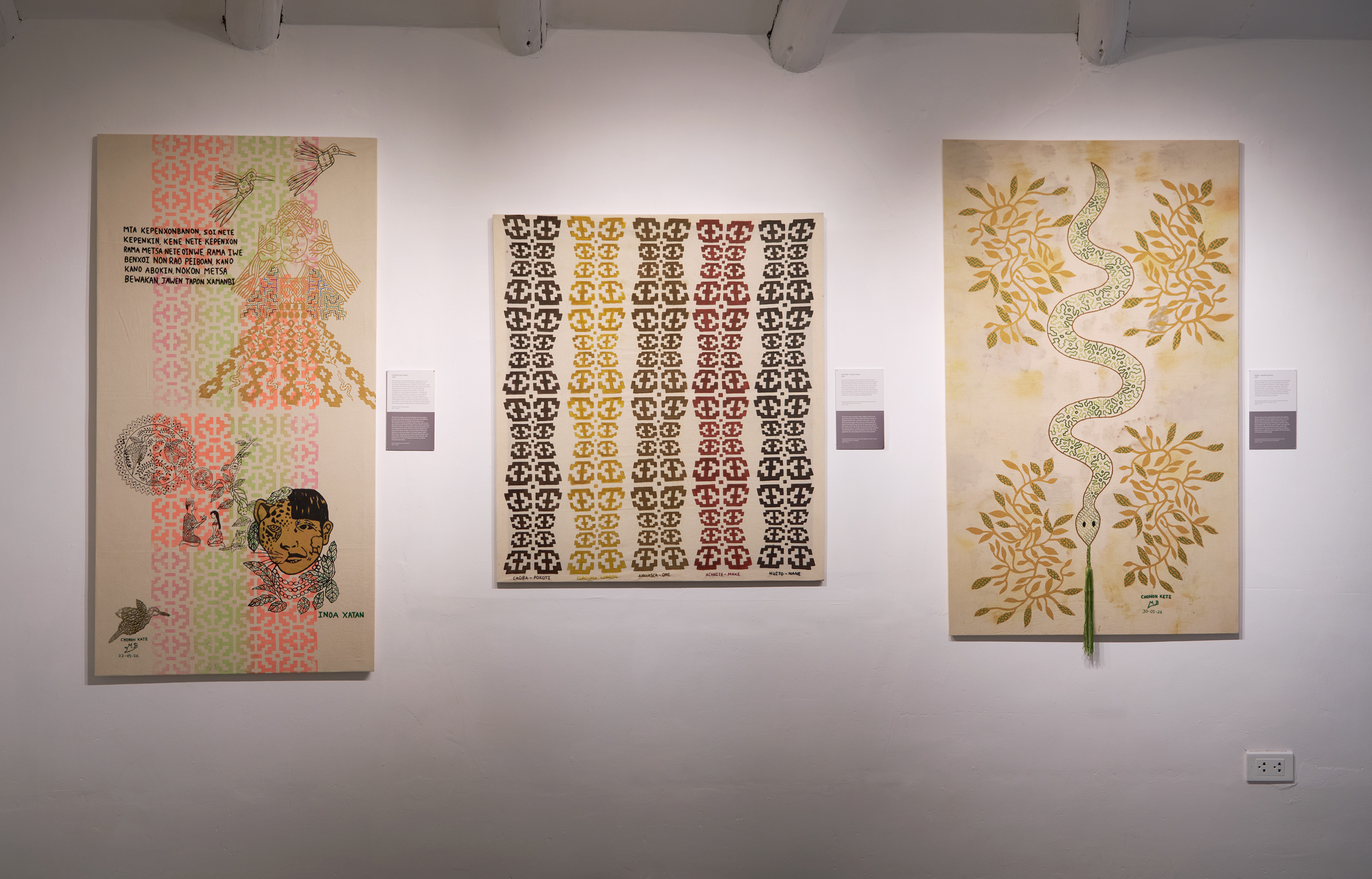
The tapestries of Chonon Kate are rooted in her healing tradition while offering new possibilities for interpreting the codes of collective memory that transmit her deep connection with nature spirit and her ancestry. Embedded in her works are stories and symbols that lie midway between orality and writing, tracing the curves, lines, and figures of the Xao Kené - a complex network of symmetrical forms belonging to the visual and spiritual language system of the Shipibo-Konibo, practiced mostly by women whose vision is gained through initiation rituals, and whose patterns are an ongoing dialogue with the natural and cosmic worlds. In her tapestries, these Kené scapes are brought to life by plant pigments such as mahogany, ayahuasca, achiote, and clay. Threads of embroidery trace the leaves of healing plants imprinted with the memory of times spent learning about them from the women who came before her, now bearing knowledge that has become her own.
"Ever since I was little, I used to watch my grandmother paint her tapestries at night because during the day she worked as a healer, using medicinal plants. And so she would find time in the evenings to work on them. Being that I was still a child, my grandmother would send me to bed early because I had school the next day. But I used to wake up around midnight when I didn’t feel her presence—as we used to sleep side by side— so I’d get up and go looking for her. From behind the door, I would watch her painting. I would always observe her painting and drawing.
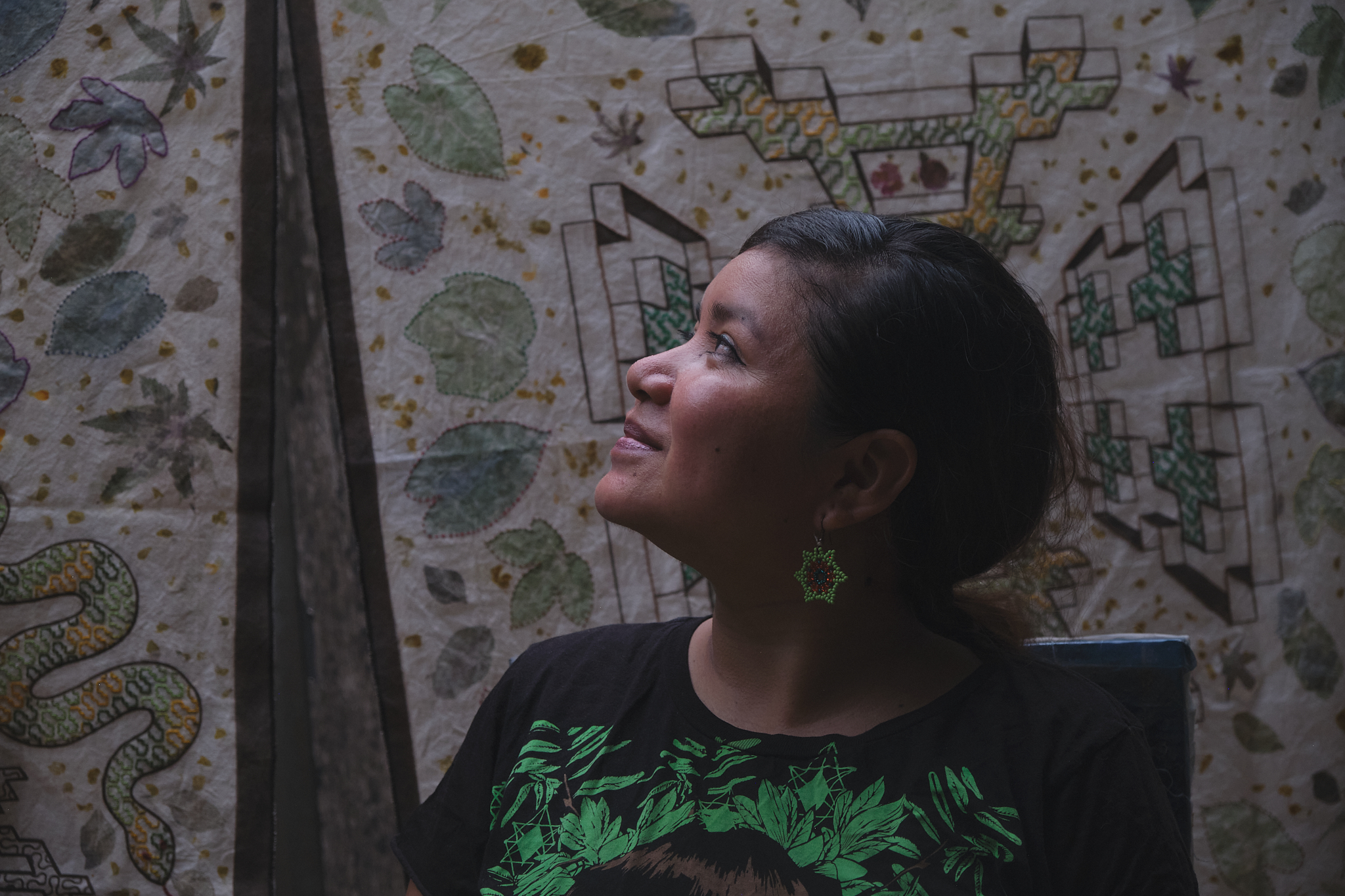
"I come from a family that is very artistically expressive, from music to pottery. In my case, my mother Martha taught me about textiles from the age of eight; she taught me how to weave by hand and to sew, and throughout this journey my connection has always been strongest with traditional textiles. But the work you see today stems from the time of the pandemic in 2020, when we became very involved with medicinal plants. I was very connected to the plants during this time due to the family losses, be it friends or close relatives. We had also returned to our alternative medicines to help us heal during the pandemic. That is where I began to express myself a little more in the works that I currently exhibit in galleries such as Colorimetria and now in Xapiri Ground."
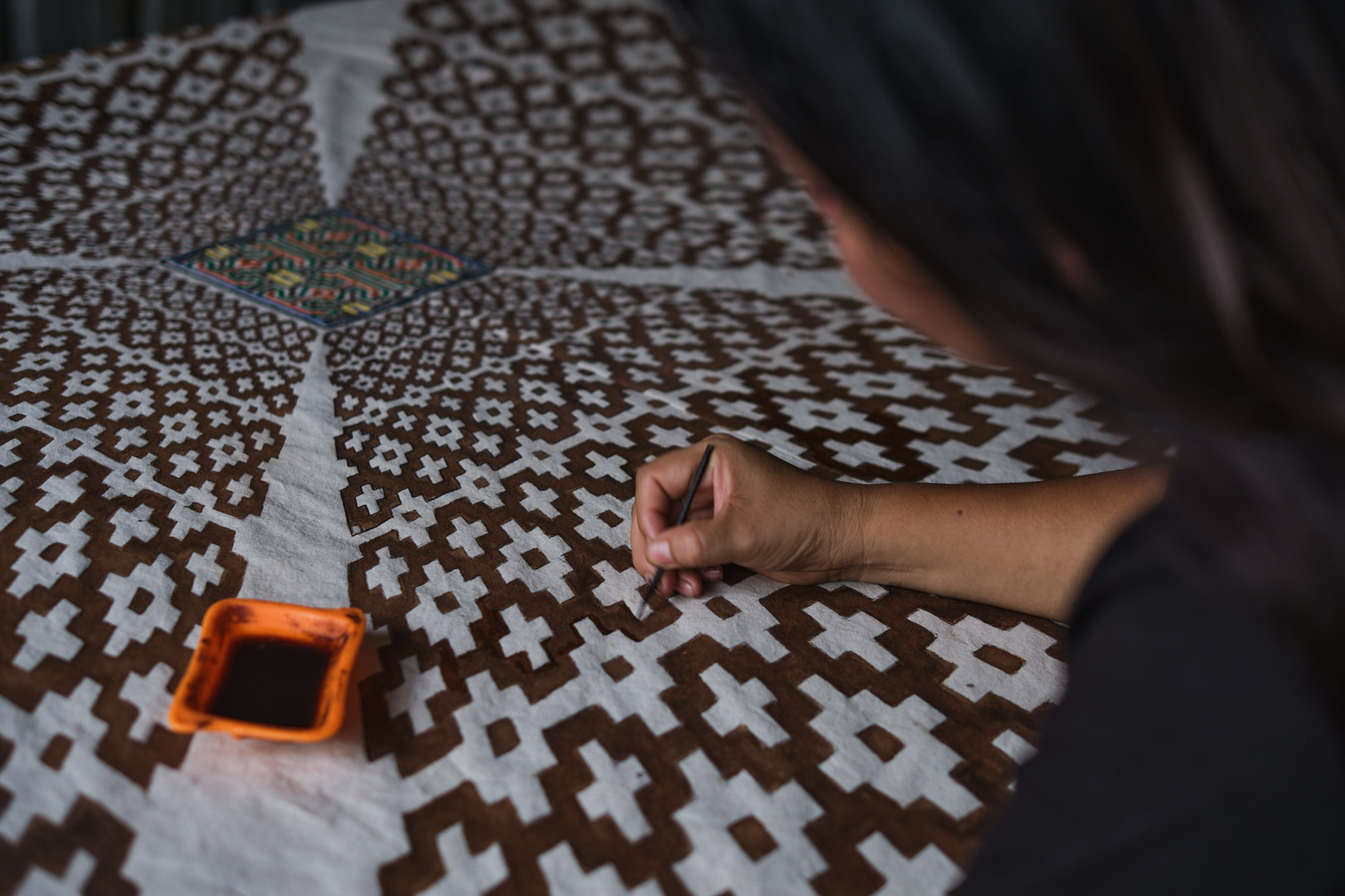
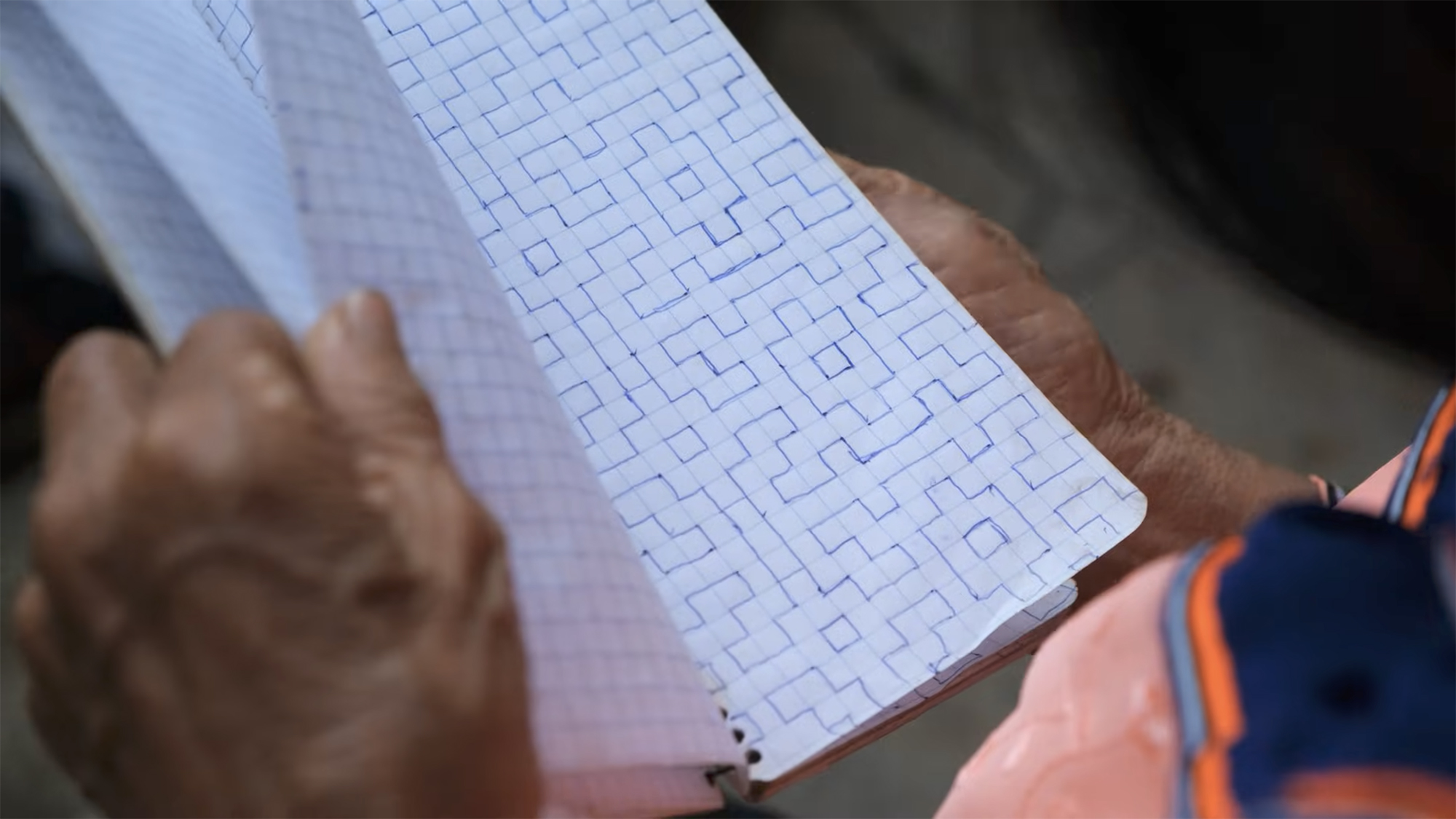
"The Kené is a legacy of our ancestors; when you draw the lines, they flow naturally from within you because it’s in your blood—it’s an expression of our roots as original peoples. Xao Kené, in particular, is one of my favorite designs; its striking geometric patterns have always captivated me. Since I was little, we’ve been taught that these are the earliest of our legacy designs, which makes it even more special to me, the Xao Kené. Ever since the day my maternal grandmother, Amelia Panduro, gifted me her notebook filled with years of Xao Kené drawings, she purposefully left half the notebook blank so that I could continue drawing and researching these ancient designs."
Honestly, the embroidery was a must during school vacations, and I was always seen embroidering. My mother was the one who taught me this skill and how to sew by hand. My grandmother Amelia was always very busy with her work, which involved a lot of travelling. I would embroider to open up my creativity, to set out towards new horizons with the Kené, and now in reality everything seems to be coming together. You know, I used to see the colors of Kené in my dreams, and I’ve always dreamed about nature. Also, I feel that my grandmother had opened the way for me to connect with the Kené, with the plants.
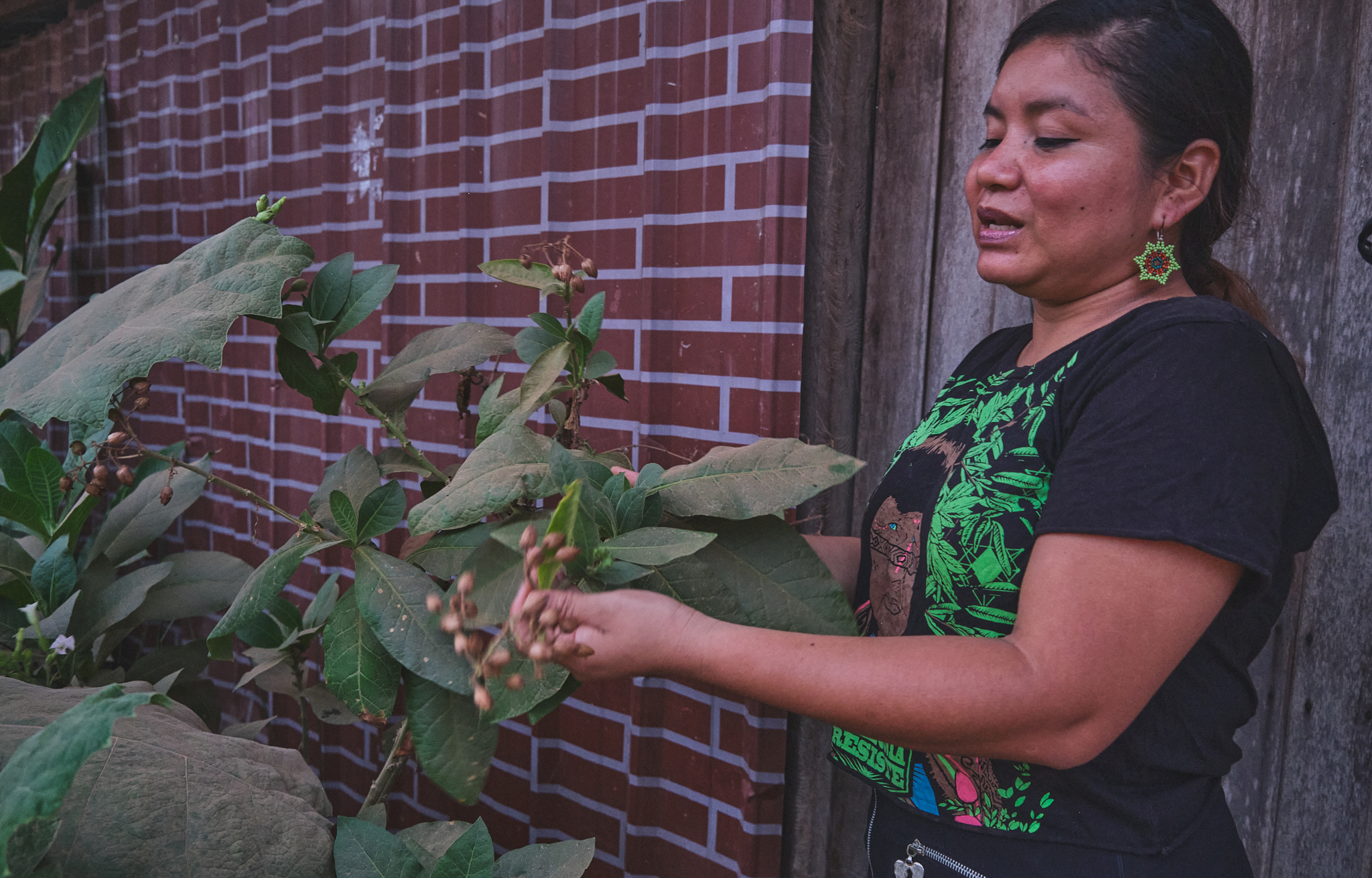
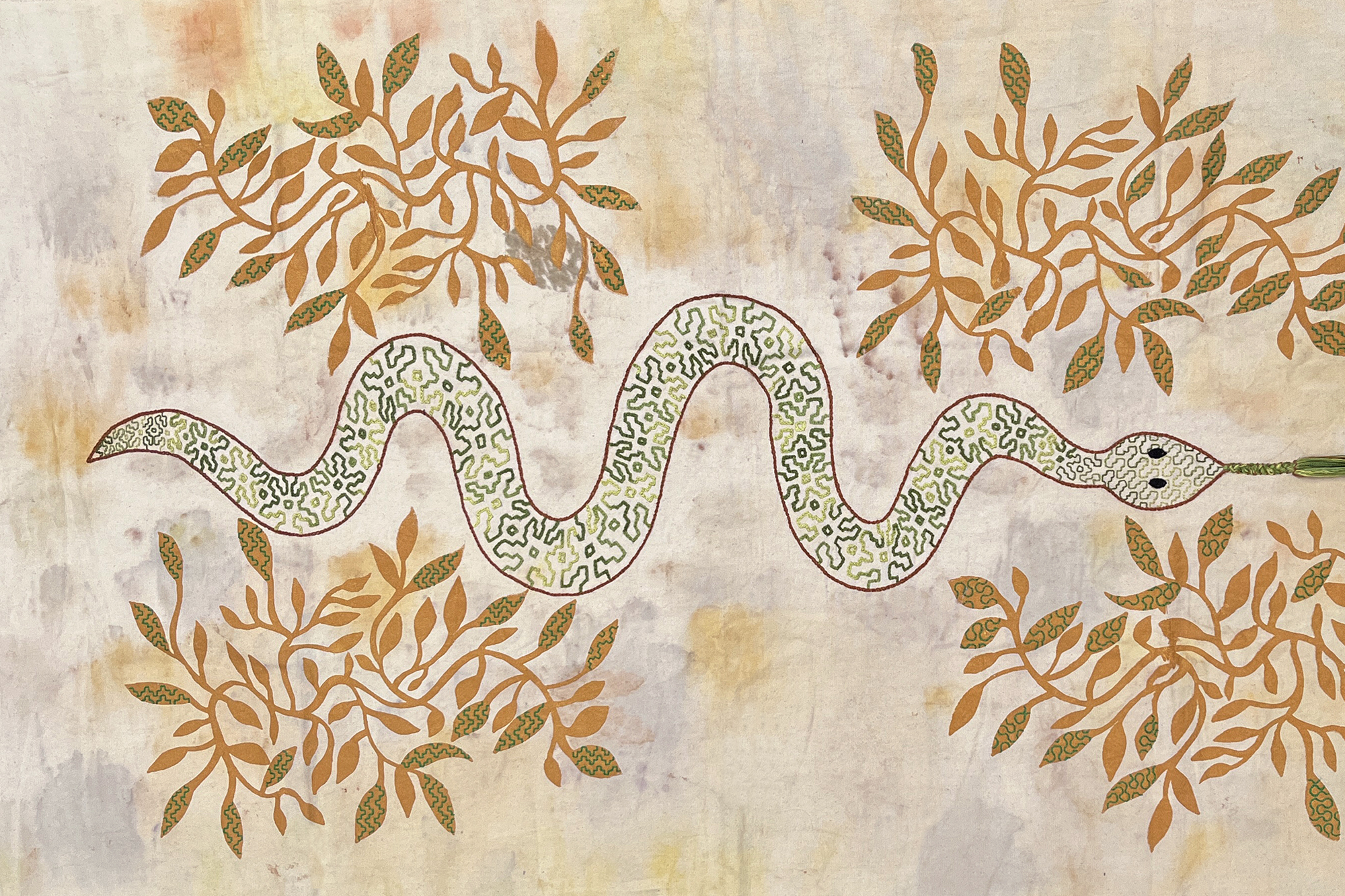
"About the Ronin, the cosmic serpent, she is the mother of rivers and medicinal plants. My grandparents always told me that Ronin was the first spirit to appear in Ayahuasca visions. In this case, I’ve painted this textile using the same vaporization method of the plants that one normally uses in treatment and with these leaves to create a contrast with the rest of the piece. I’ve also applied some screen-printing with hints of dotted embroidery to the small leaves. This gives it a warmer finish and is more representative of the traditional healing through steam treatment."
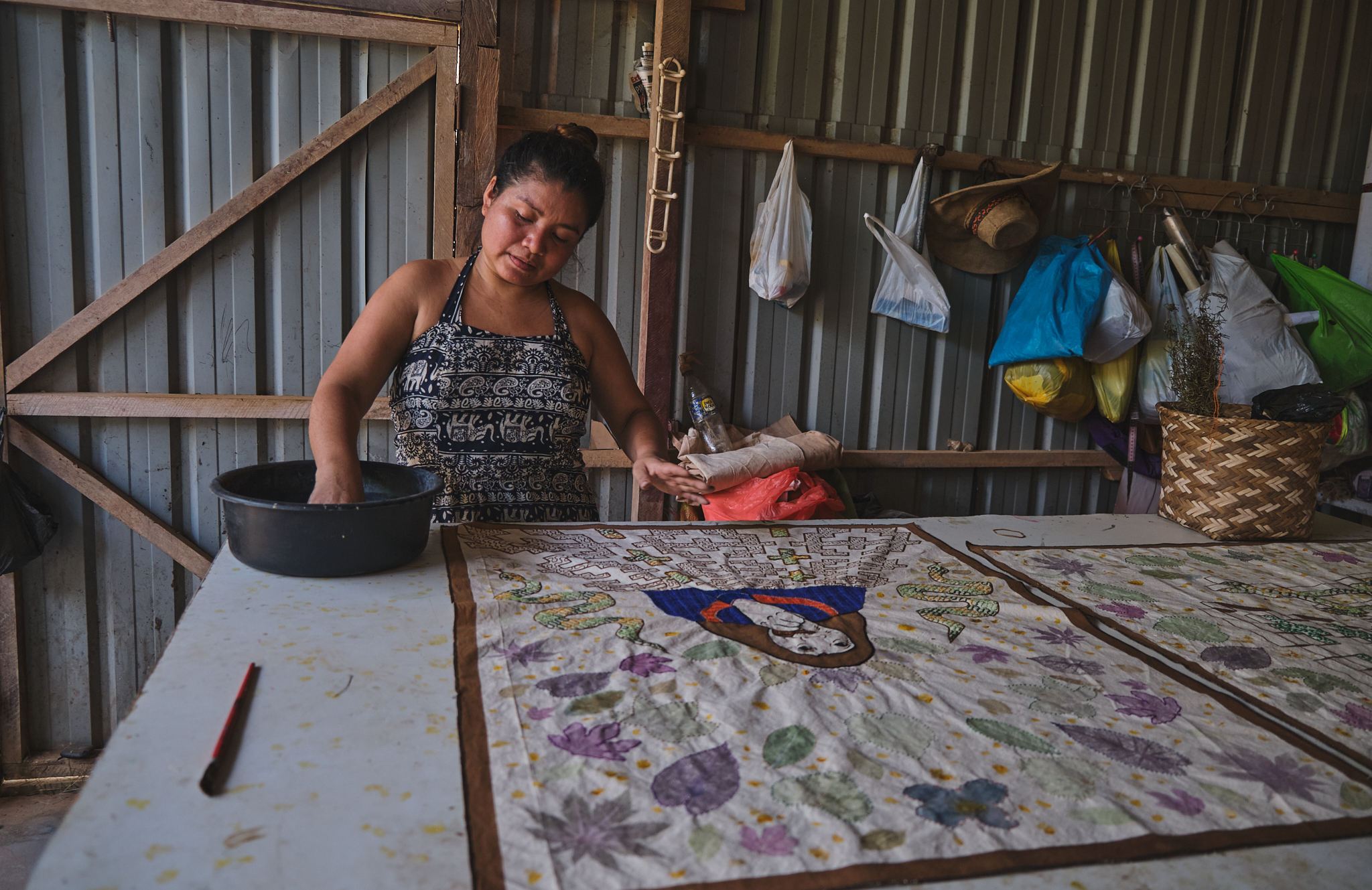
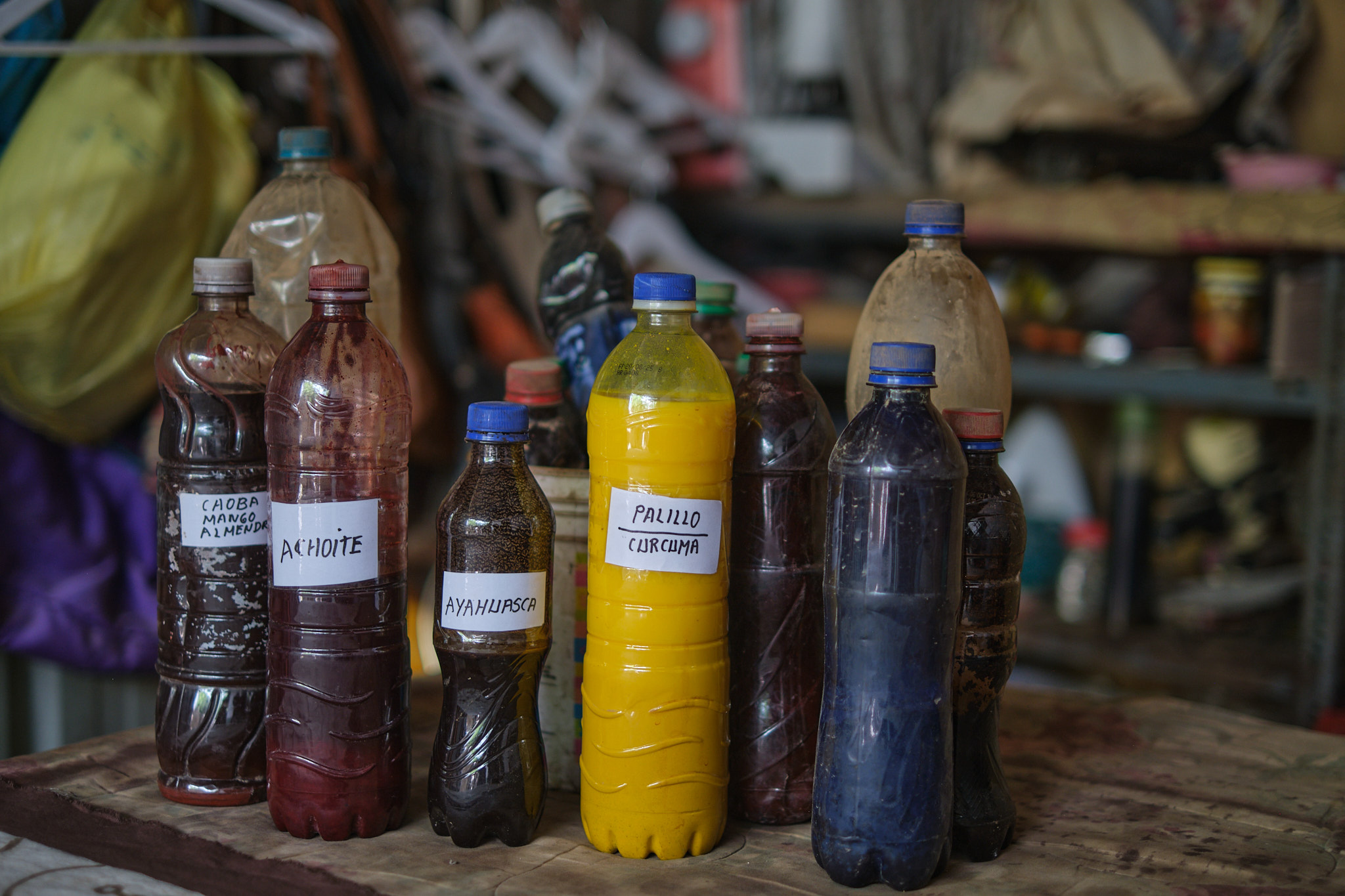
"These pigments my grandmother gave me were ones she’d been saving for many years. When I explained to her that I was to have an exhibition at Xapiri Ground, she observed that I was falling behind on my designs. I also told her that I wanted to paint them using natural pigments. I said, ‘Now I have to prepare the natural pigments, and I’d like you to explain to me a little more about the colors you used to paint your looms with, as I watched you do when I was little. And besides achiote, I sometimes saw you paint with Ayahuasca, as well as with huito and mahogany.’ And I was really surprised that during those conversations one night, she showed up with some tapestries that she’d kept for a while and some materials for hand-painting. And the next day, she started looking for her dyes in the storage room. When I arrived at my studio to see them, with all the materials on the table where I work, it gave me a really beautiful feeling. Really, as I mentioned, I was feeling a sense of absence in that regard—we no longer had the kind of opportunity to sit face-to-face and paint together."
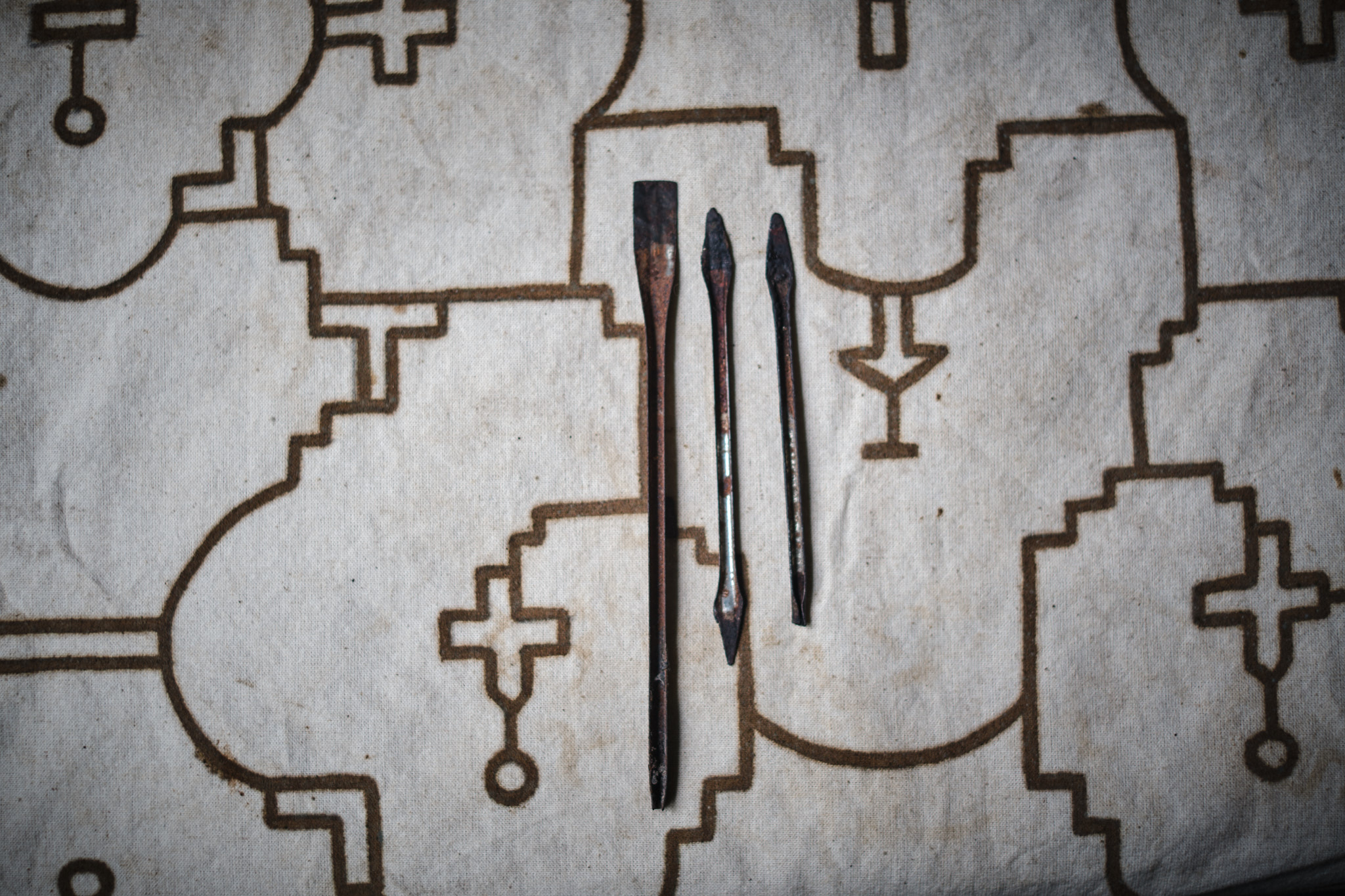
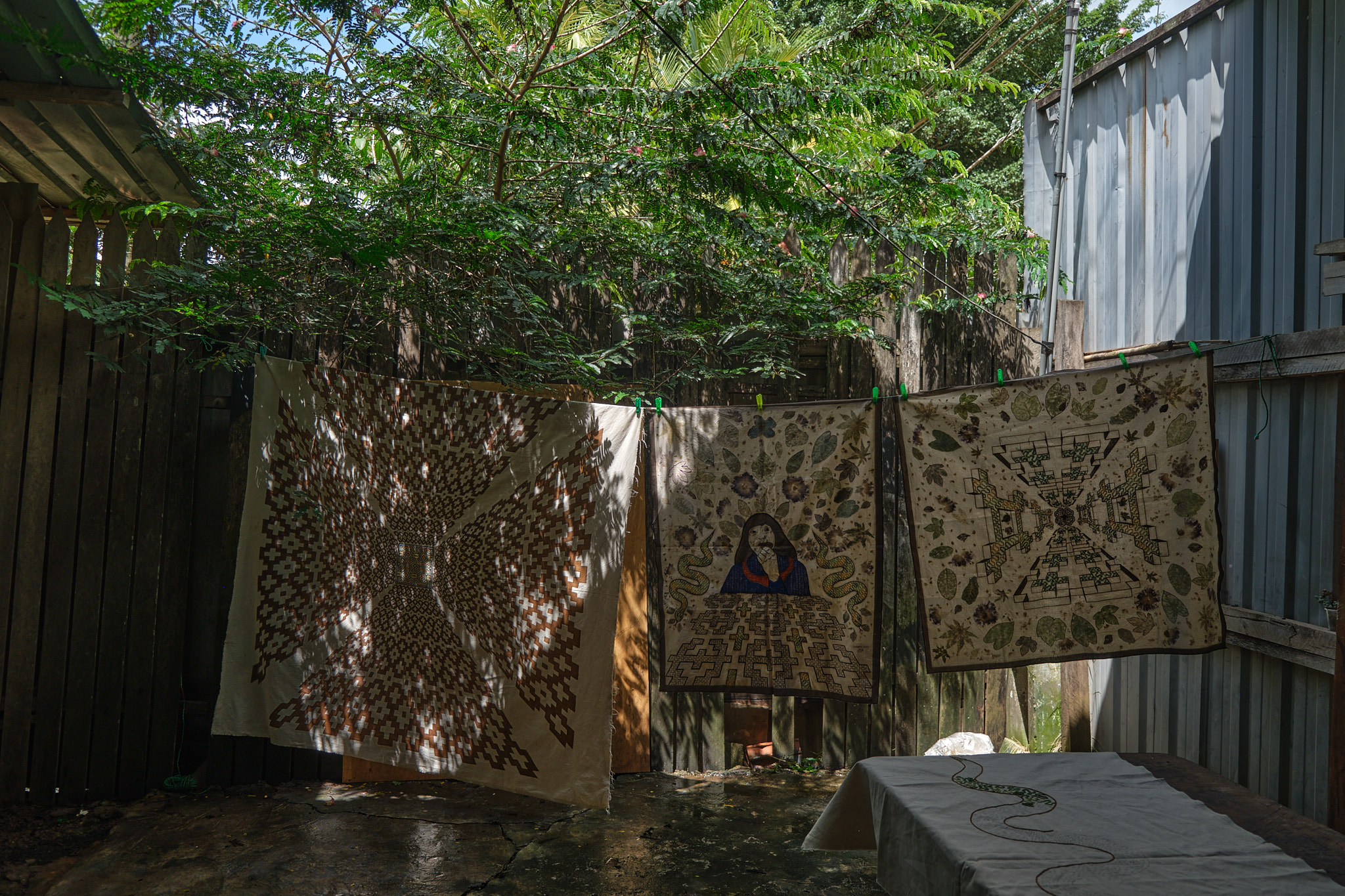
"Perhaps there were moments I missed because she traveled a lot, worked extensively with traditional medicine, and the few times I had with her, my connection to the designs was also a way for me to ensure those practices weren’t lost. Seeing these dyes has also been a way of telling myself, “Look at this—you carry on.” It’s something that truly felt like she was placing a part of her life in my hands, and I felt that responsibility to bring it forward."
"I believe this exhibition has reached out to me in a particular way: my communication with my grandmother, which I hadn’t experienced before in these conversations, and the new ideas and designs emerging. These have been moments I will always cherish for the rest of my life, and also because she had surgery—due to her age and the nature of the procedure—she can no longer continue these practices. I would like her to see these works reflected through me as well. That they can serve as a means of communication, to show the public that these works are living legacies from our ancestors spanning many generations—and that it’s something my grandmother continues to transmit through me. I feel very fortunate to be able to showcase these works now at the Xapiri gallery."
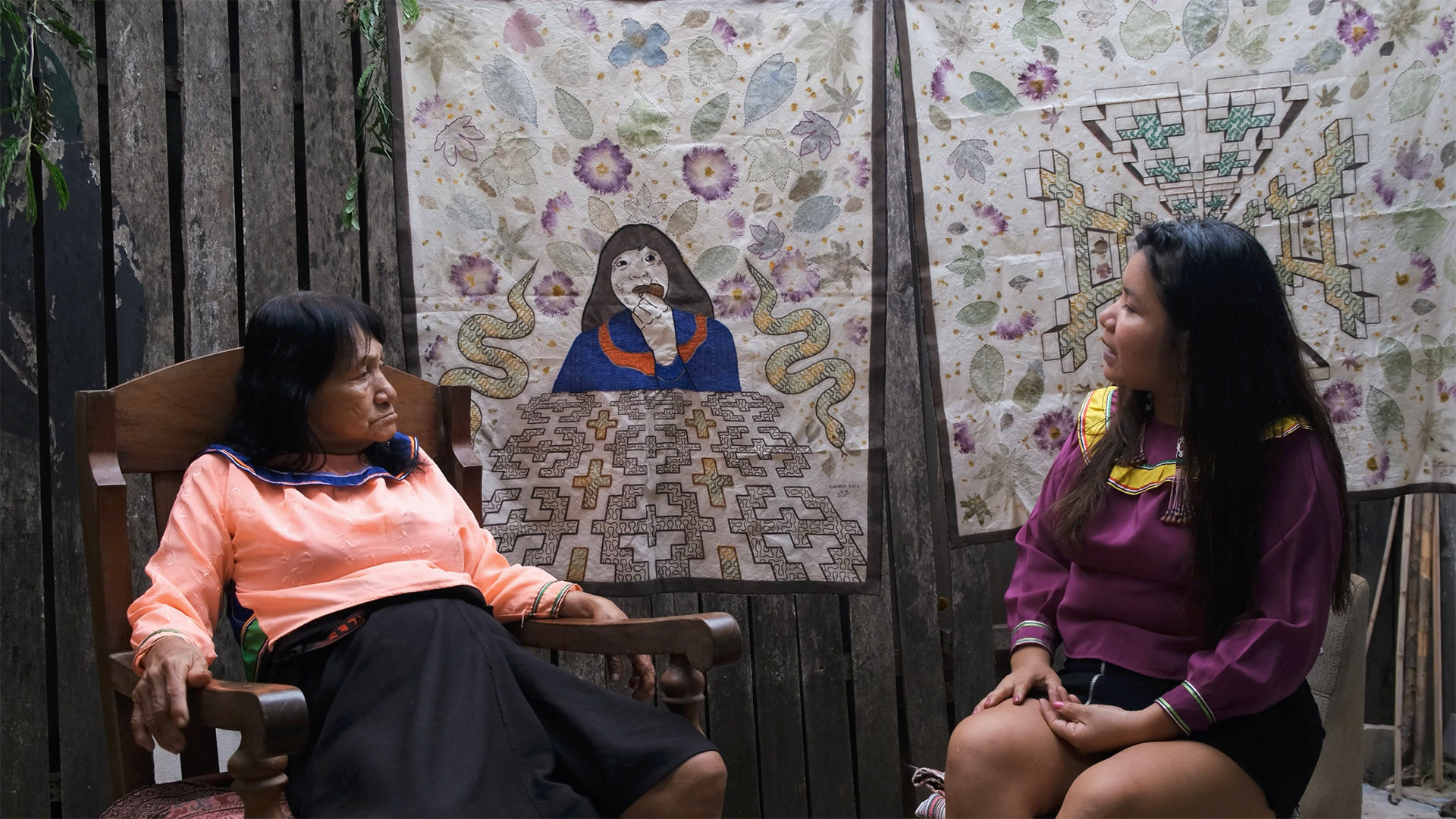
“...the medicinal plants guide our path; they are like a light that accompanies us on our journey.” Amelia Panduro
CHONON KATE is on exhibition at Xapiri Ground in our Sala 2 from June 12, 2026 through December 04, 2026. For inquiries about the art on exhibition, please message us directly at info@xapiriground.org
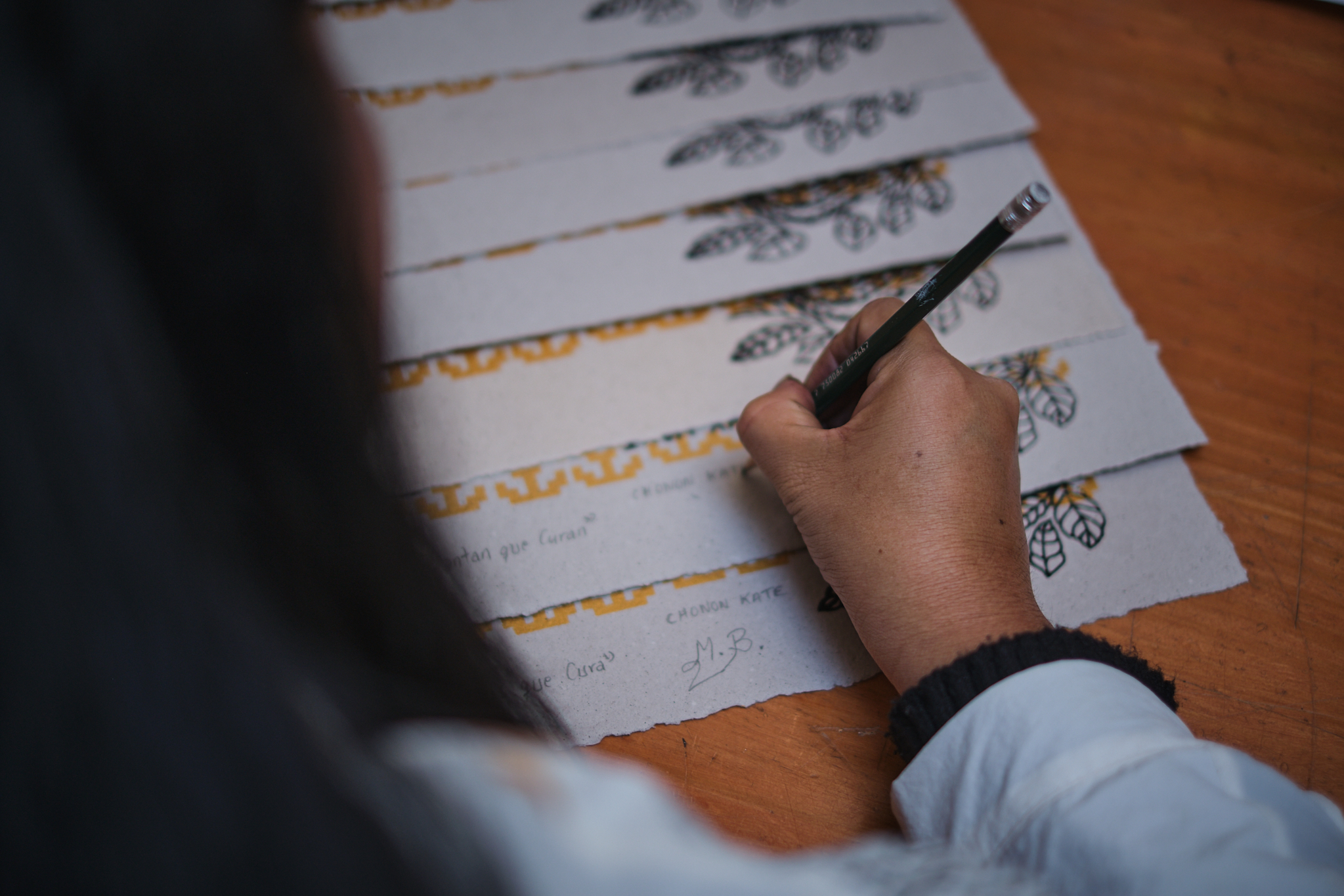
We are also offering limited edition art prints from this exhibition in collaboration with the artist Merly Bernabe and Amapolay.
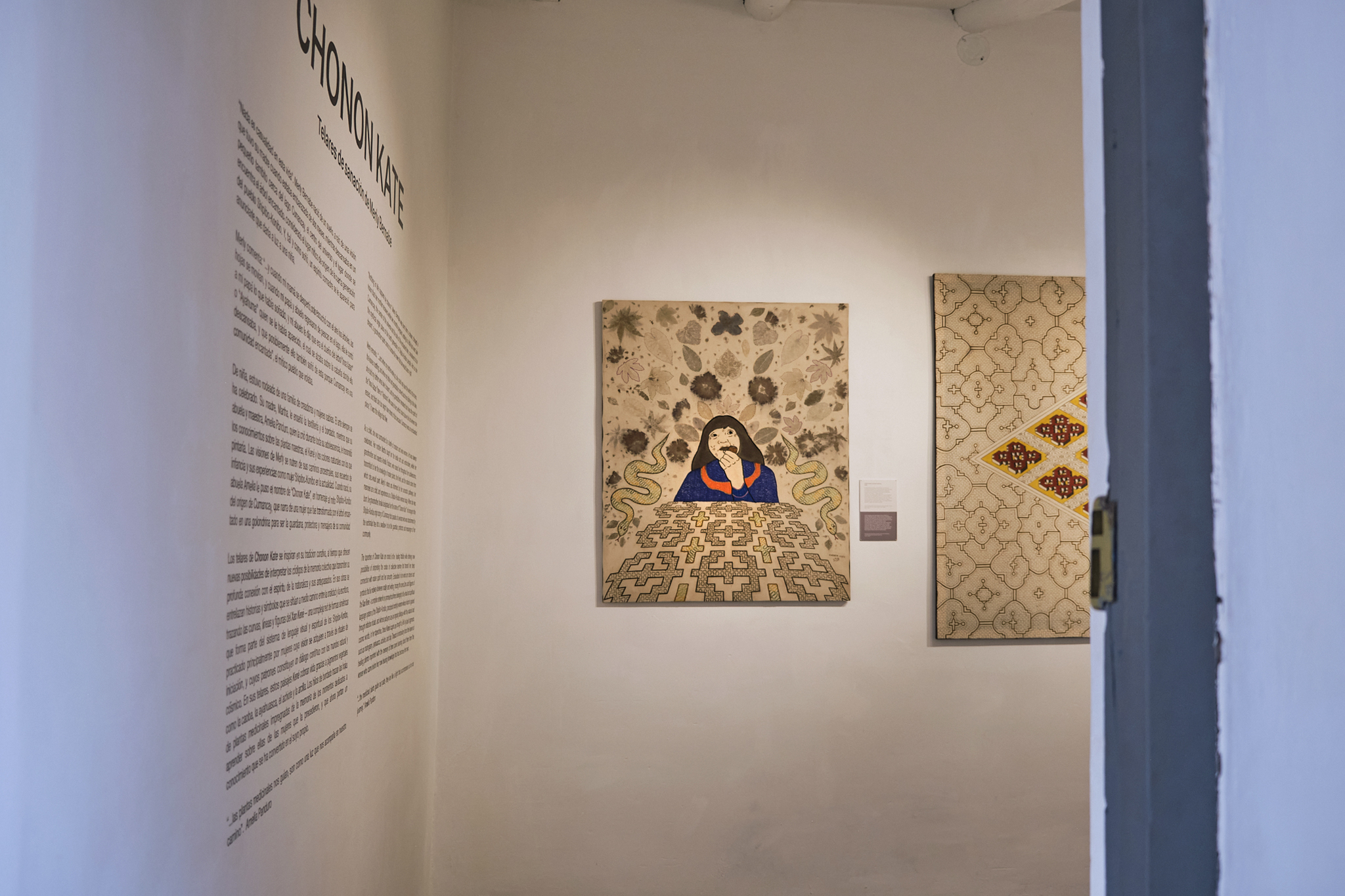
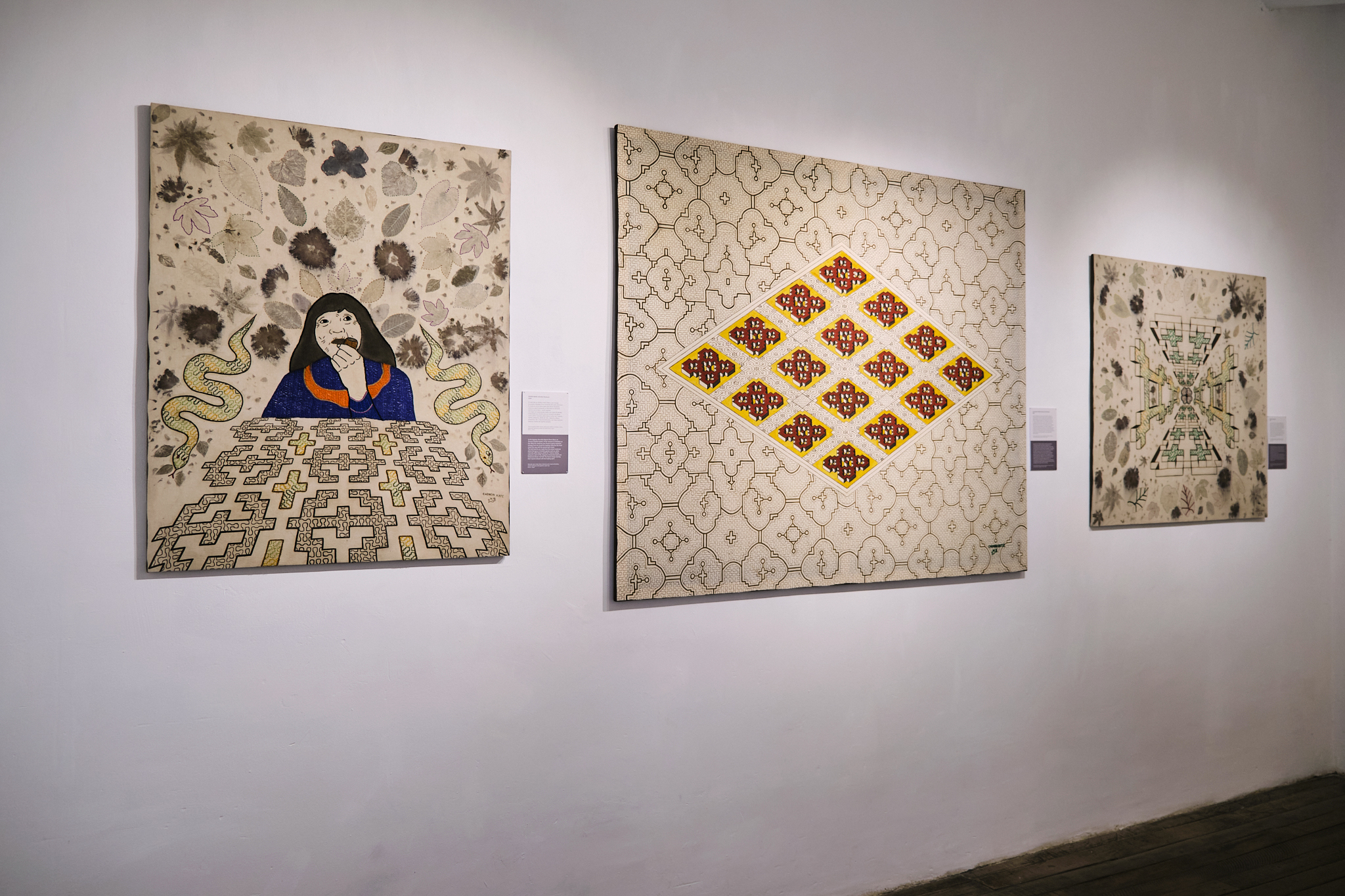
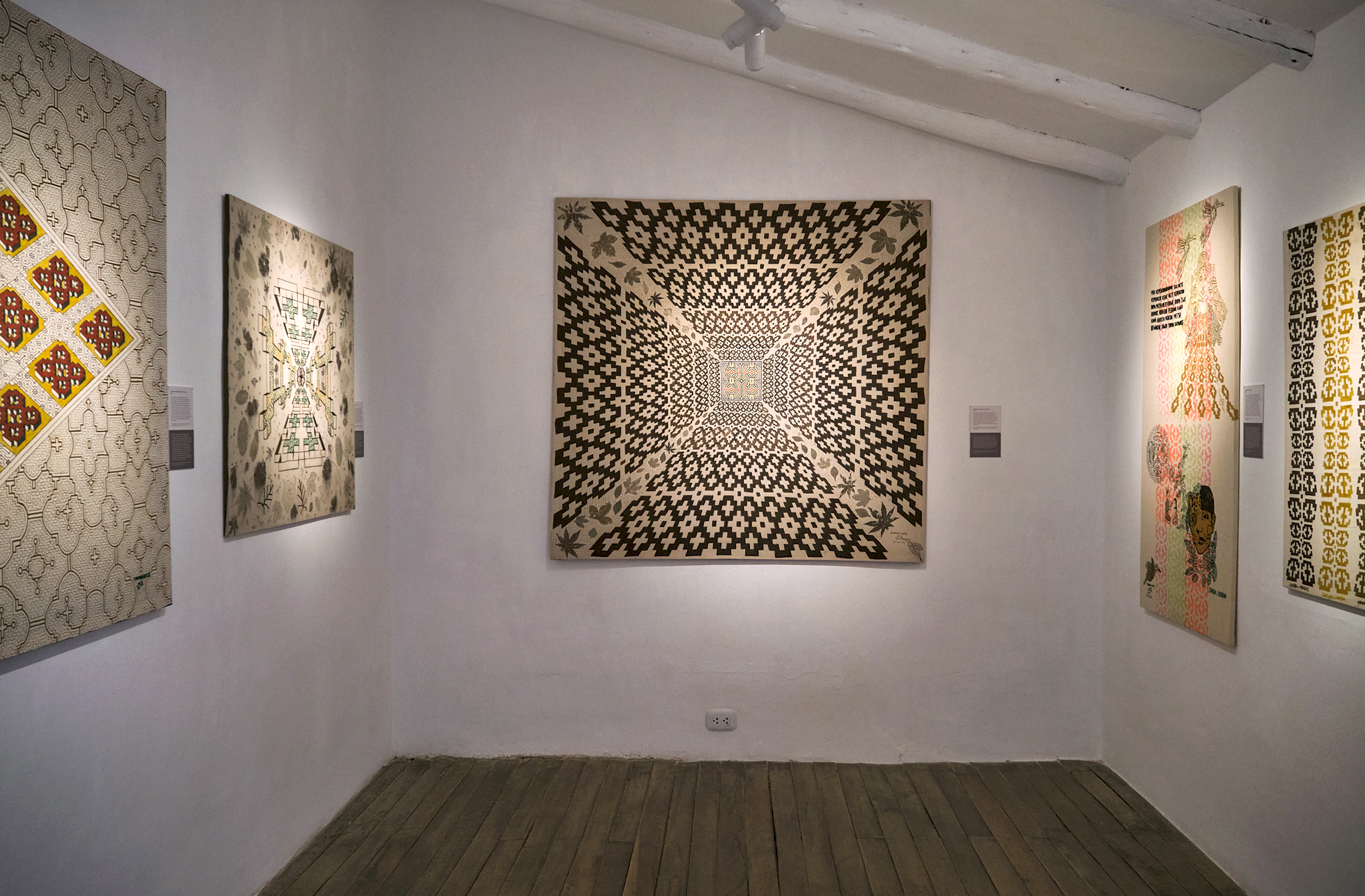
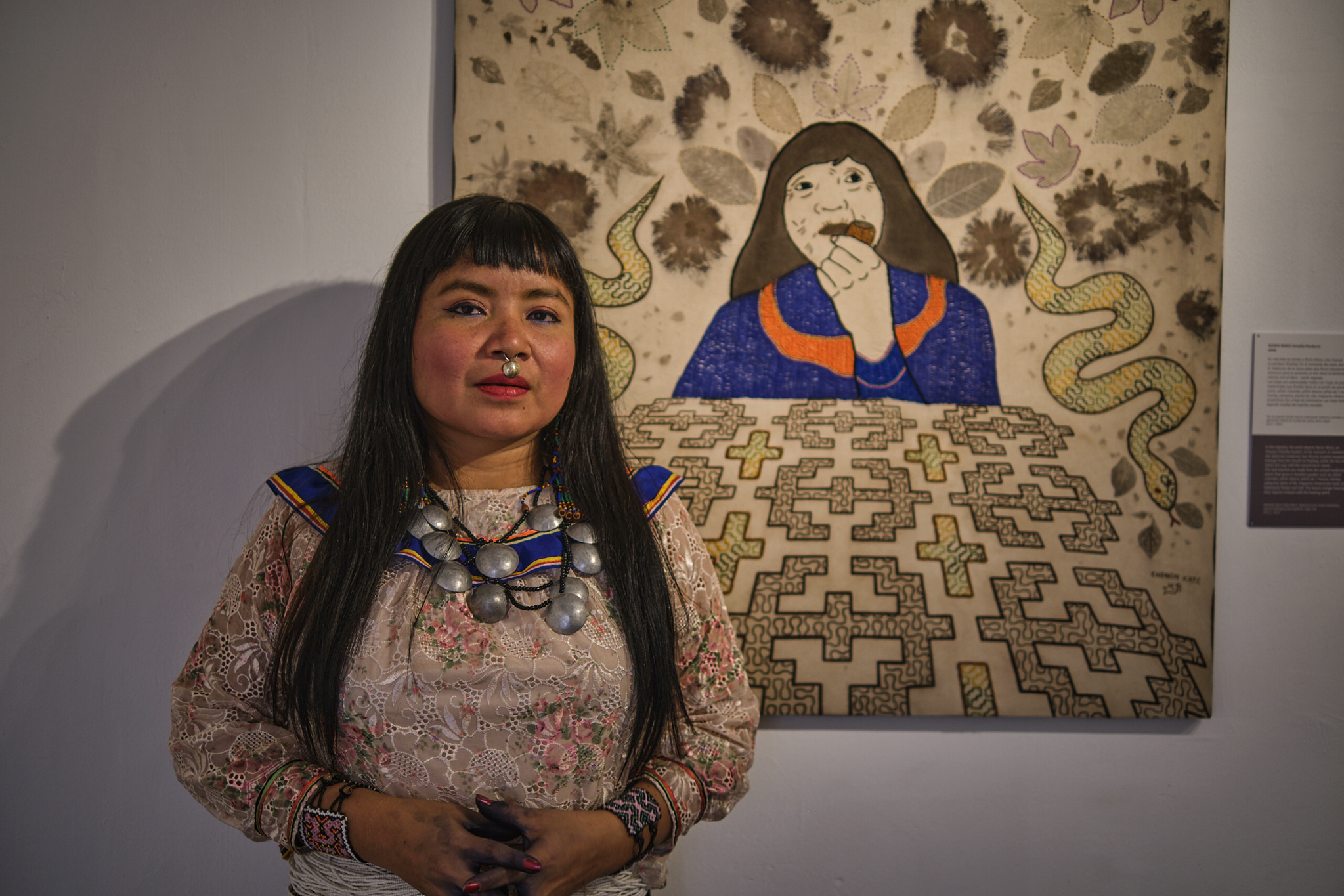
Biography | Merly Bernabe
Merly was born in 1993 in the Shipibo-Konibo community of Vista Alegre de Pachitea, in the Masisea district. She grew up in Yarinacocha, Pucallpa. She comes from a maternal family lineage of artists, traditional musicians and plant healers. She learned traditional textile techniques from a young age, exploring and practising natural pigments, hand embroidery, and jewellery-making alongside her mother and her grandmother, Amelia Panduro – a master of her lineage. She studied fashion design in Lima in 2012 with the vision of integrating ancestral and contemporary techniques into modern clothing.
Her work is rooted in the Kené, an ancestral language of geometric design that preserves the songs, visions and memories of her Shipibo-Konibo heritage. Her artistic practice speaks of reciprocity with the artisan mothers of Pucallpa, where the transmission of knowledge is woven amongst them, sustaining a process of communal knowledge that resists being forgotten and withstands commercialisation. And it is this same vision that has led her to collaborate with brands, organisations, and NGOs that seek to raise the profile of Amazonian art, with a focus on respect and co-creation from a conscious, cultural perspective.
Since 2018, she has been working to promote traditional textiles and running workshops for the “Menin Nomabo” project, a sustainable fashion and creative economy initiative in Peru that empowers Shipibo-Konibo women artisans. Her work has been exhibited 2018 and 2023 at the Colorimetría Amazónica gallery in Pucallpa. “Chonon Kate” is the first solo exhibition of her medium-scale works at Xapiri Ground in Cusco, Peru.


